Ferries, Feet, and Cable Cars

Another day in Istanbul, and another day of long walks, ferry trips, trams, mosques, and ruins.  Today, I also added a ride on a cable car, exploration of a Byzantine cistern, and a trip to a contemporary art museum.

I’m pretty wiped out right now, so don’t have much energy for writing, so I’ll just skip to the photos (click to enlarge).
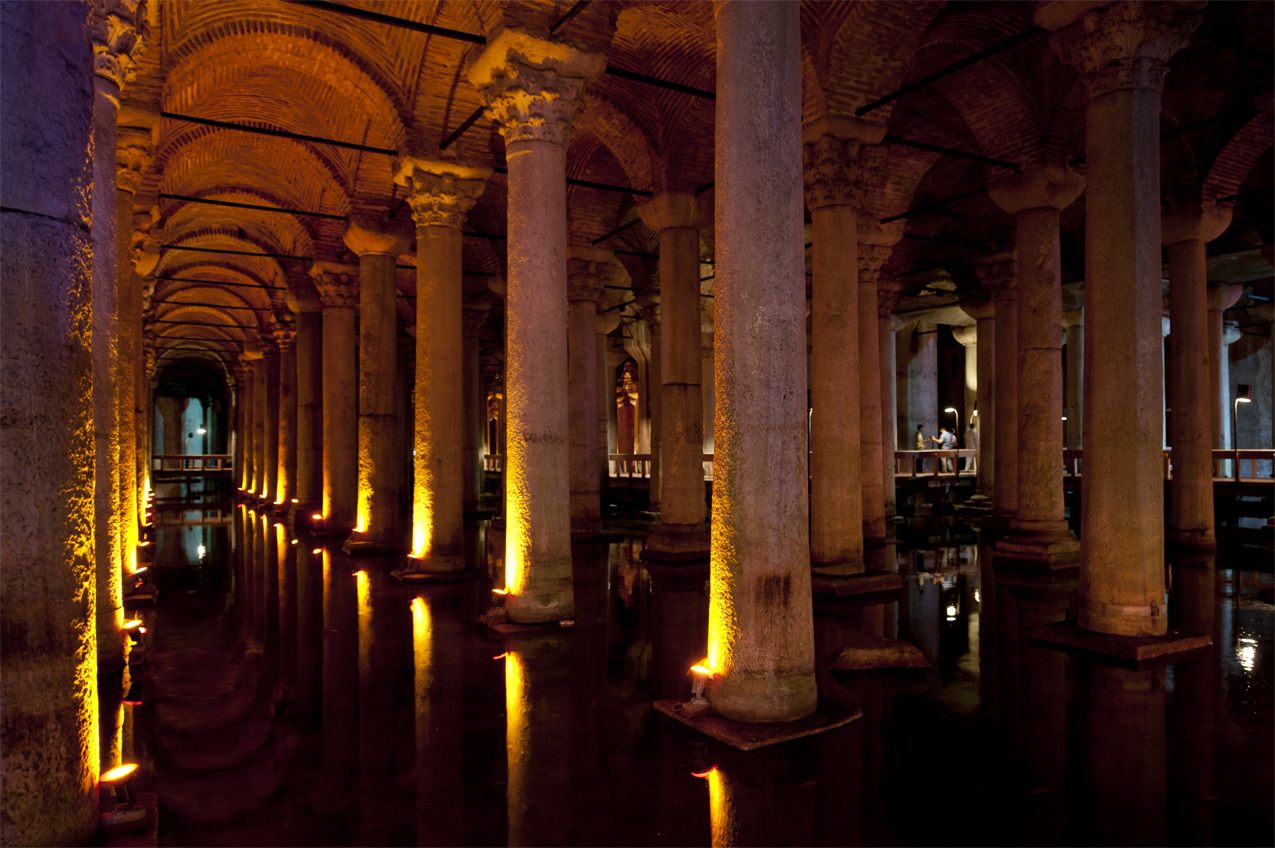
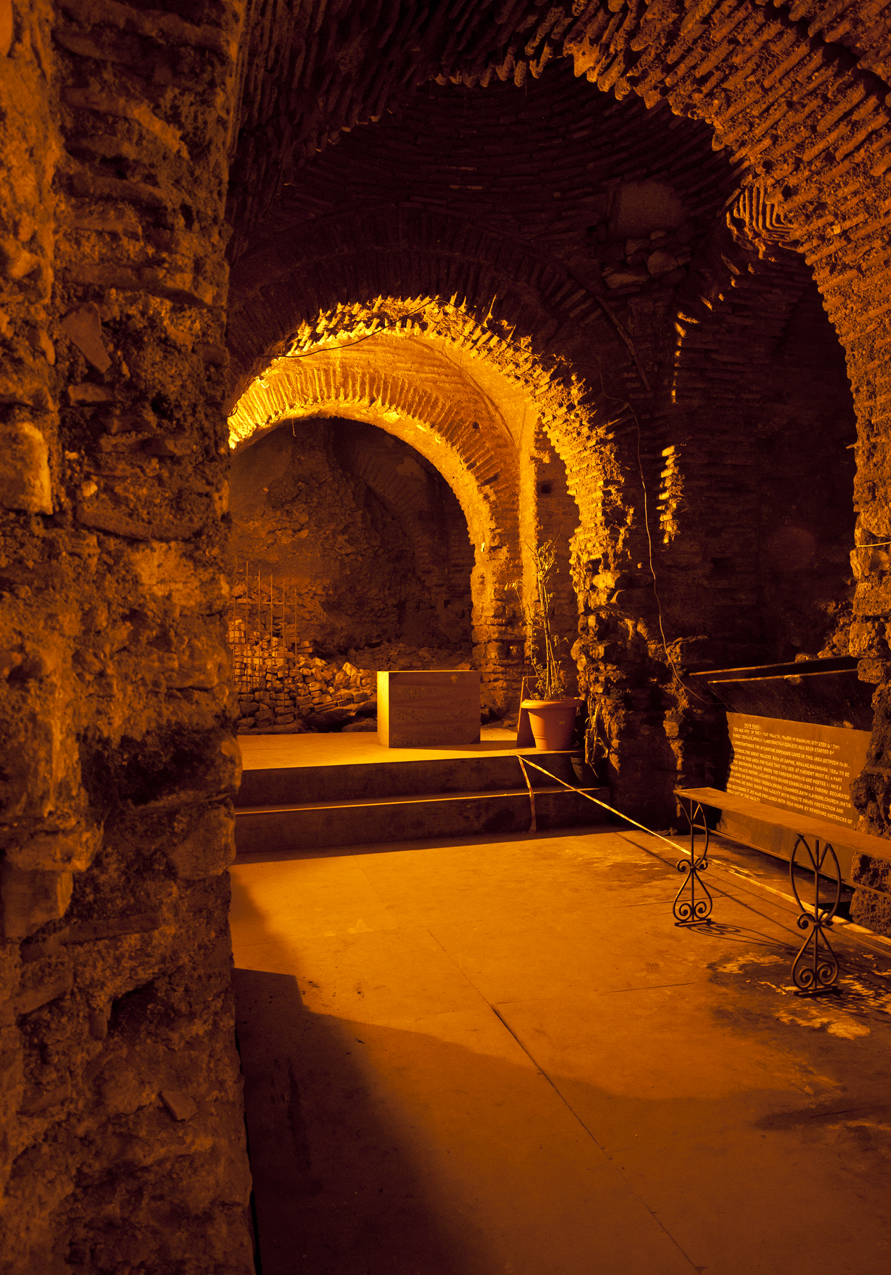
The Basilica Cistern, pictured here, was built around the same time as Hagia Sophia, around 532. Its columns were reused from a variety of ruins in the area. Carp still occupy the waters.
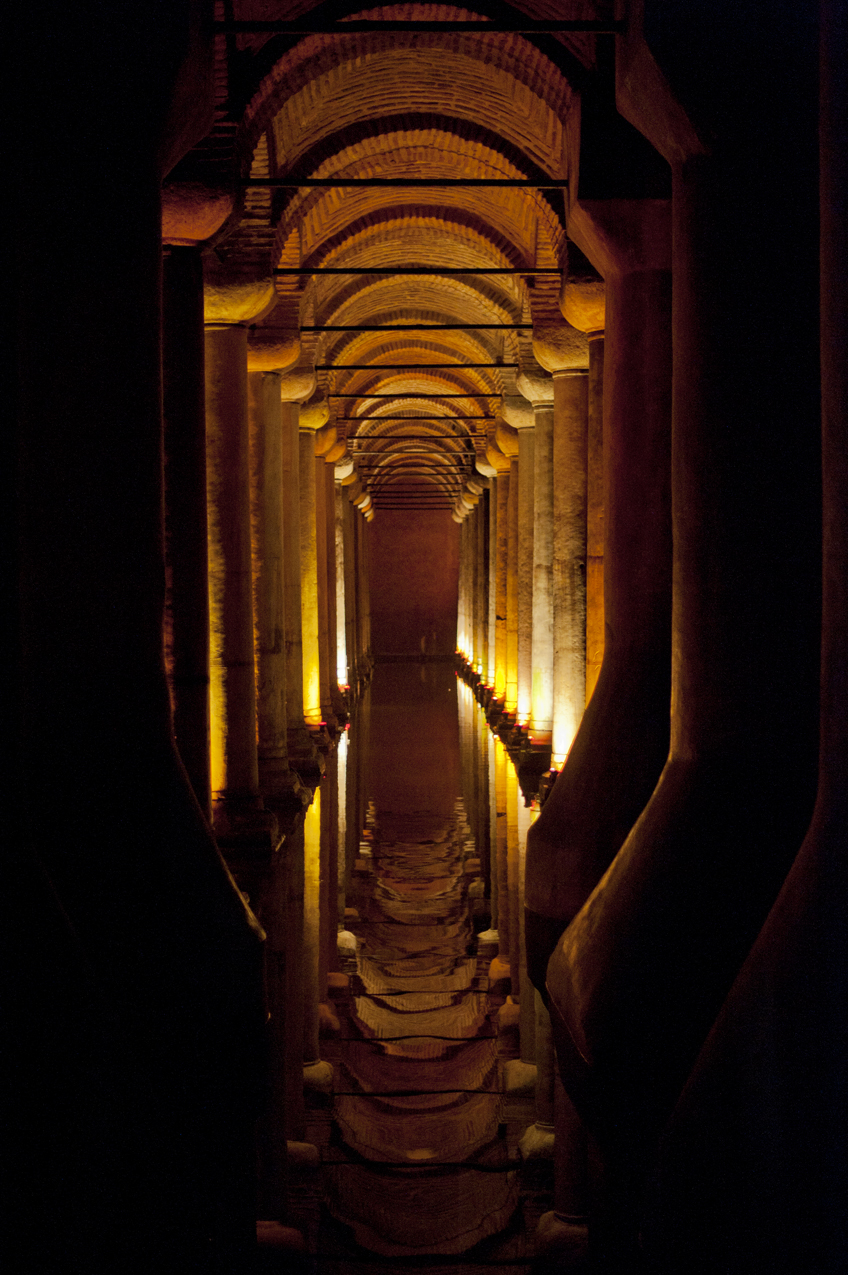
Supposedly, during the early Ottoman period, this became a good spot to dump a body.
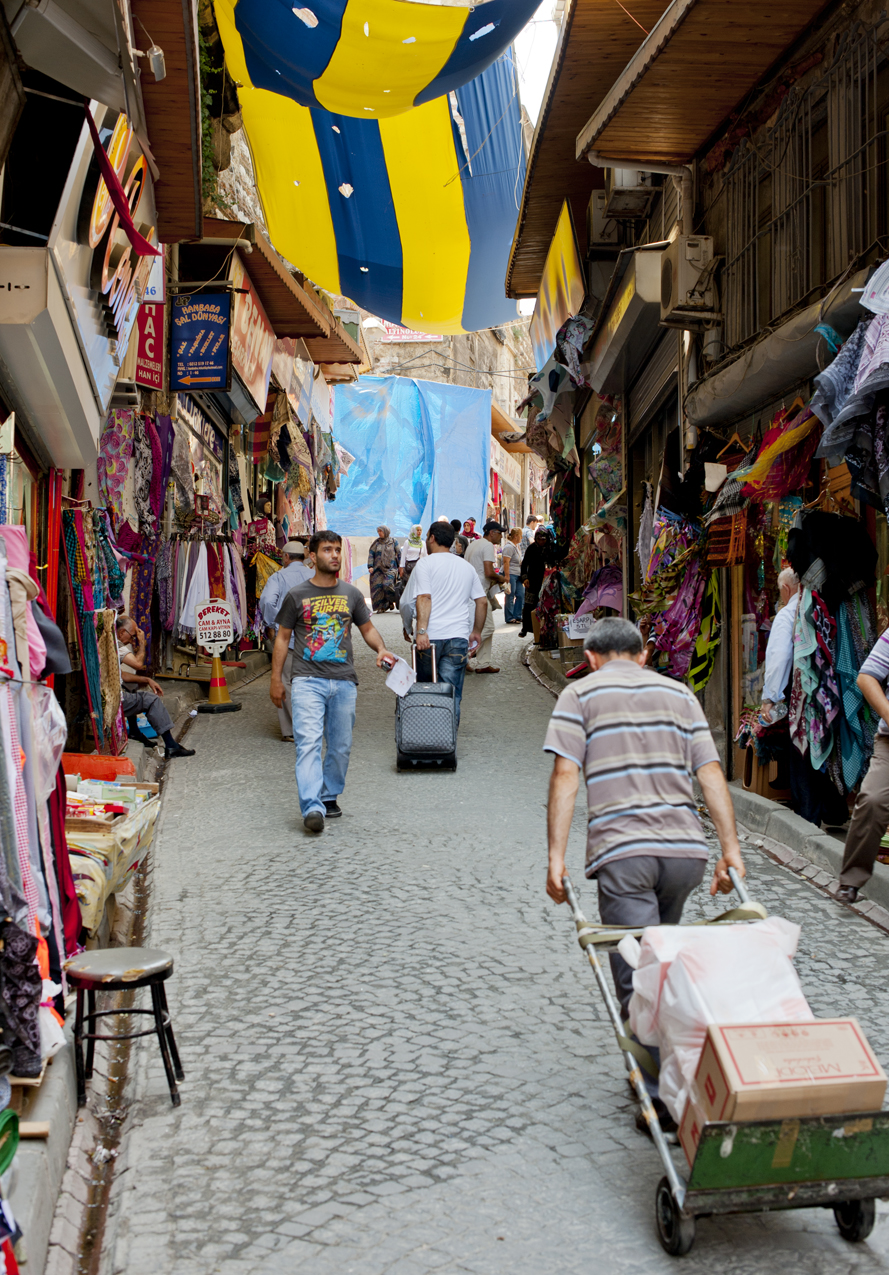
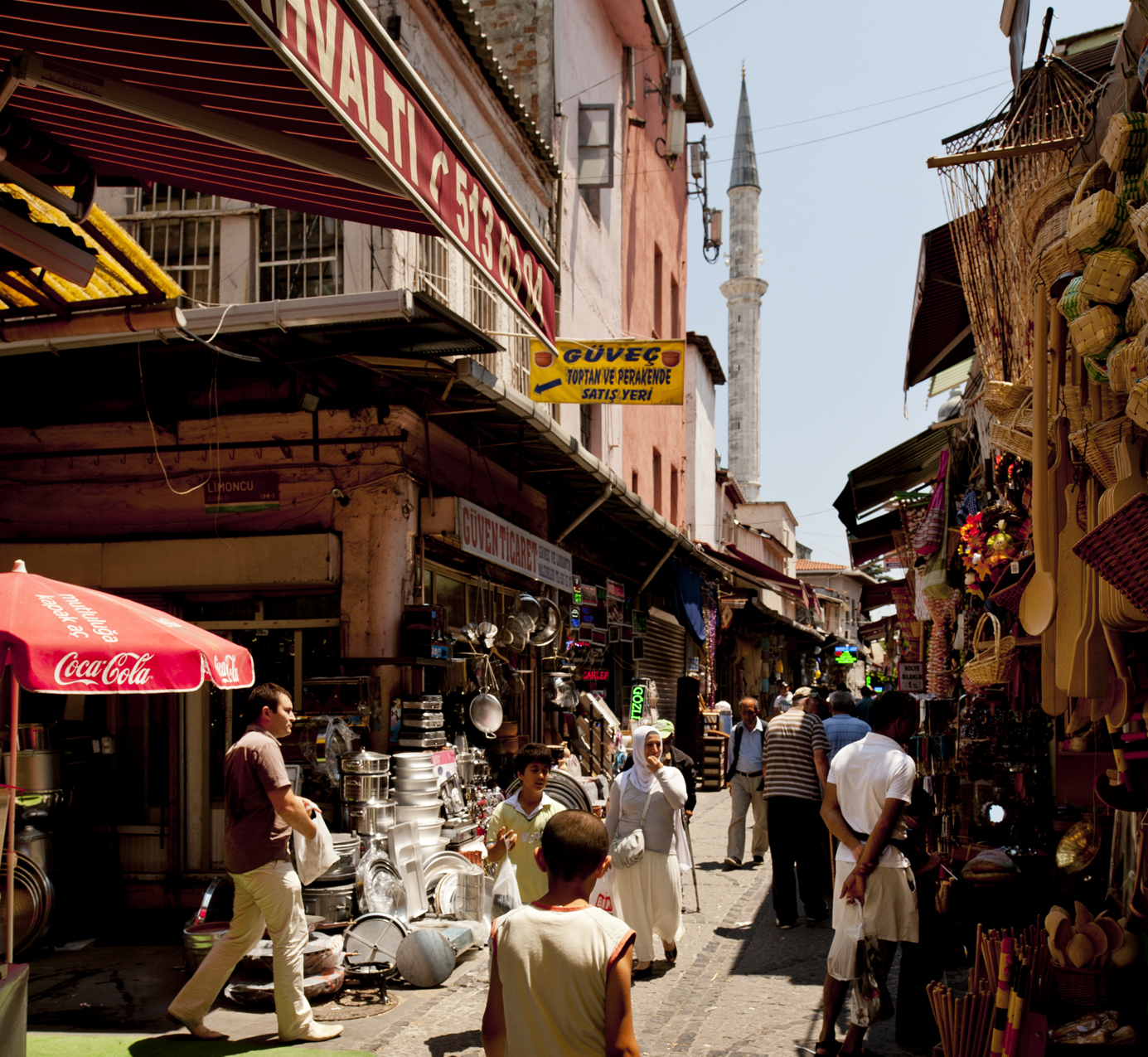
One of the ubiquitous men pulling carts struggles up the hill on the outskirts of the Grand Bazaar.

The bazaar had a few more signs of life today than it did last Sunday.
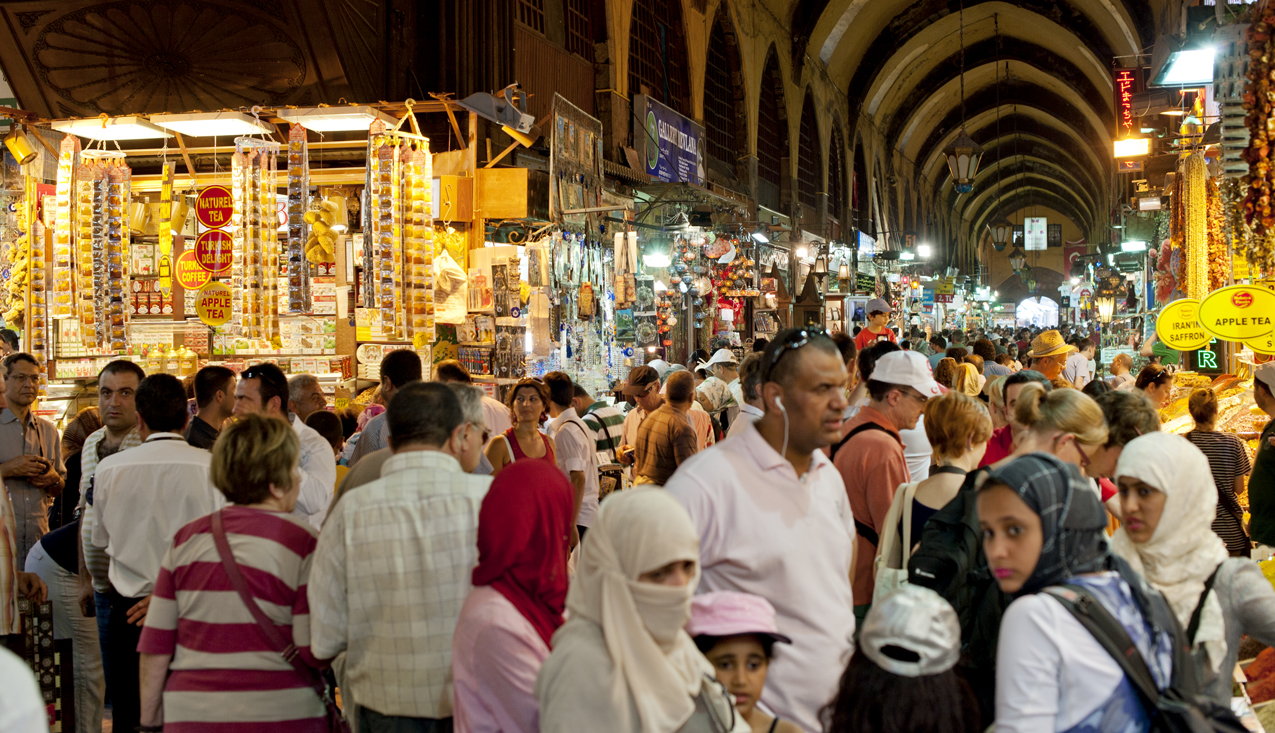
I thought that I might pick up a few spices in the spice market, but I think I'll have to go back when it's not so crowded.

I found a tiny little kebab place, staffed by a friendly waiter, and a more friendly cook. This was the salad that they gave me. It was a spicy sauce to be put on bread that was more similar to salsa than salad.

This simple meal was one of the best that I've had on this trip. Bulgar, lamb, peppers, onions, fennel, lettuce, and tomato. I put a bit of everything on the pita, added a little of the salad, and rolled it up for my dining enjoyment. It was cheap, too.

The friendly cook, who was laboring over hot coals, insisted on taking my picture enjoying the meal that he prepared.

i hopped off the Golden Horn ferry at the last stop, and walked about a mile and a half to get to SantralIstanbul, one of the city's contemporary art museum. I discovered a great exhibit on 20th Century Turkish art in the simple, but elegant museum, which is housed in a former power plant.

After the museum, I walked back the mile and half to the ferry stop, and then waited 45 minutes to take this gondola up a neighboring cemetery hill. The wait was not worth the trip, especially since at the top, I discovered that there was no wait to go down. I would have happily walked up the puny hill, and taken the gondola down for the experience.

The view was pretty impressive at the top.

On the way down, I descended through the cemetery to the Eyup Sultan Mosque.

The Eyup Sultan Mosque is an important pilgrimage site, and the plaza out front was packed with worshipers.
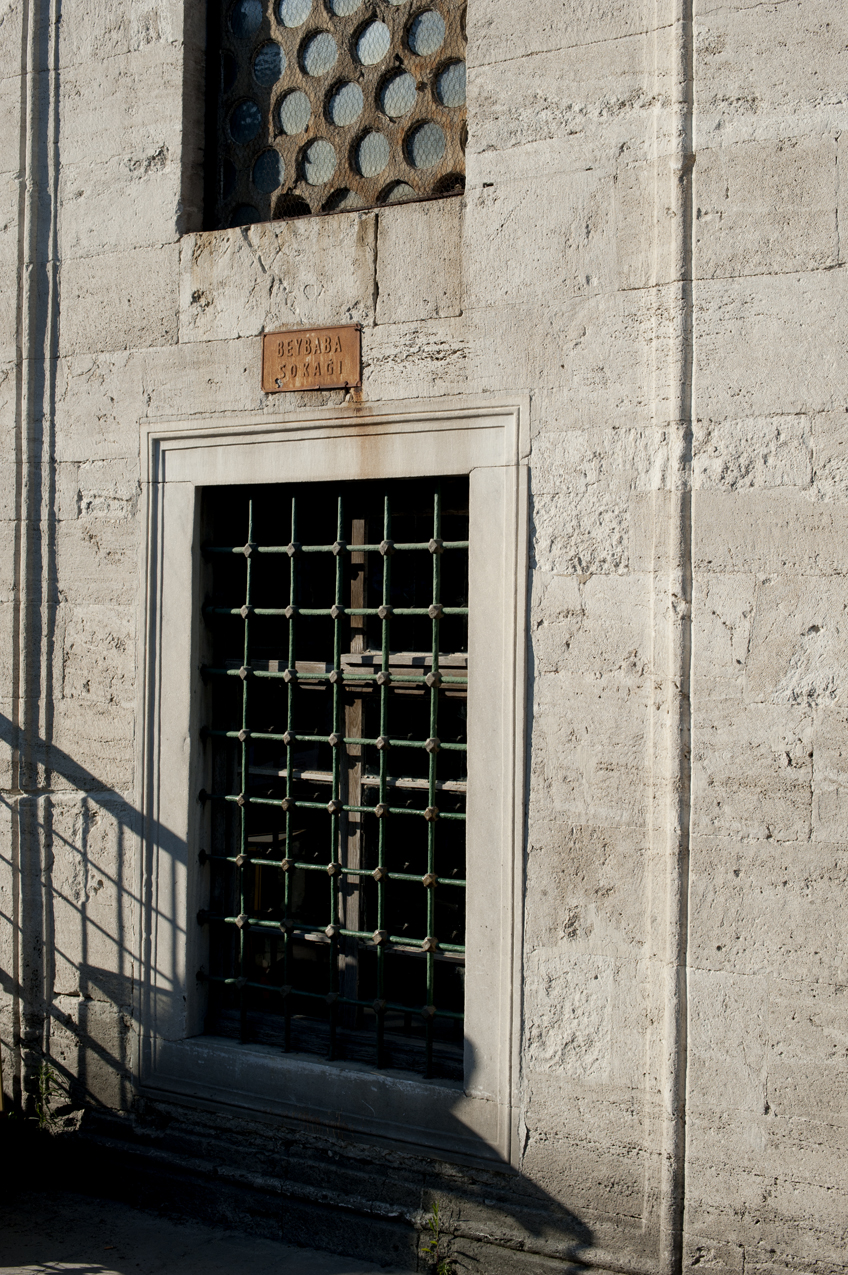
The area around the mosque is full of mausoleums like this one.
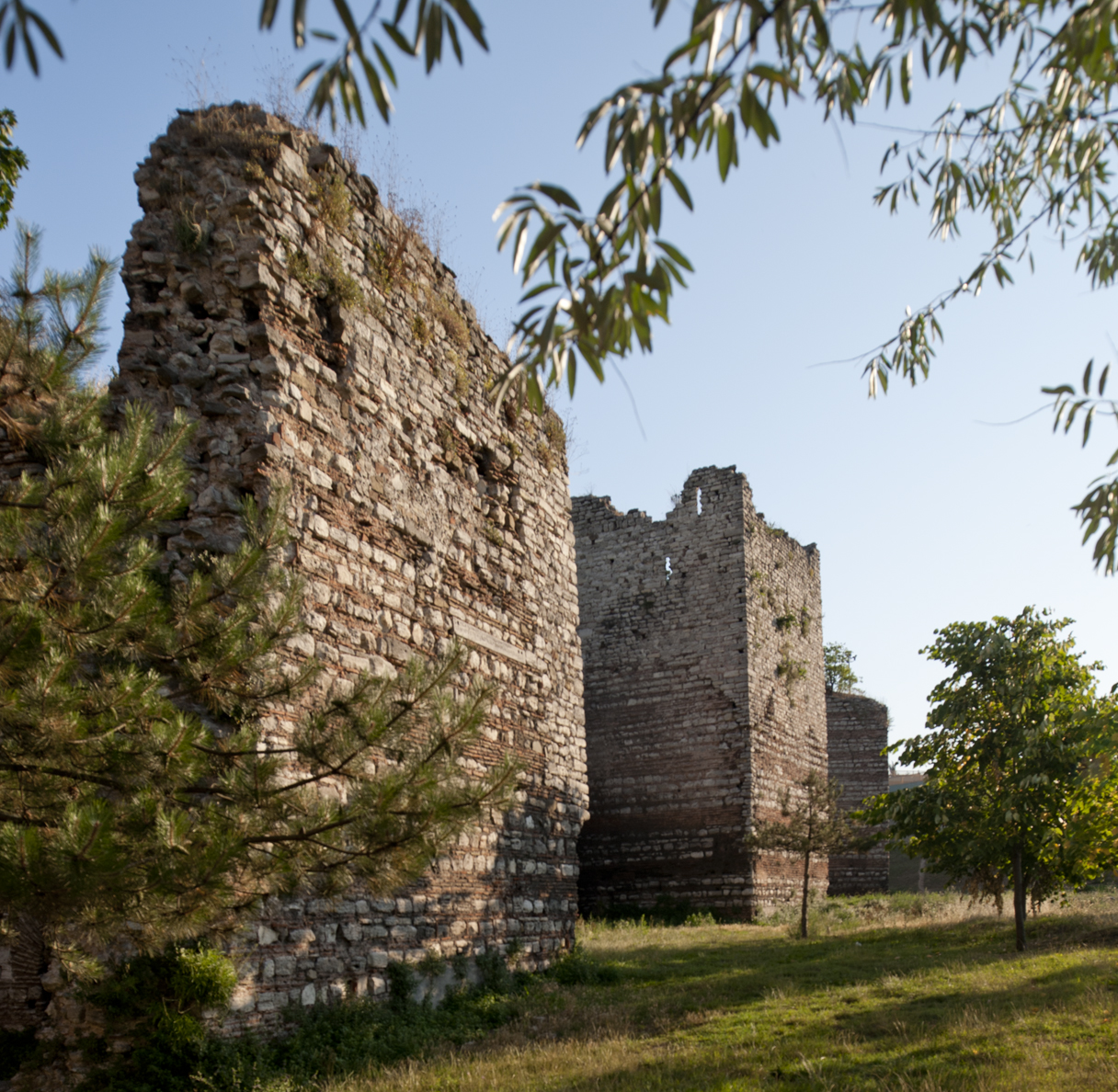
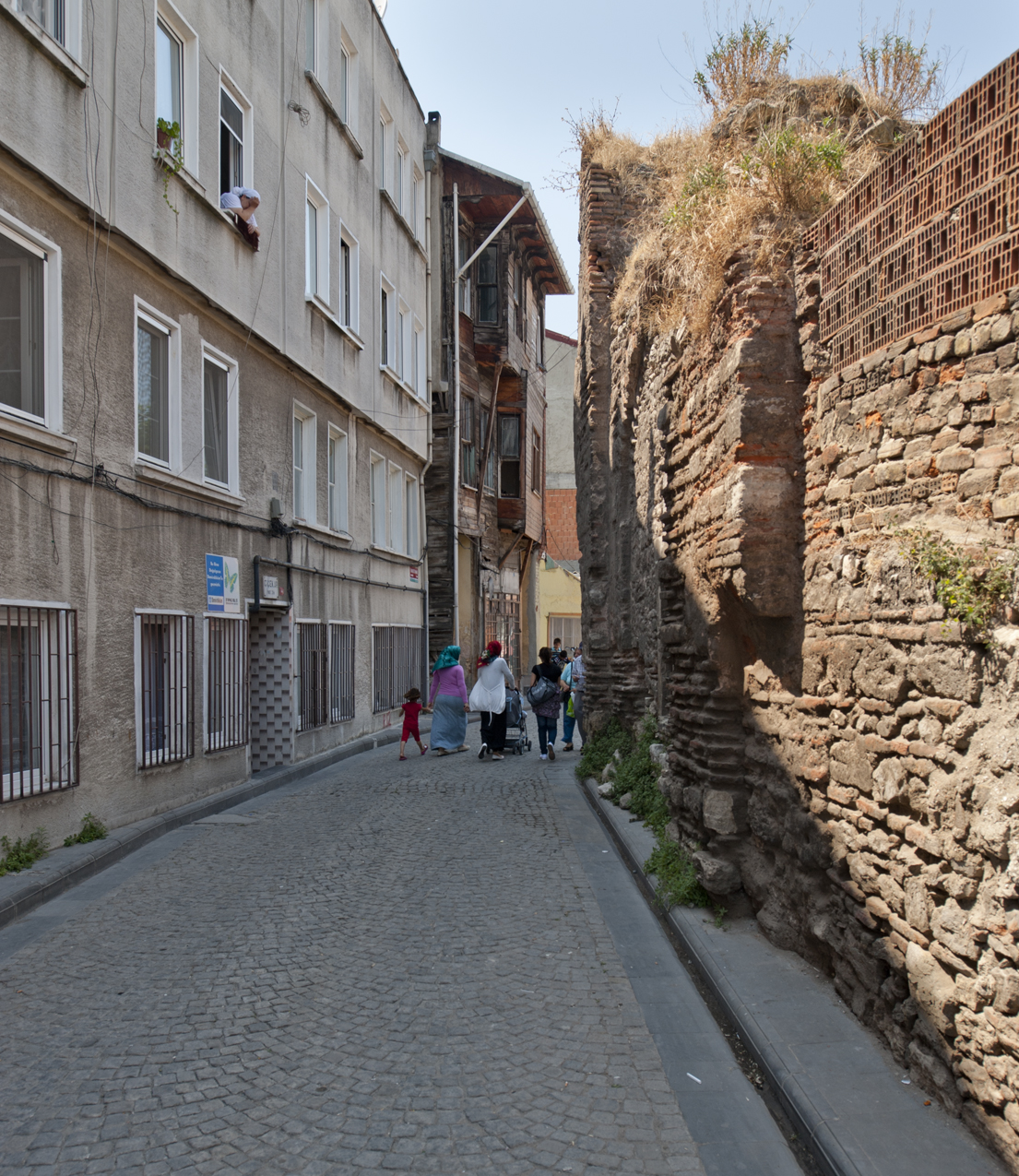
The great city walls, constructed by Theodosius II, still stand in tact, for the most part.

The neighborhood around the walls, Kasim Gosim, is particularly colorful.

A small gate in the wall provides one of the few means to penetrate the barrier.
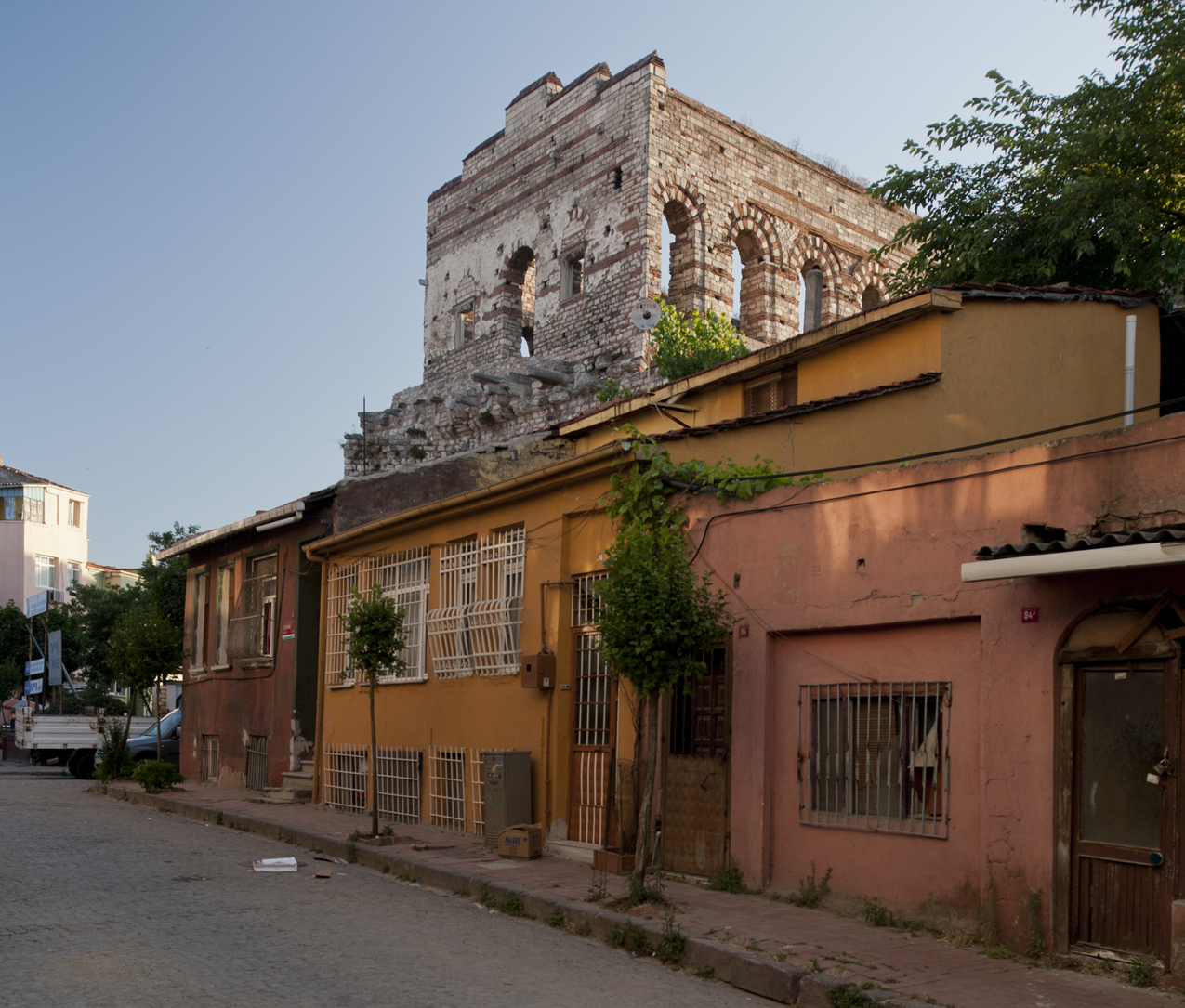
The palace of Constantine Porphyrogenitus pokes out of the neighborhood.

While the Ottomans saved the Byzantine churches, they let the palaces fall to ruin.

I'm sure that most of the houses around here have panoramic views, but on the ground, it's nice to get a brief glimpse out to the Golden Horn.

Not a bad spot to dock a boat, this was where I awaited my ferry to take me back down towards the center of the city.

Another view from a ferry, this one is from up the Golden Horn, back towards the Fatih Mosque (right), the Suleymaniye (center), and the Hagia Sophia (left).

I nice supper snack, this bread, which was stuffed with potatoes, was tasty, and made for me over an upside-down-wok-type device in the open air.

Mosque, Mosque, Mosque . . . Fish!

I set out on a mission today to see some of the mosques that I still had to cross off my list.  I took a long walk westward from my hotel near Hagia Sophia, and, probably as I should have expected, I ended up spending more time in a few of the mosques than I thought I would.  I’m a little worried that some of my regular readers will accuse me of posting too many similar images of mosques, but believe me, they are all different (the mosques, at least), and I’ve gotten a lot out of seeing all of them.

In the evening, I didn’t really have any good idea what to eat, so I meandered down to the water, thinking that I’d cross the Golden Horn to have a meal on the Beyoglu side, but ended up getting distracted by the delicious fish sandwiches that are sold on the docks before I made it very far.

The photos are below (click to enlarge).  Allez Schleck!

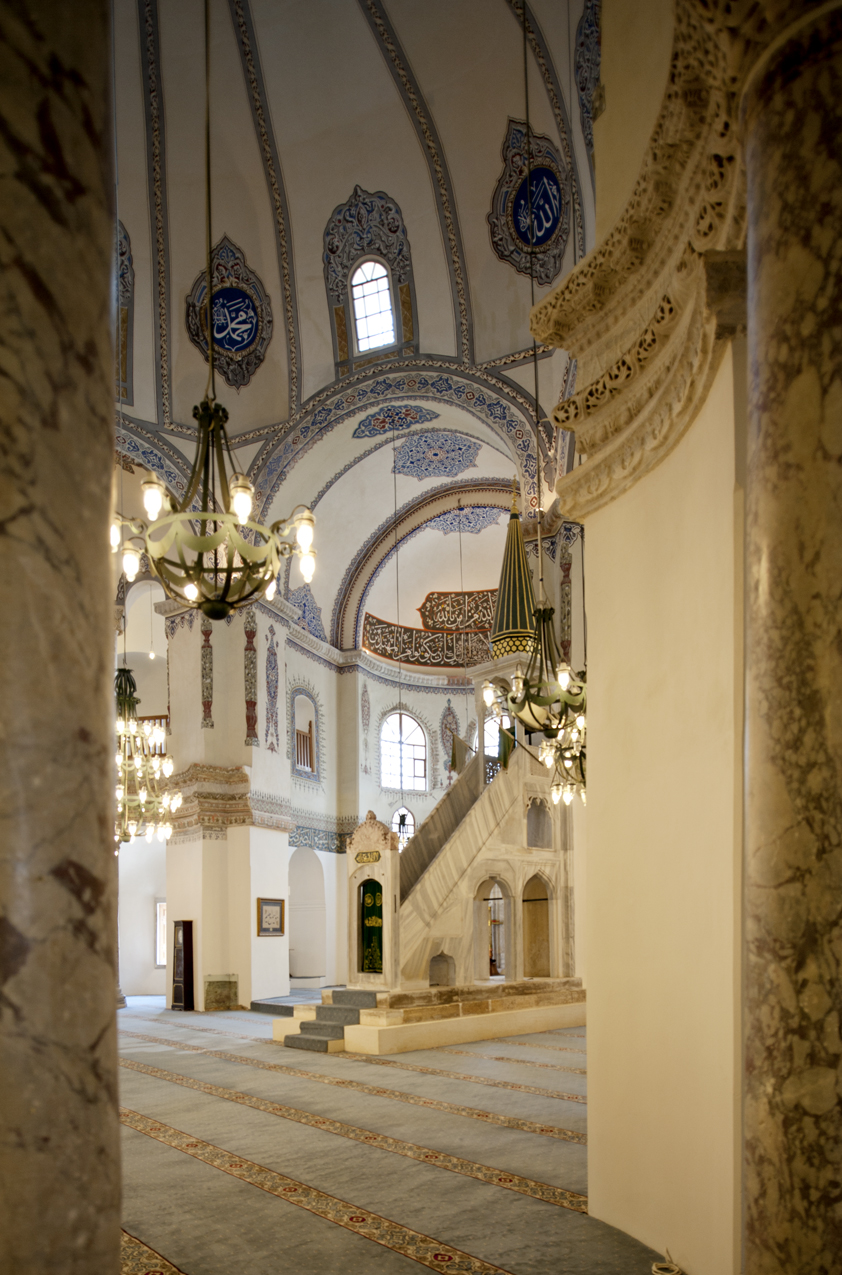
Yes, another day spent looking at mosques. This is the Little Hagia Sophia, which was also built around the same time as its larger cousin. As the name implies, this one is much smaller.

The interior of the Little Hagia Sophia is as intimate as the larger Hagia Sophia's is vast.

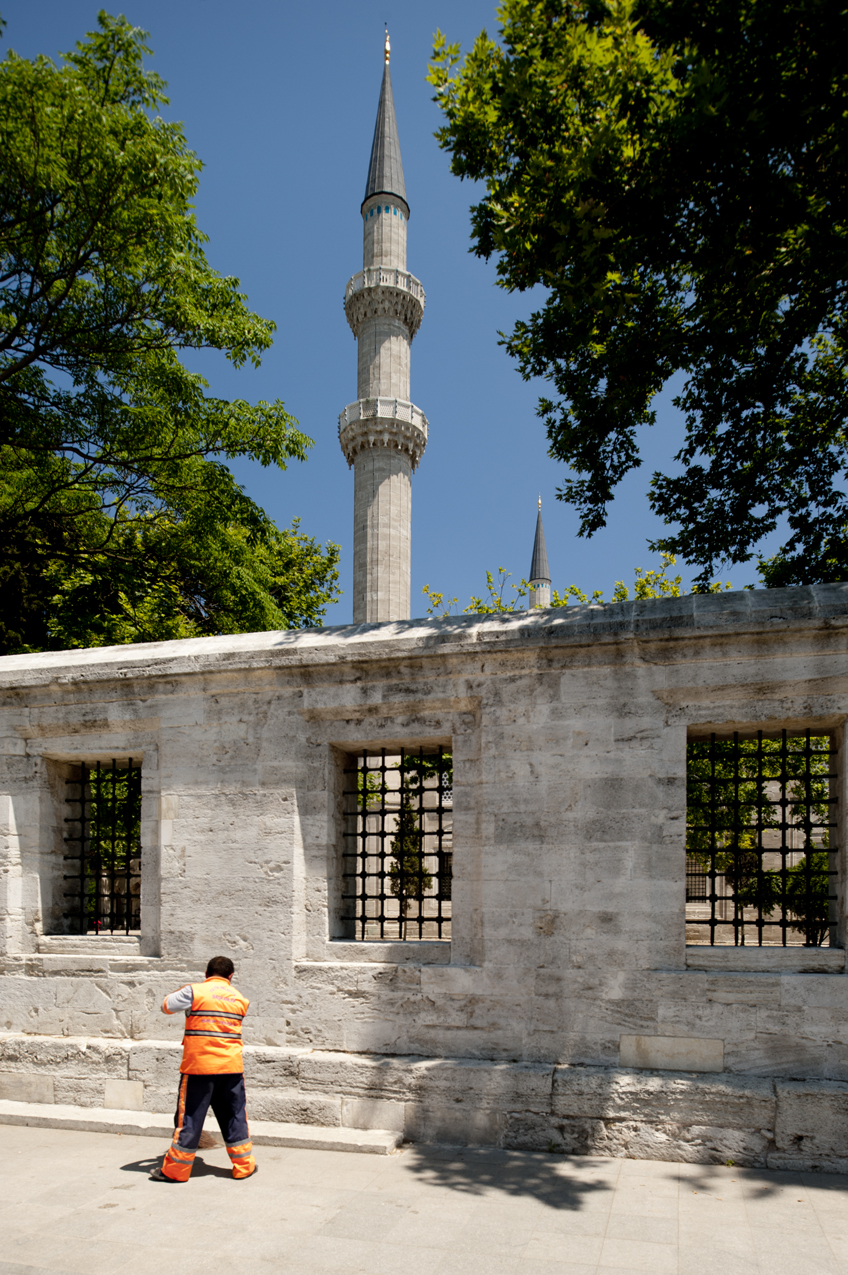
This worker is taking advantage of fact that there is always a nice breeze under the arcades around the mosques.

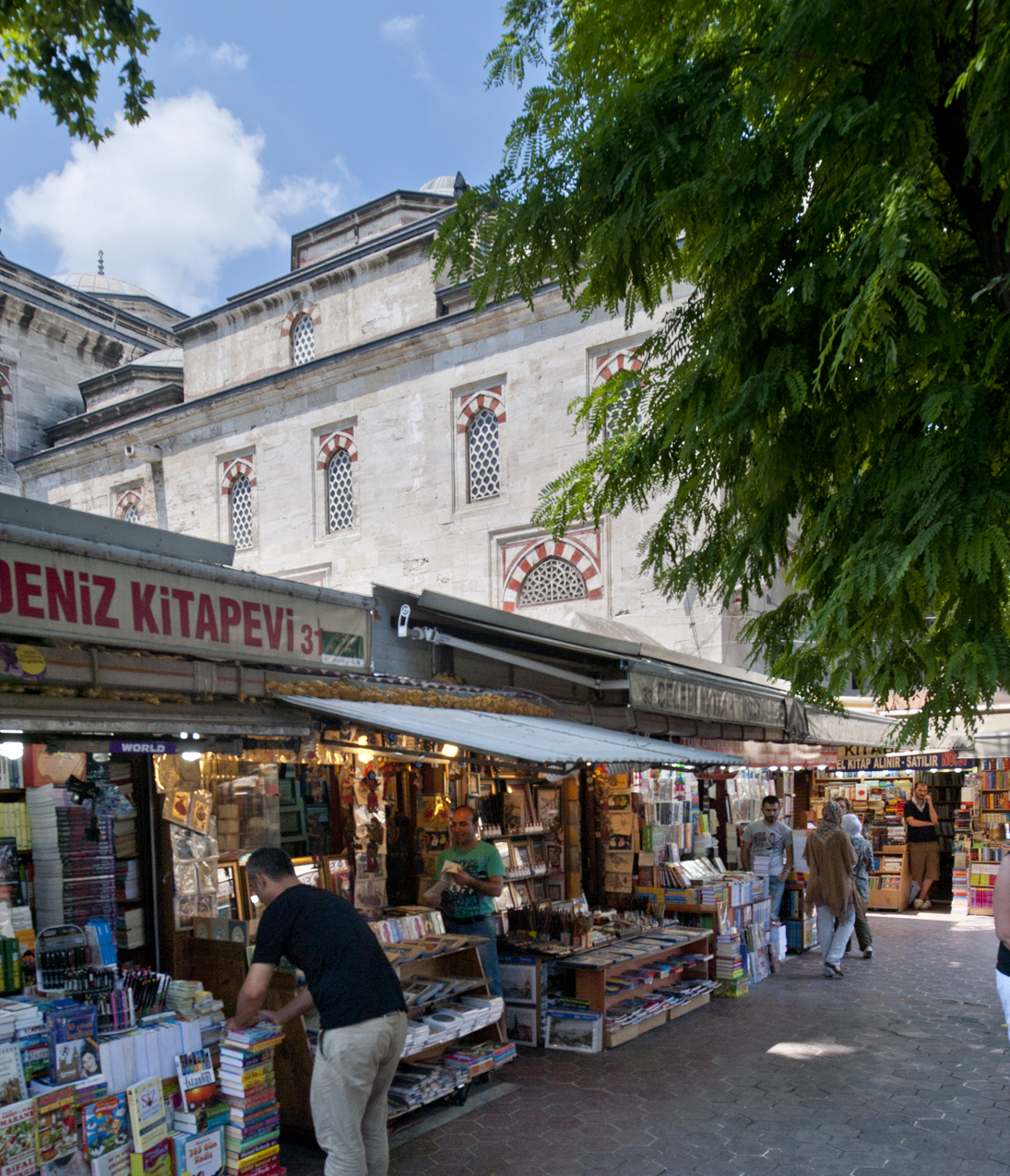
The Book Bazaar is located in the shadow of another enormous mosque, the Beyazit.

Cool shade is also provided by the walls surrounding the mosque courtyards.

The Beyazit Mosque was one of the first grand mosques to be built by the sultans. It is far more ornate on the interior than anything that Sinan produced.

Another Sinan design, the Sehzade Mosque was the architect's first major mosque in the city.

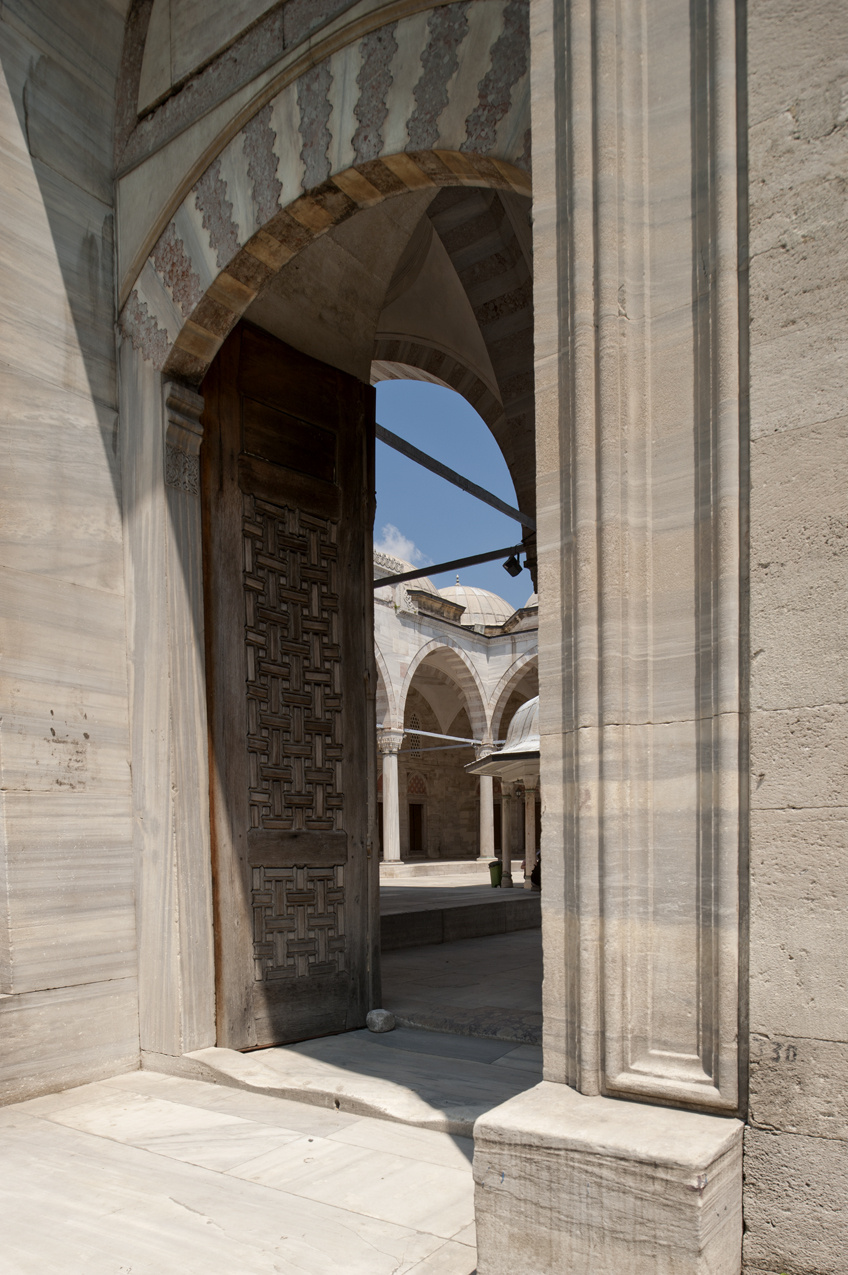
The Sehzade Mosque must have been well used, as the worn marble threshold makes clear.

The fountains in the mosque courtyards are still actively used, and seem to be important meeting places.

The interior of the Sehzade is evocative of Sinan's later grand mosques to come. I was sitting in the back when prayers began, and stayed there inconspicuously throughout the ceremony. It was a powerful experience to see and hear the mosque in action.

Every surface in the mosque resonated with the sounds of the imam's melodious prayers.

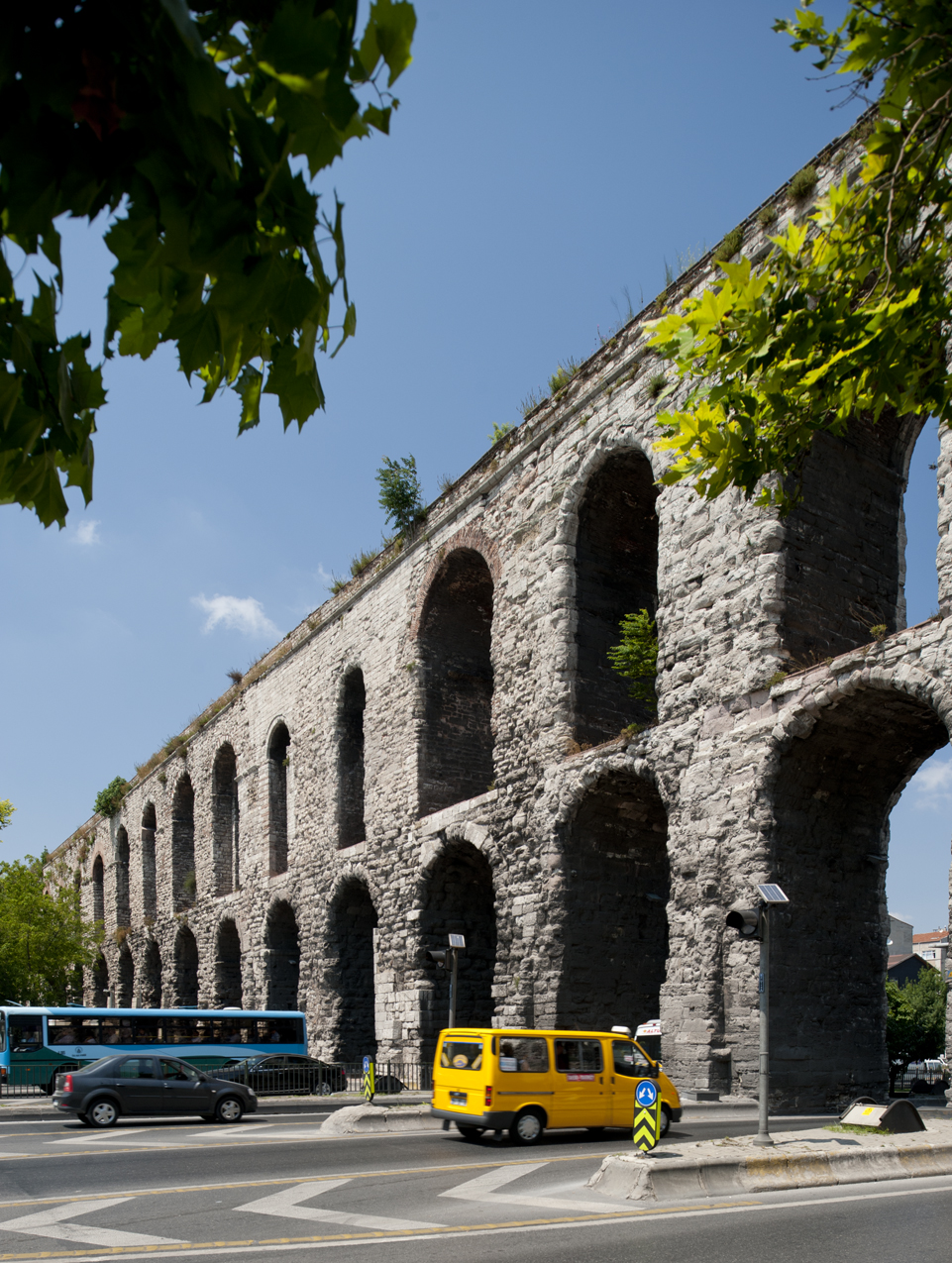
The Aqueduct of Valens is an old Roman artifact that now serves as a huge traffic obstruction.

I made a trek to see this mosque, which was built as an ancient church, only to discover that it is closed for renovations.

Istanbul is composed of layers of history built on top, or crammed next to each other.

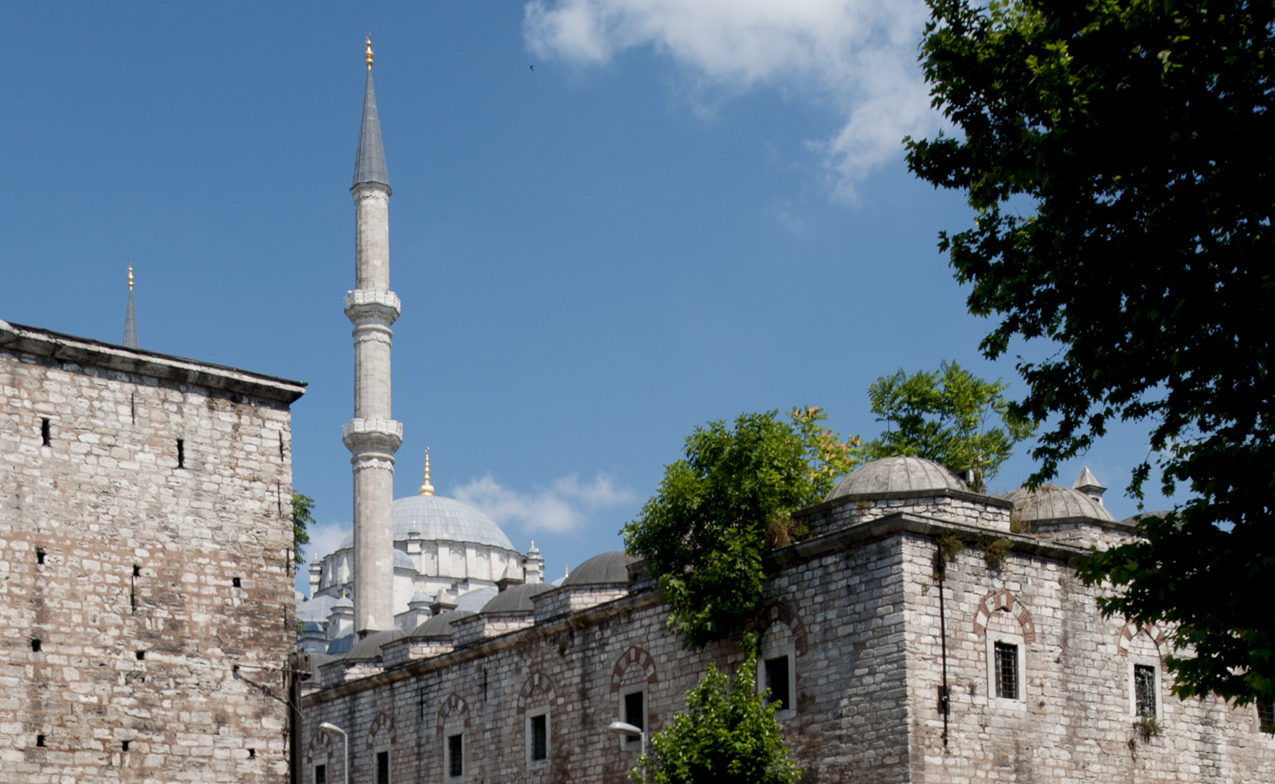
I made a twenty minute walk out of my way to visit the Fatih Mosque, only to discover, once again, that it is currently being renovated. The tiny glimpses that I got looked impressive, though.

From a distance, it's pretty hard to tell that the Fatih Mosque is being renovated. This does not help those who see it in the distance, and are intrigued enough to make their way to see it (I'm speaking from experience).

Corn on the cob is a popular street snack. The setting's not so bad, either.

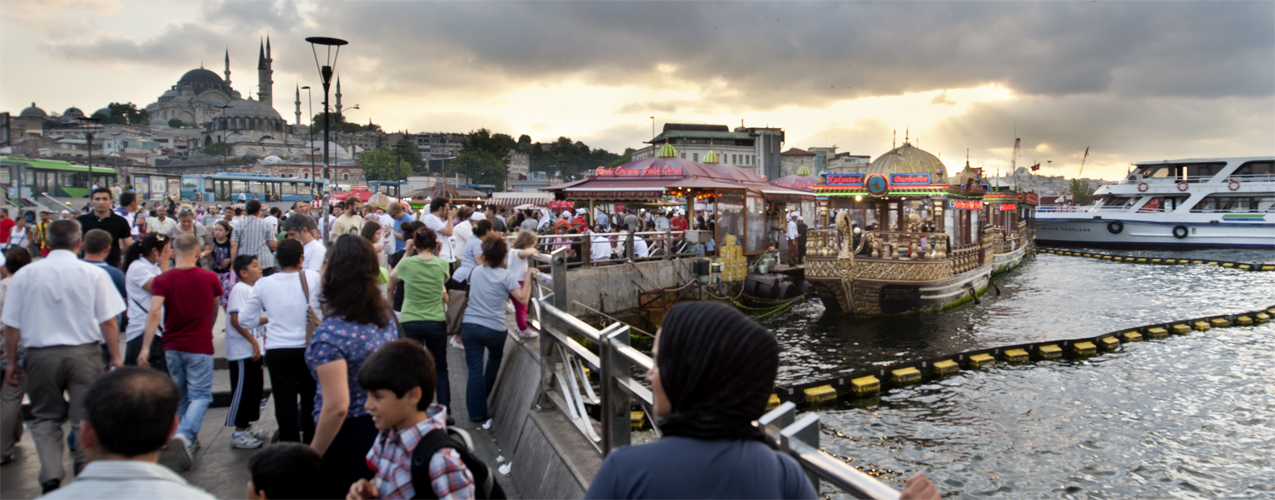
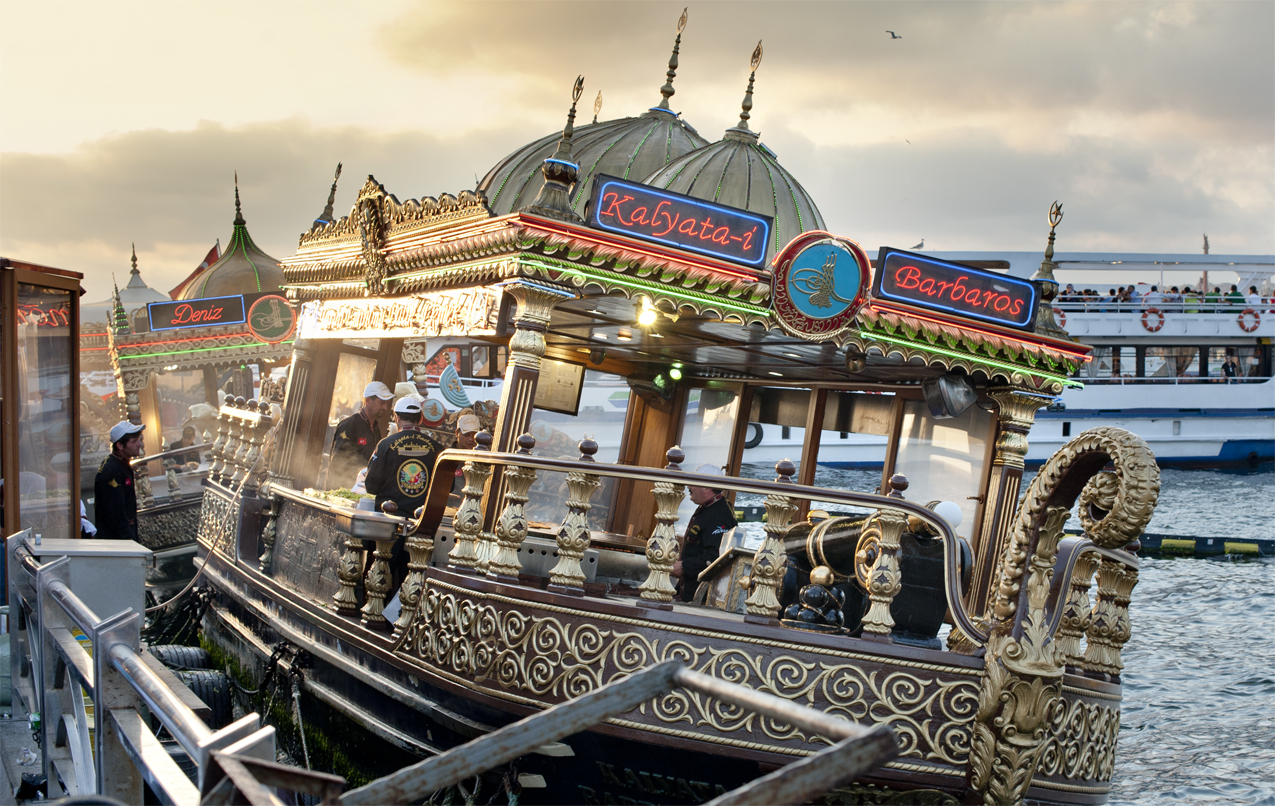
These bobbing boats serve what has become my new favorite street food, the local fish sandwiches. Throw in a backdrop of the Suleymaniye on the hill, and I can't resist.

Although I try to sample as much of the food as I can, I've become addicted to these sandwiches, known as "balik ekmek," or "fish and bread." I could not resist getting one for dinner.

Lemon juice and salt are provided on the tiny tables. Nothing else is needed.

I'm not the only one addicted to these sandwiches. The tables were crammed with locals.

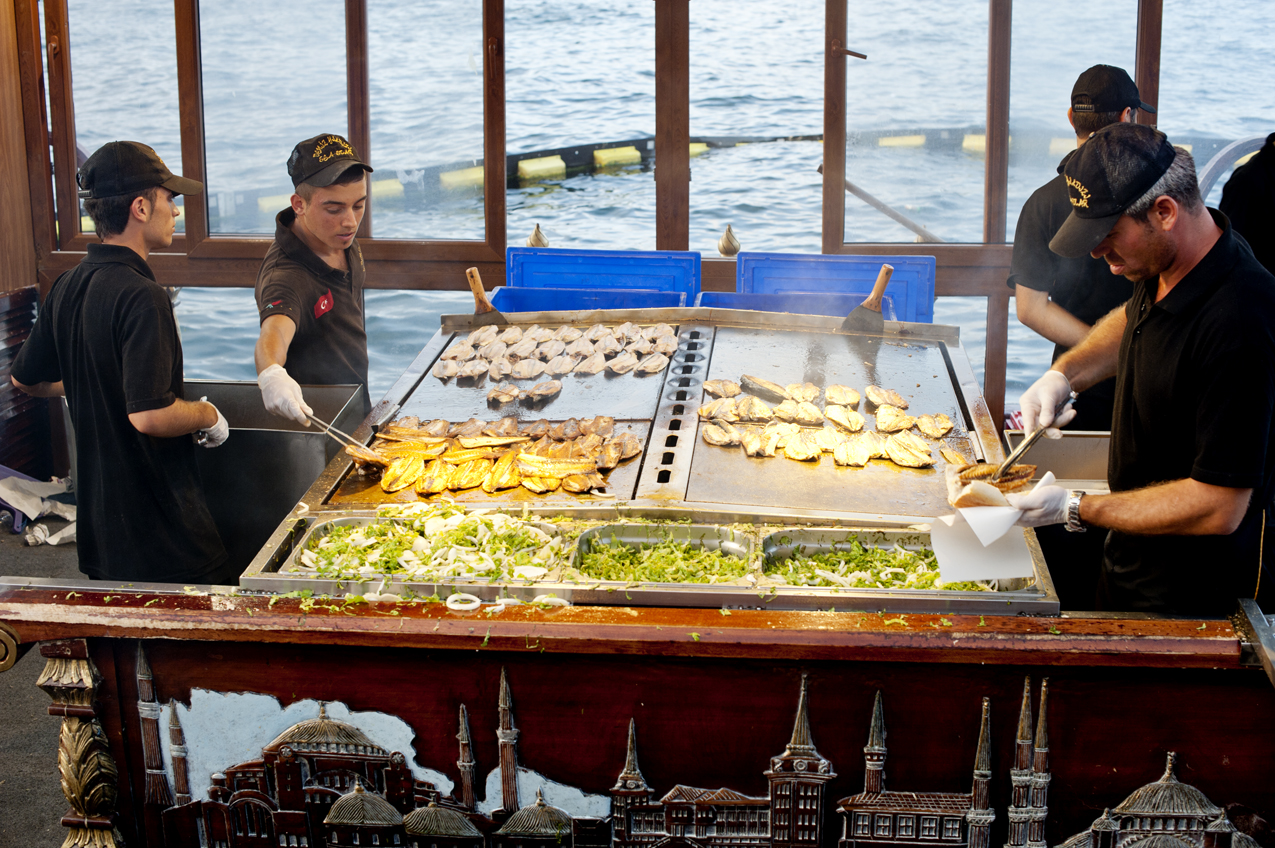
I can't imagine that it's easy to cook in these boats, but I guess the guys have had enough practice.

I couldn't resist snapping another photo of the New Mosque, which isn't so new (it was built in the 17th Century).

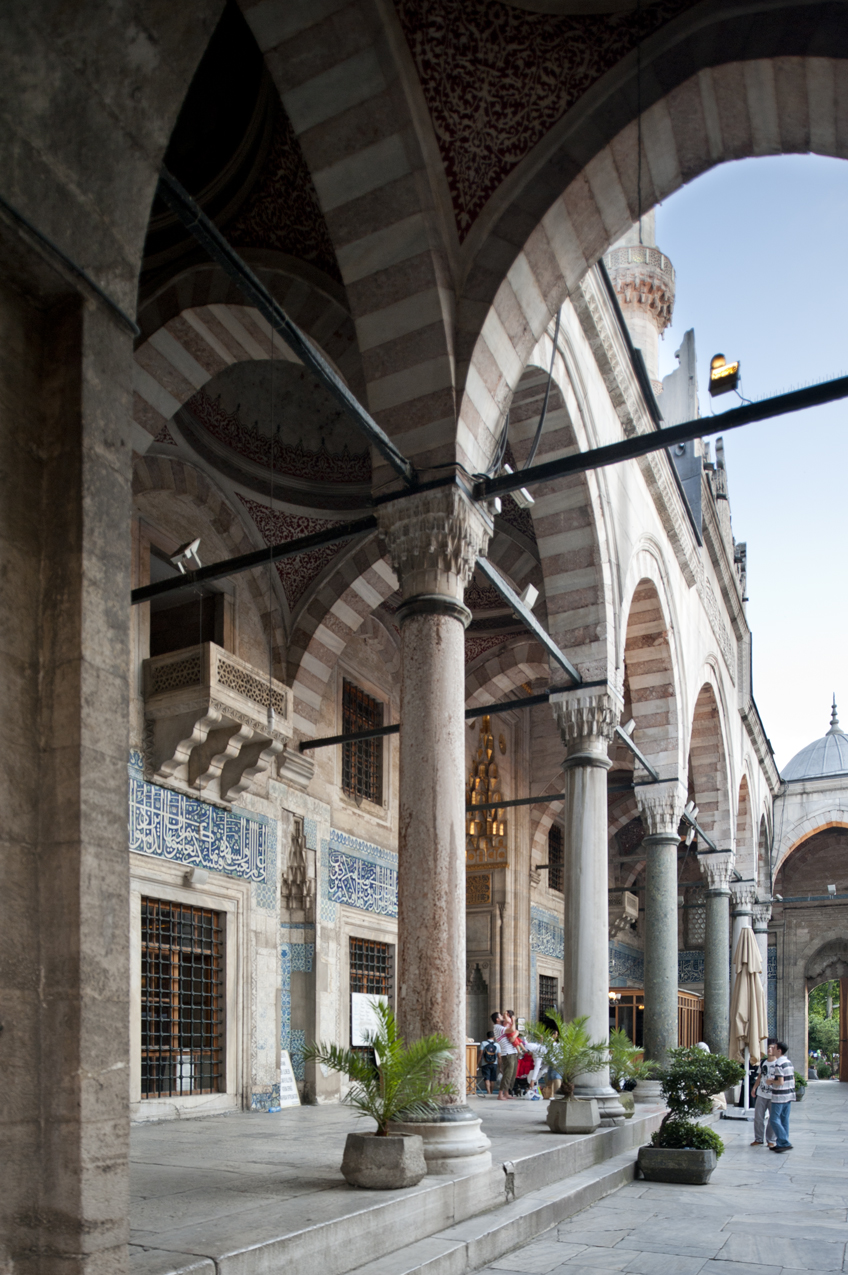
The New Mosque's arcade has some blue tile work that is vaguely reminiscent of the Timurid tile work that I encountered in Uzbekistan.

The mosque is in an extremely busy district, but the courtyard was surprisingly peaceful.

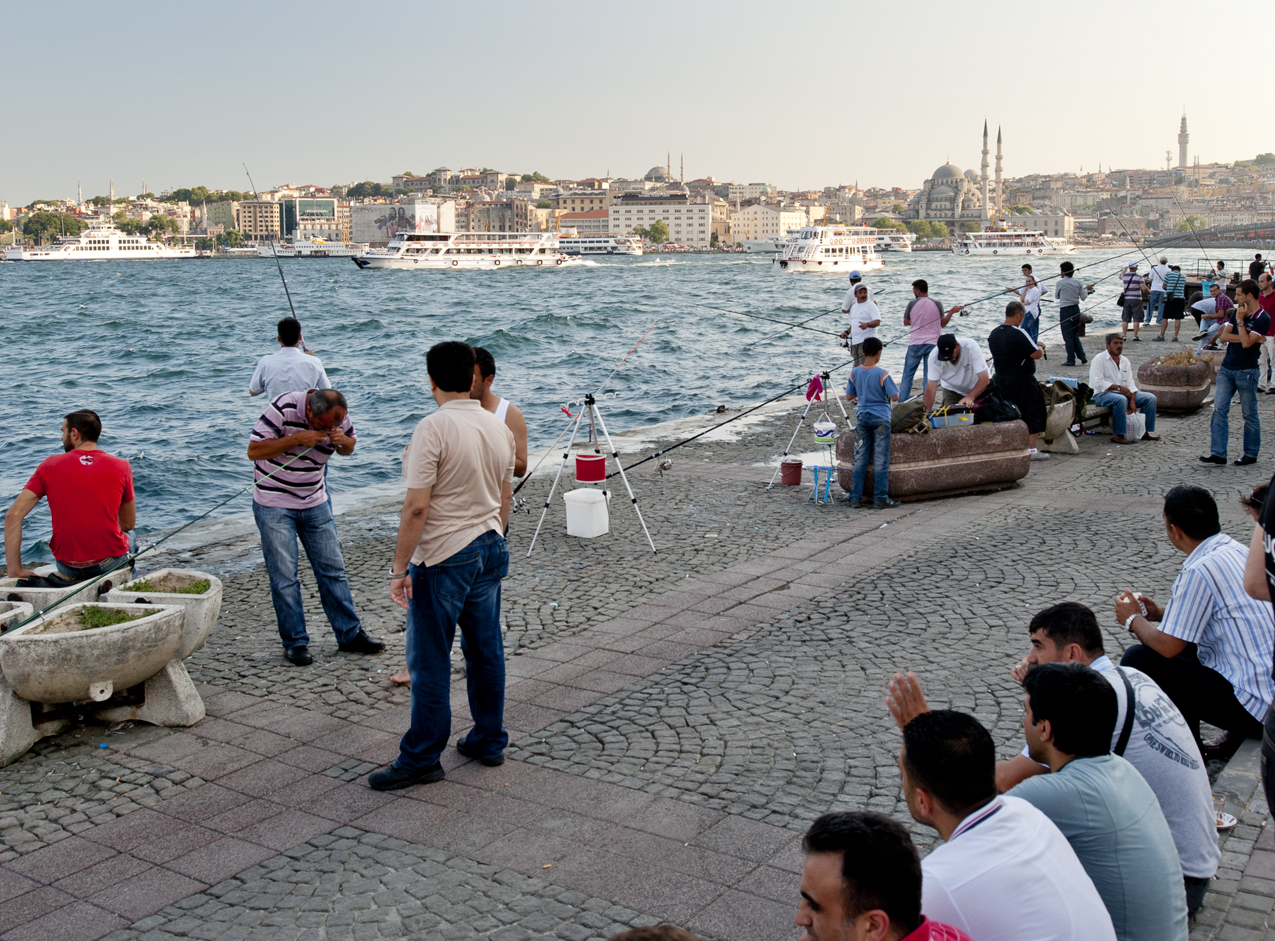
The Galata Bridge seems to be the most popular fishing spot. It's funny to see these people with enormous fishing poles pulling up sardines.

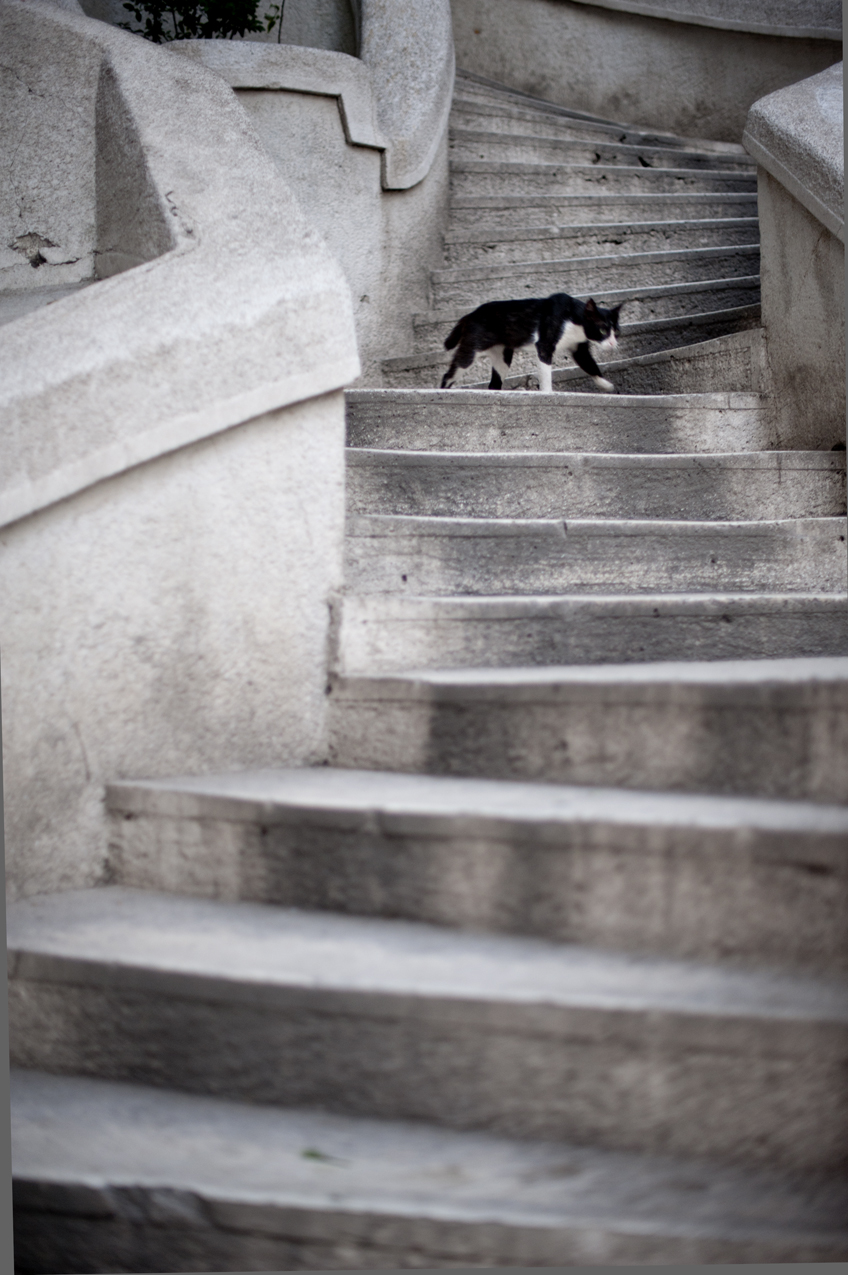
Istanbul has a huge population of ferrel cats. I sometimes hear them serenading me at night.

This guy sold me a kilo of tasty cherries for $2.

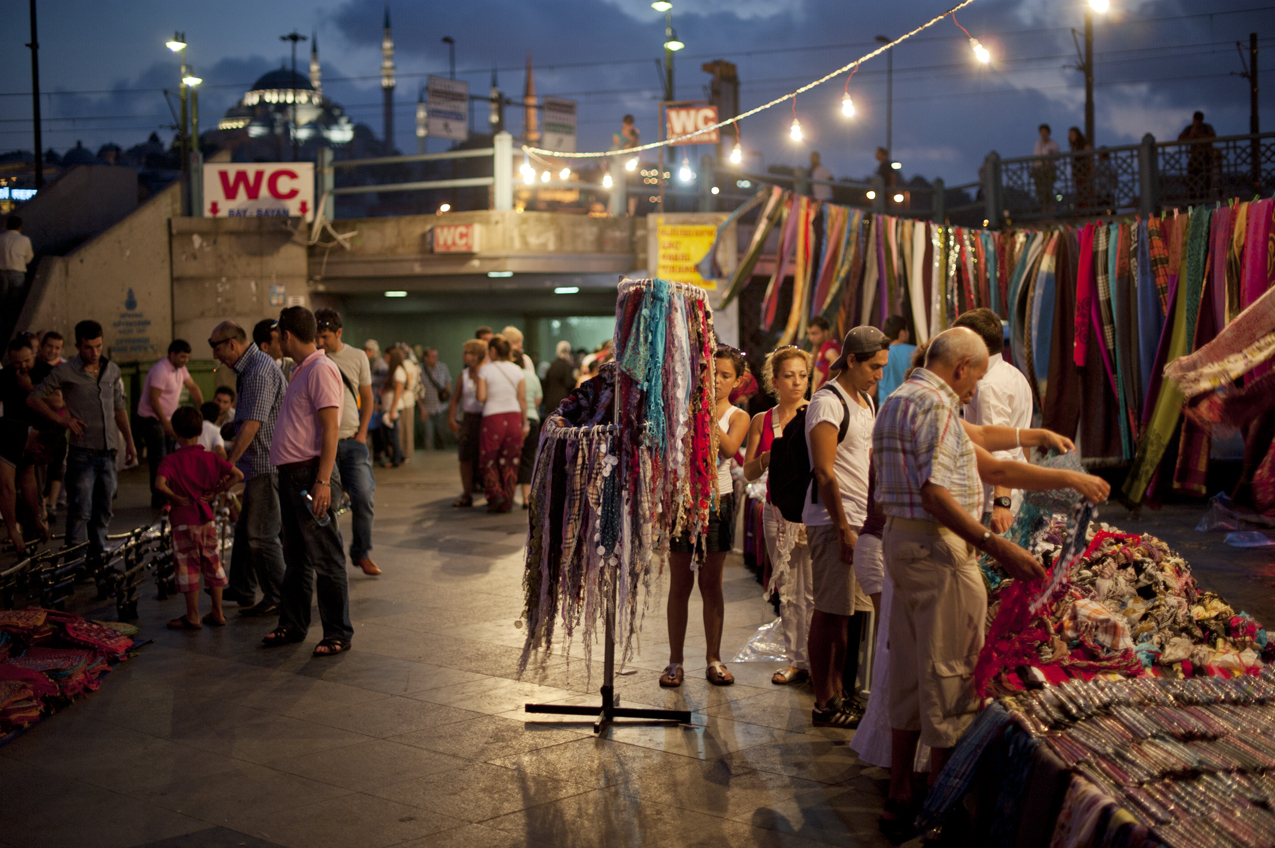
The quay in Eminomu becomes an open air market at night.


Cruising up the Bosphorous

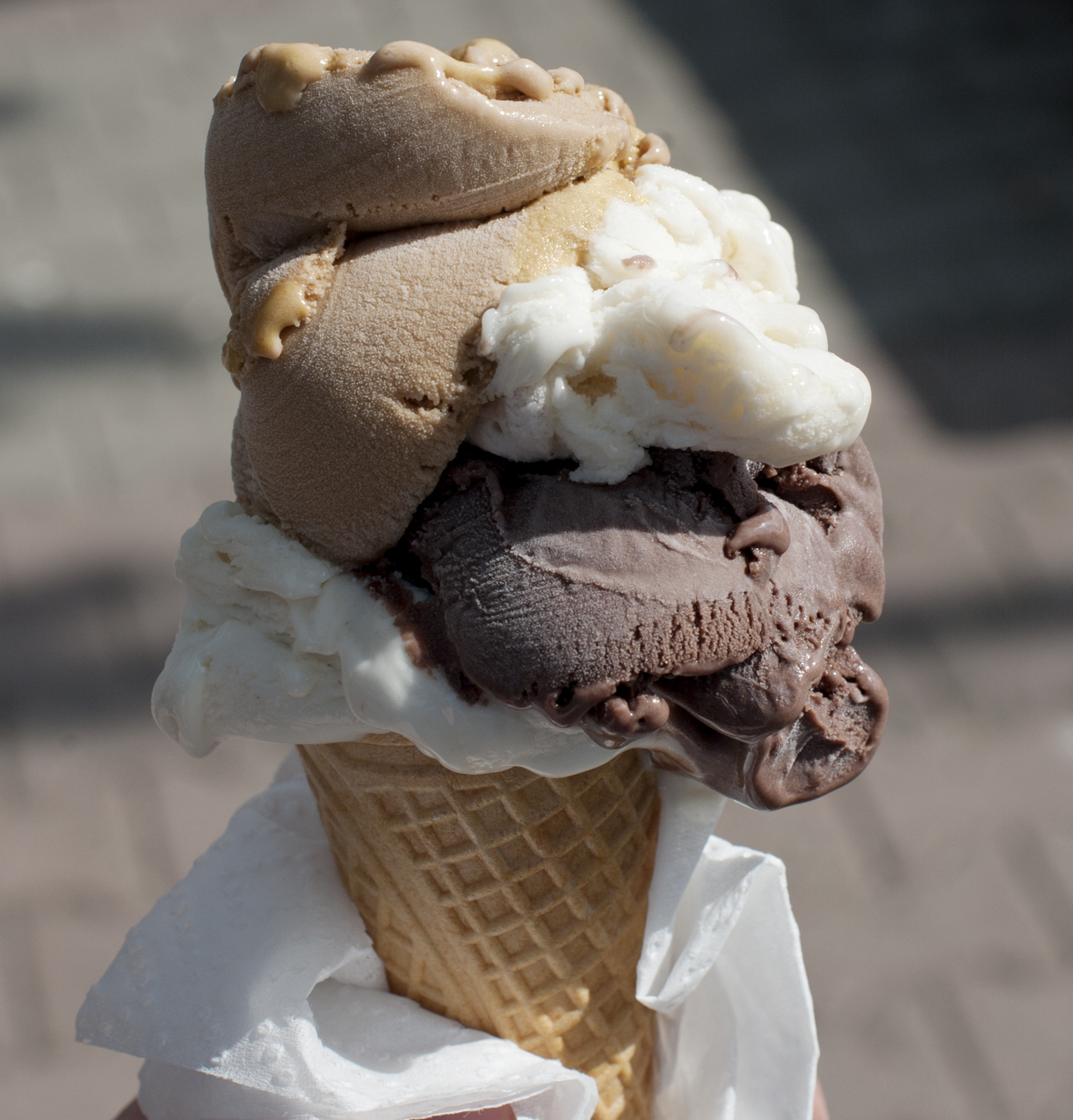
Yesterday, I had planned to take a ferry up the Bosphorous, and explore some of the settlements on the shores.  However, the manager at my hotel convinced me to join a tour cruise that was making the same trip.  While the boat was comfortable, and food was served, I think that I would have preferred making the trip on my own by ferry.  I didn’t really have much time at all to explore.  Our first stop was at a fishing/beach village all the way up by the Black Sea.  Unfortunately, we stopped in the small harbor, which was also part of the beach/swimming area, and could not walk ashore.  Stupidly, I also forgot my swim trunks on my hotel bed, so the 45-minute stop was not all that great for me.  Our next stop only lasted 15 minutes, and I just had enough time to get an ice cream, and walk around a little bit.

All in all, though, I’m glad that I made the trip, although I would have appreciated a little more freedom.  It was nice to get a sense of the city from the water.

Here are the pictures:

We made our all the way up to the mouth of the straight at the Black Sea. This little fishing village was close to the Black Sea, and had an old Byzantine castle overlooking on a point up above.

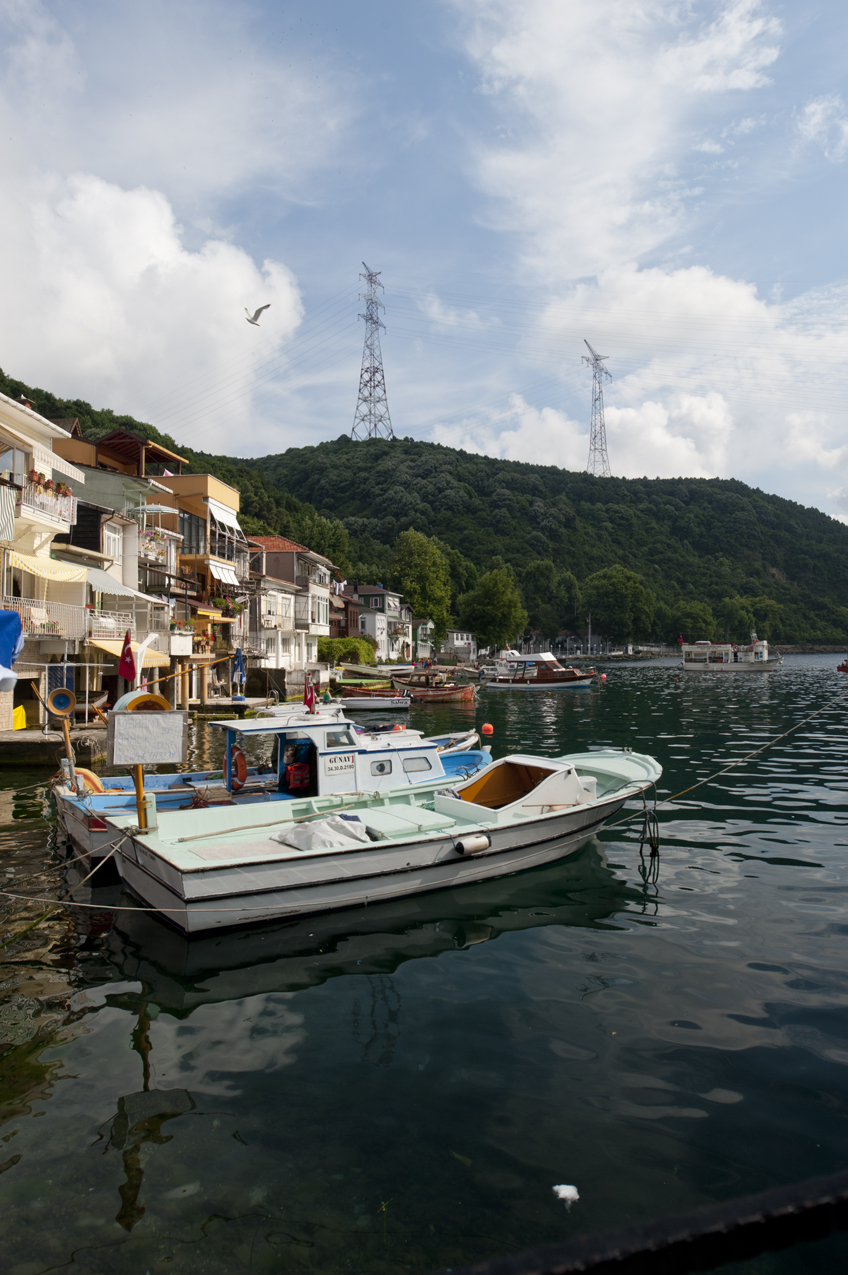
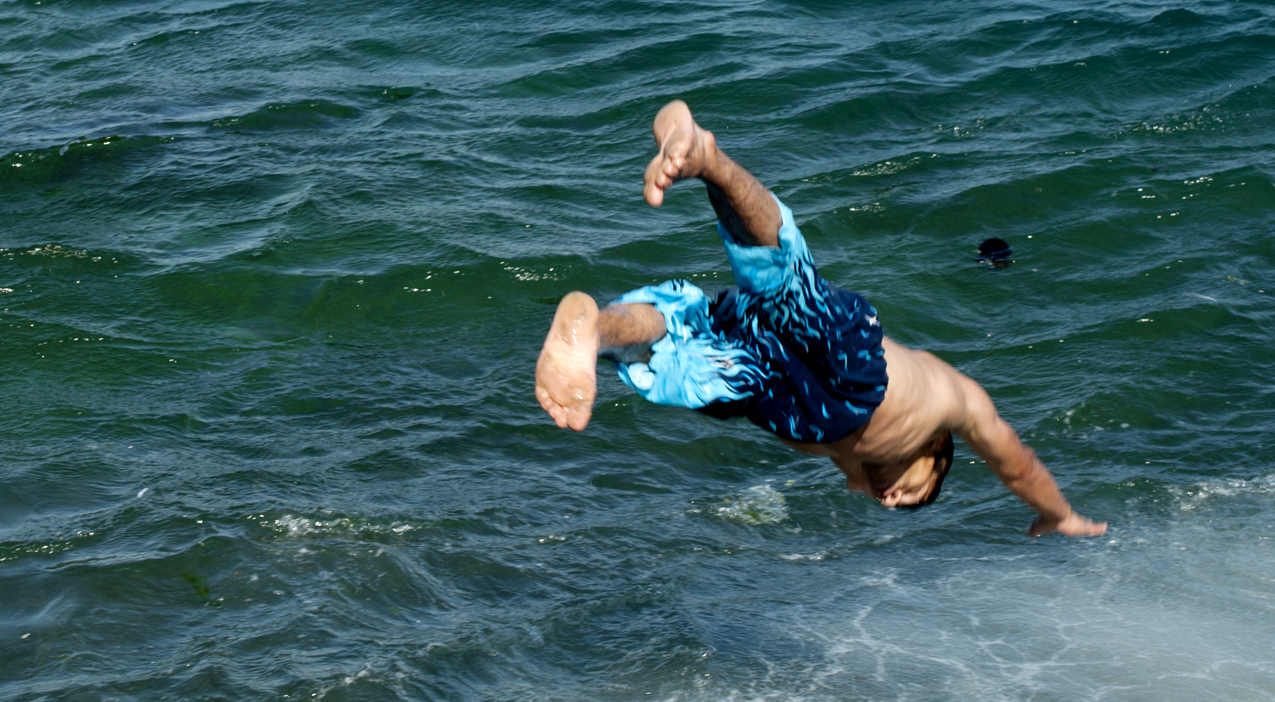
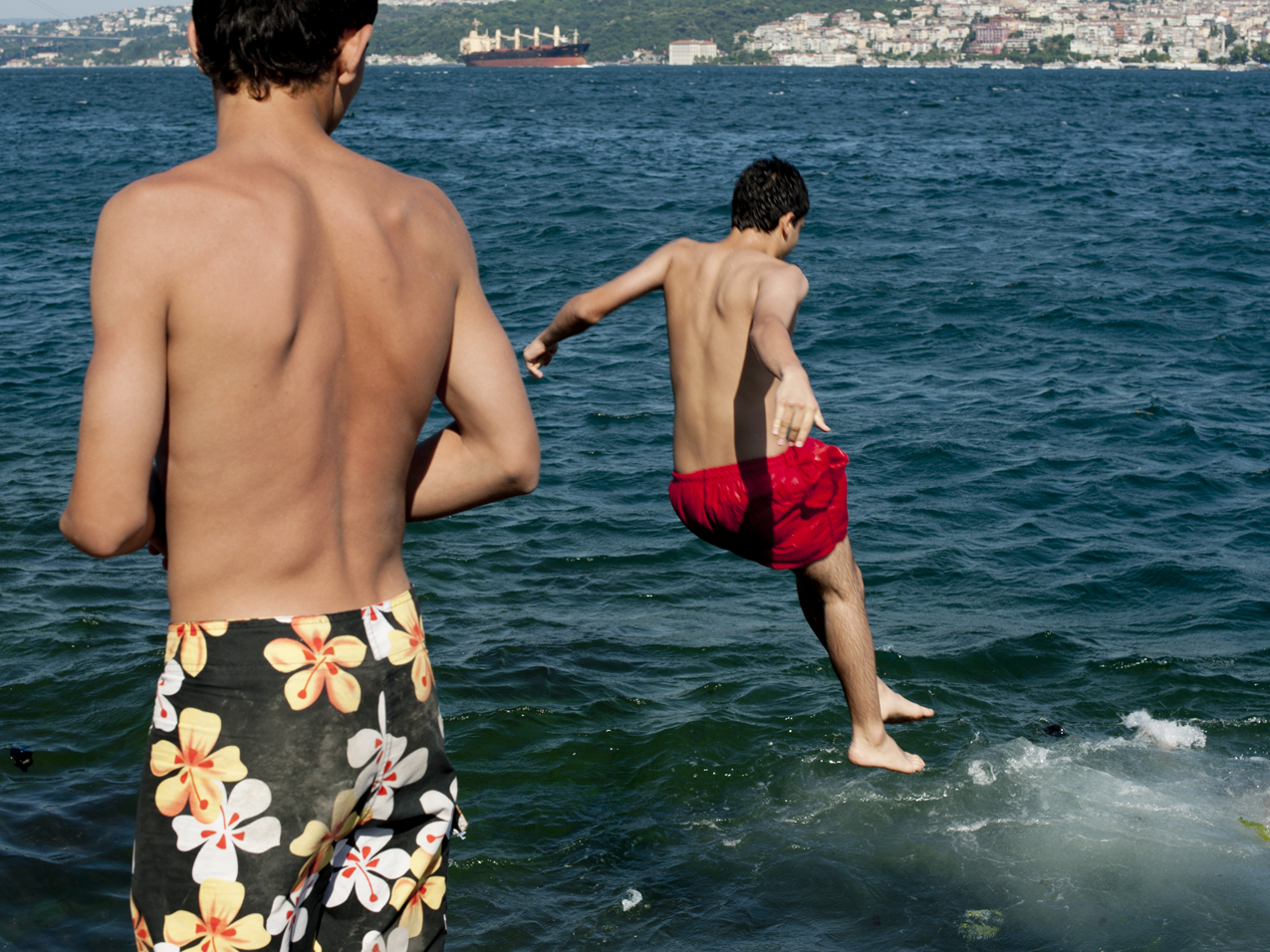
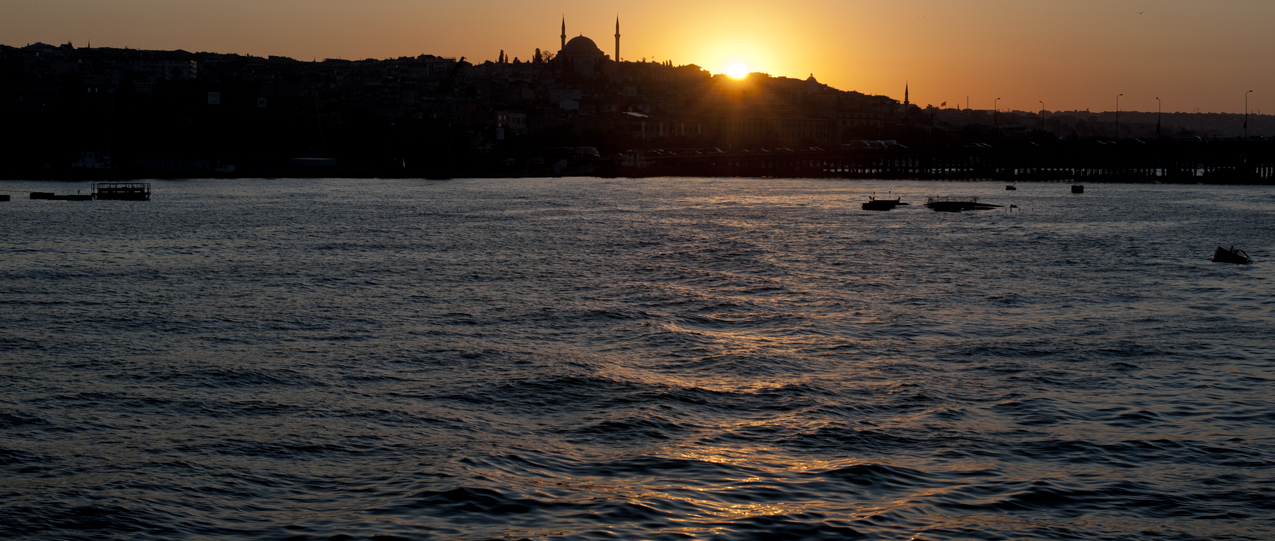
We stopped at the town pictured in the photo on the top of this post for swimming. Like an idiot, I forgot my swim trunks on my hotel bed. These people were avoiding the crowds at the beach.

I caved in, and got some ice cream at a fishing village on the asian side. This one had vanilla, chocolate, and caramel.

This little village had what seemed like one fish restaurant per inhabitant.

Right around here, on the European side, a house just sold for $120 million.

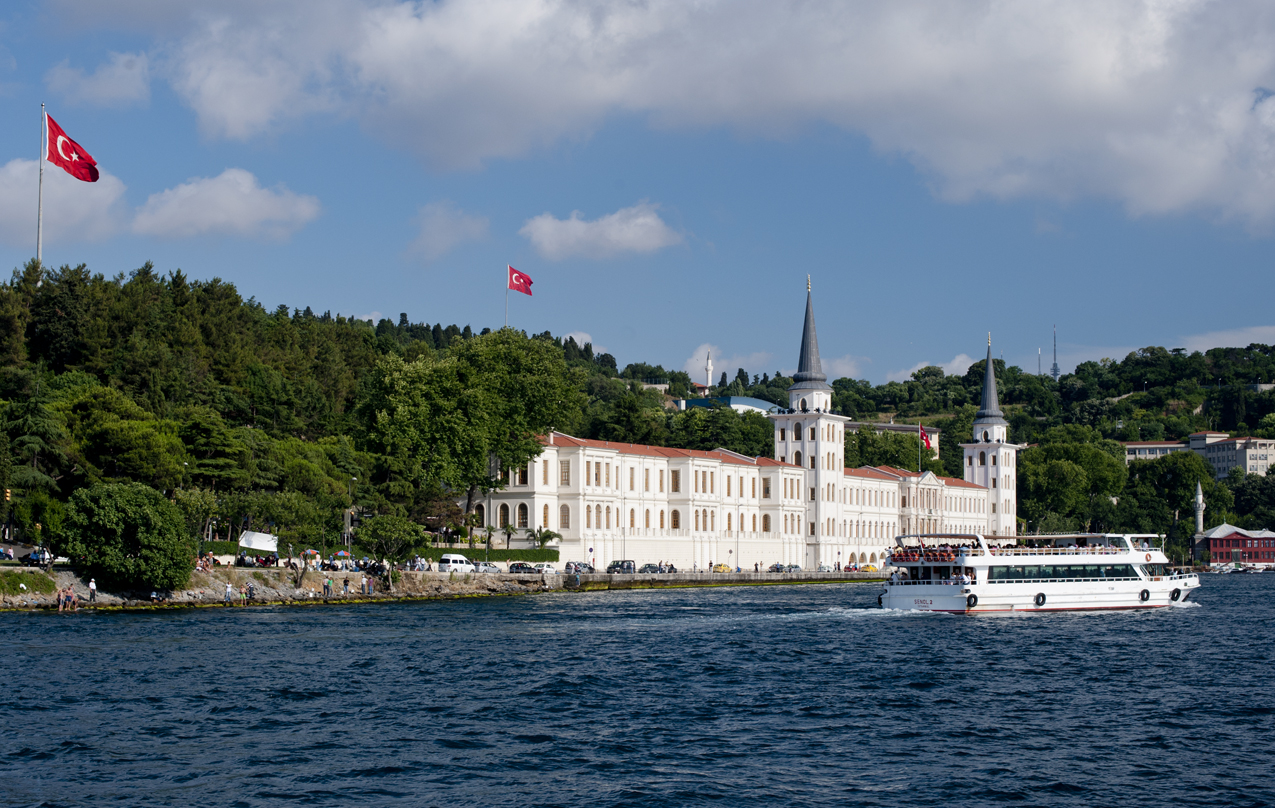
This is a famous Turkish military academy. Some names with dubious reputations graduated from here. It's a nice setting, though.

Before this bridge was built in the seventies, the only way that Istanbullus could reach the different parts of their city was by boat.

A view towards Uskudar, on the asian side

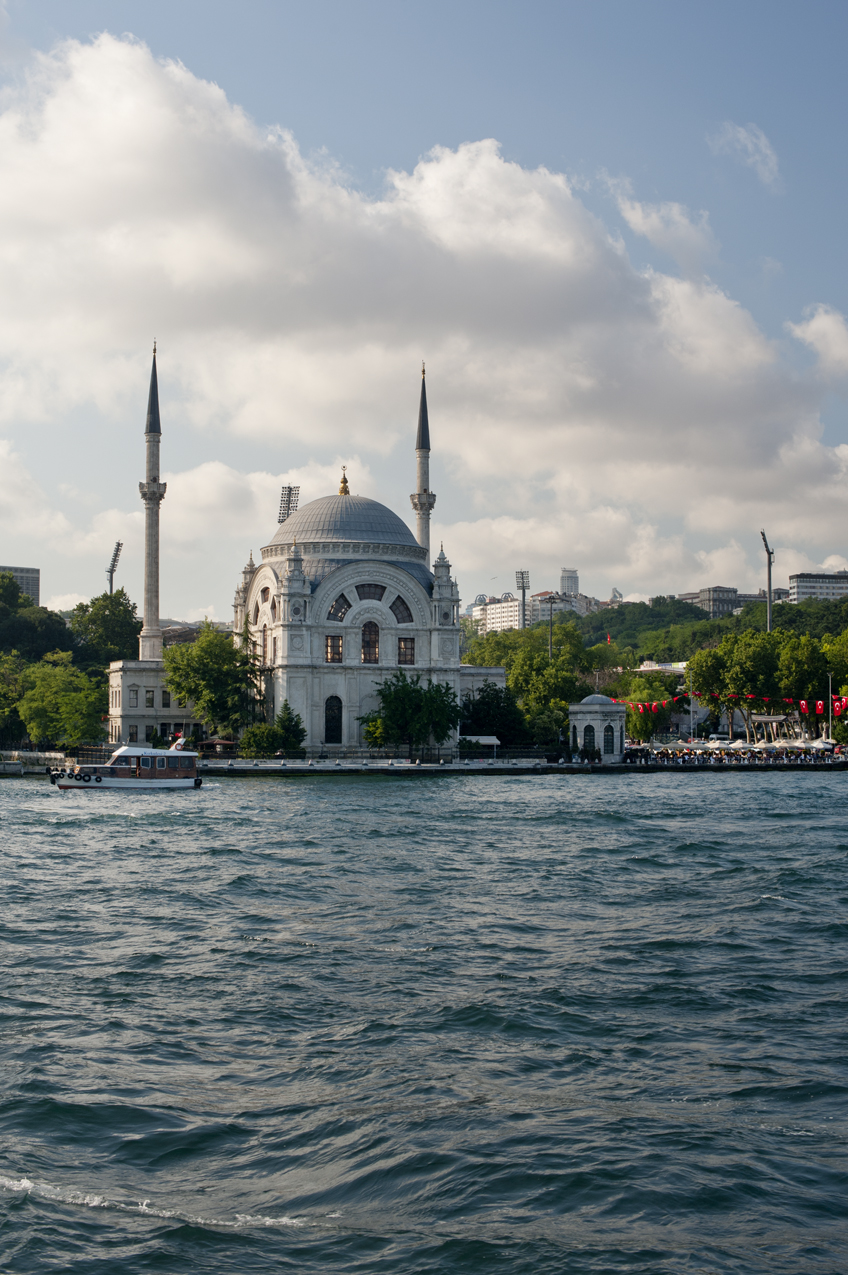
The Dolmabahce Palace, pictured here, was built in the 19th Century, and soon replaced Topkapi as the sultan's preferred residence. Ataturk ended up moving in when he took power.

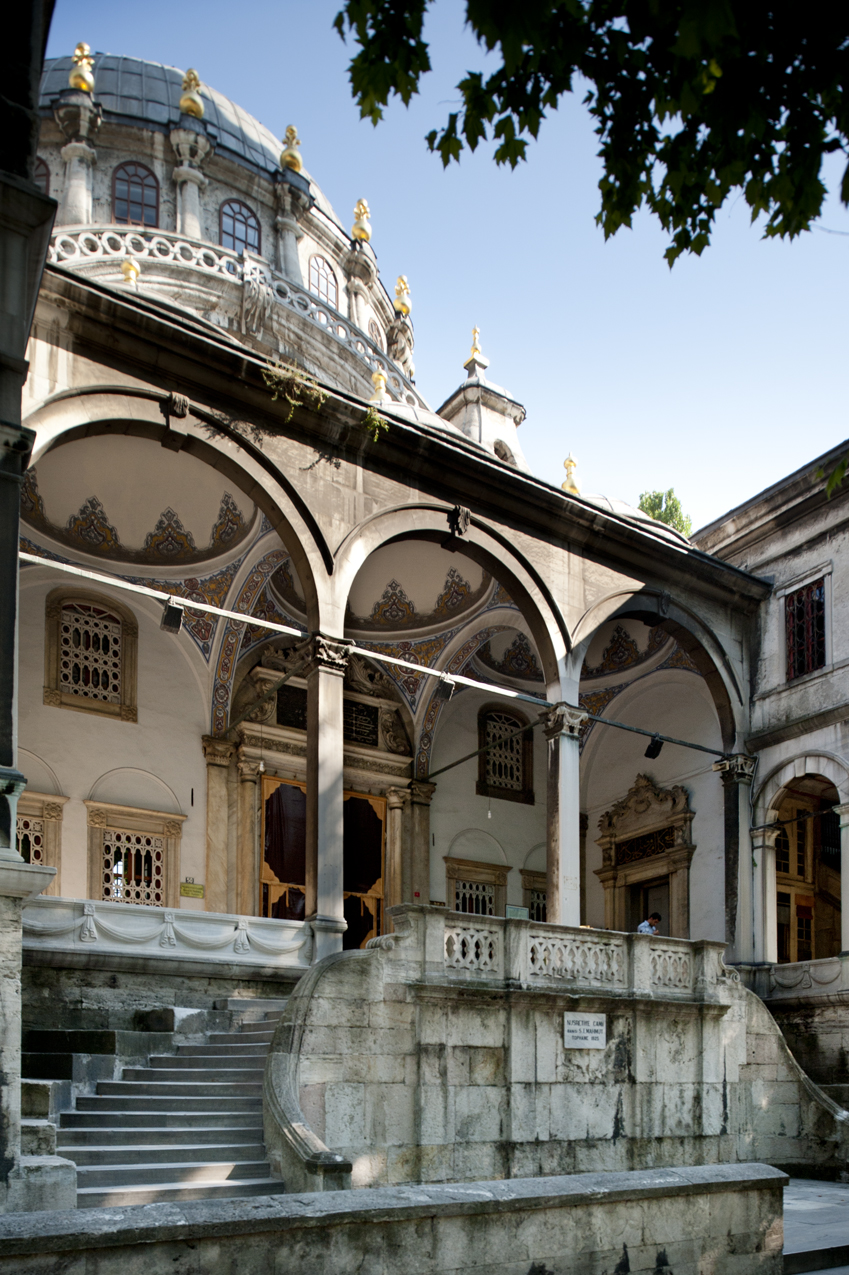
The Dolmabahce Mosque became the sultan's home mosque, too.

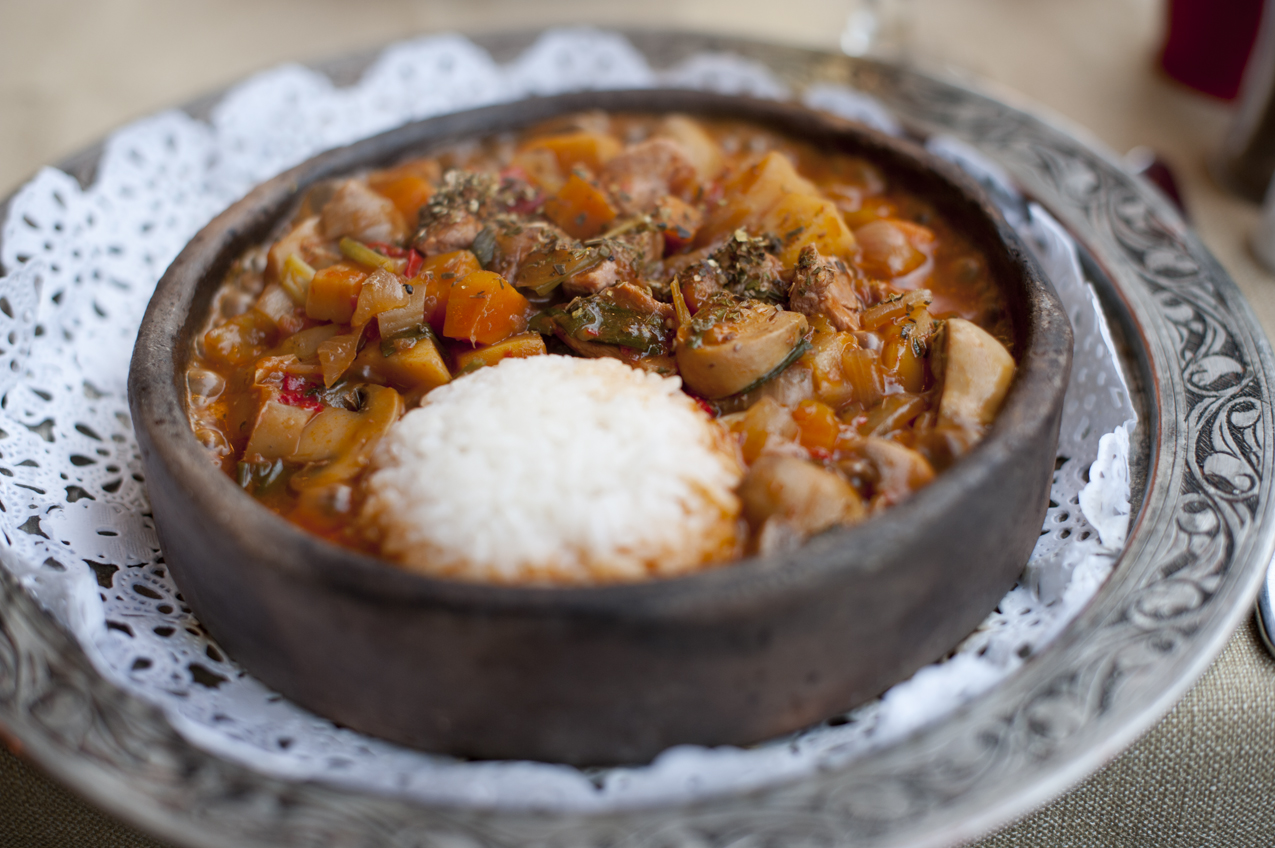
Dinner: a lamb dish, served in a white-hot terracotta bowl. I'm not sure this was the best choice after a hot day, but it was pretty good, once it stopped boiling.


Real Adaptive Reuse

I had grand plans for seeing much of the city yesterday, but I ended up spending the whole day in Hagia Sophia.  Once I got in, I had trouble making myself leave.

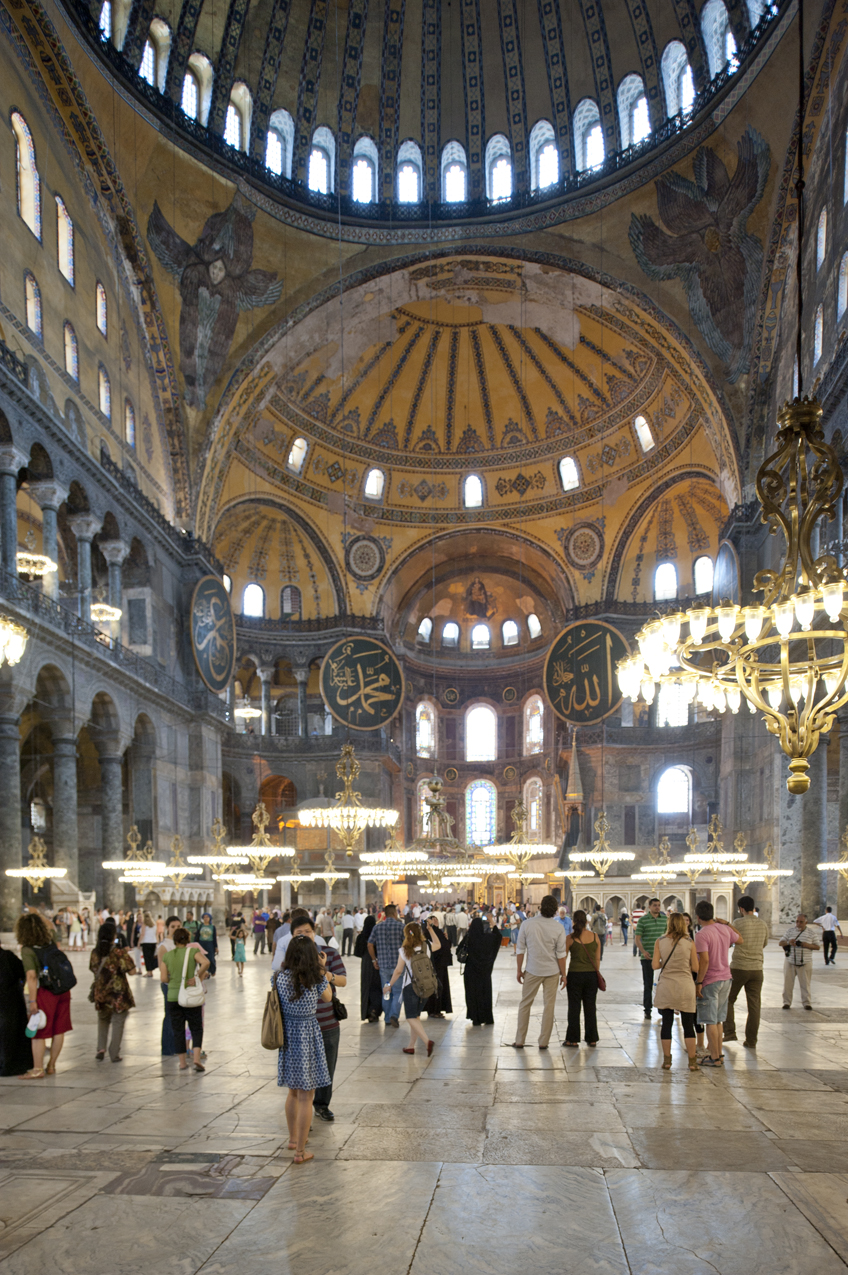
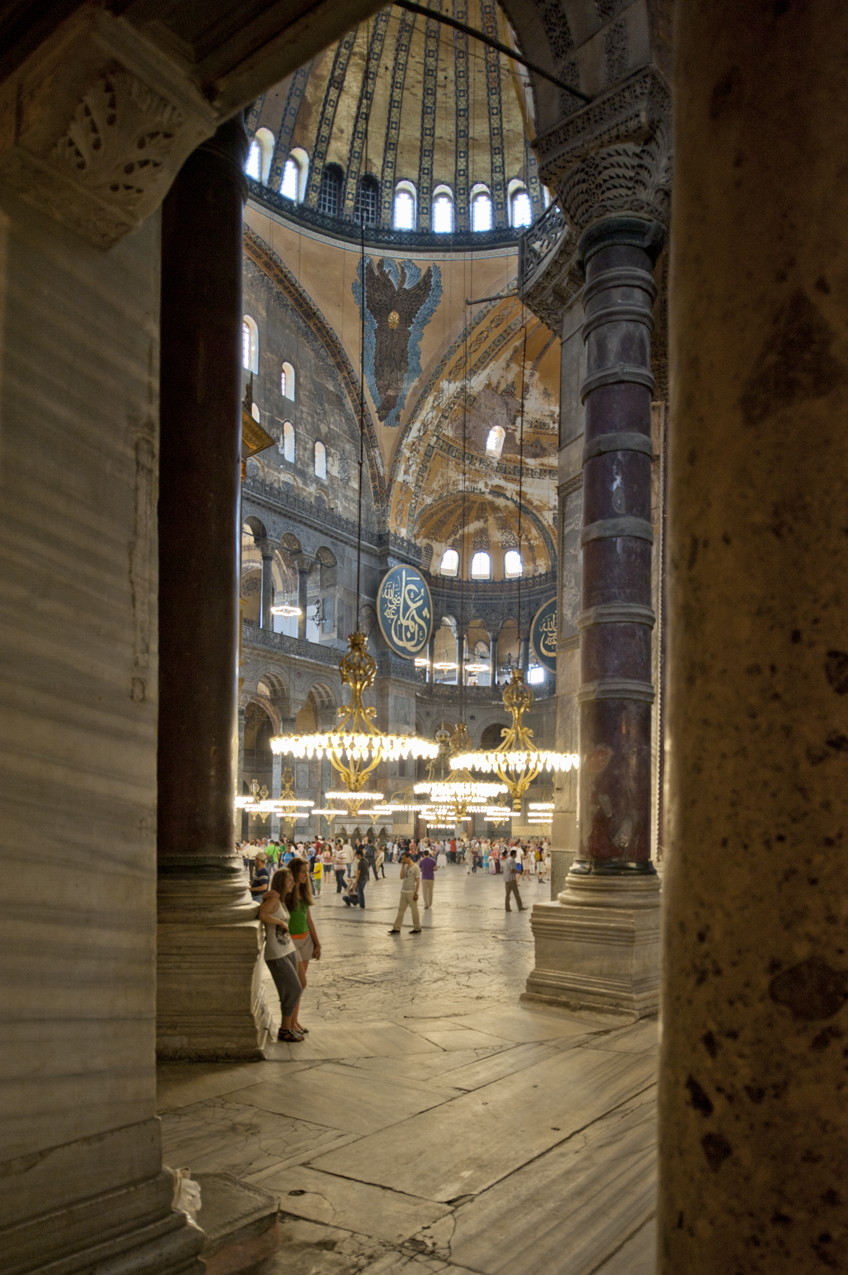
I was prepared to be underwhelmed by the interior of the building.  But, to my surprise, it completely exceeded my expectations.  Built as a church in 537, converted to a mosque when the Ottomans took over a thousand years later, and turned into a museum when Ataturk came to power, its central space, is vast, towering, and awe-inspiring.  Judging by the exterior, I didn’t actually expect this space to be so enormous, and was shocked when I entered.  It was a moving experience, one that I wish I could repeat.

In the evening, I met up with a friend of mine from college who is now living in Istanbul.  We went out to dinner on the other side of the Golden Horn, and on top of catching up with an old friend, it was great to go out to dinner with someone.  Meals are social events here, and it’s always difficult for me to show up to a restaurant by myself.

The photos are below.  I’ll have another post later this evening or tomorrow morning.

The entrance to the church/mosque/museum is through these buttresses.

The narthex gives visitors a taste of what's coming. From here, you can glimpse the enormity of the space inside.

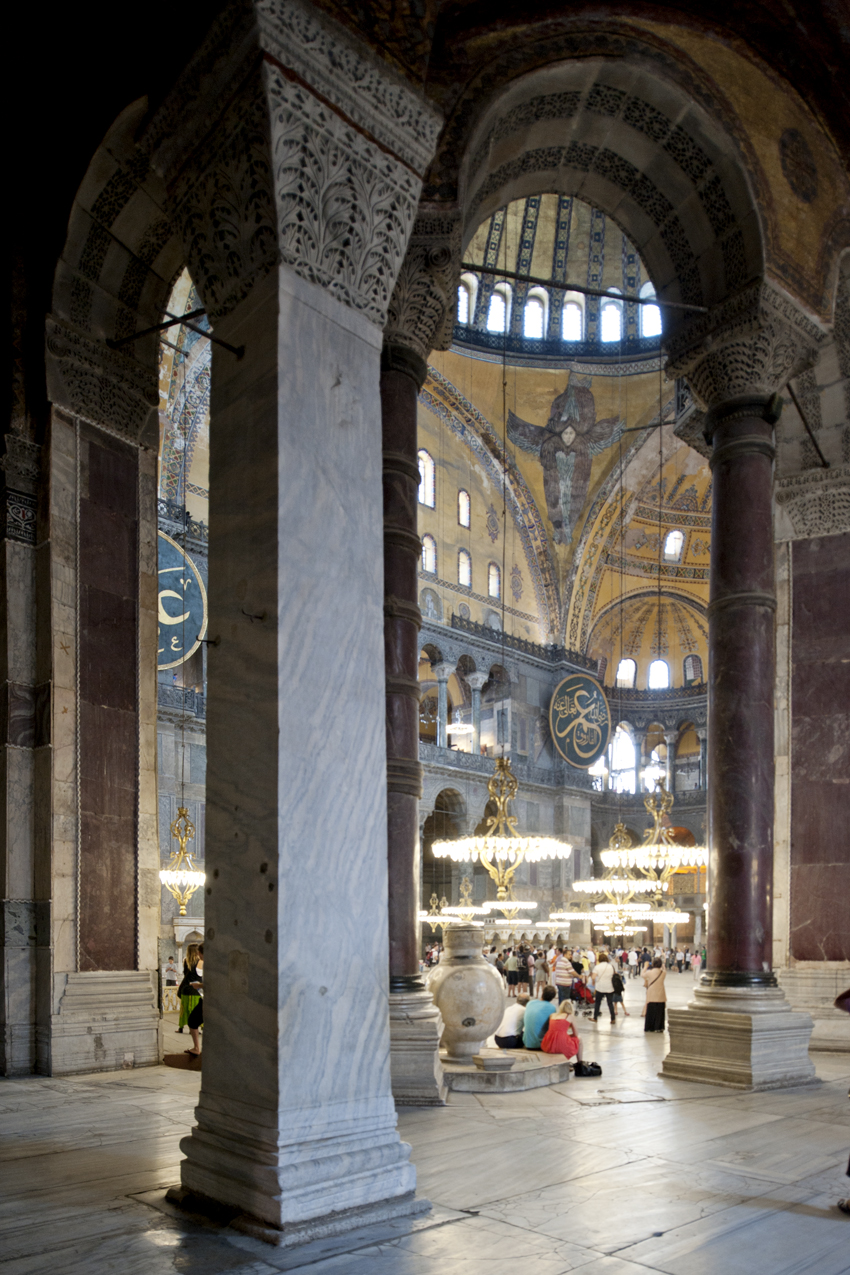
I walked around the space before stepping into the middle, trying to get a sense of its dimensions before being assaulted by its grandeur.

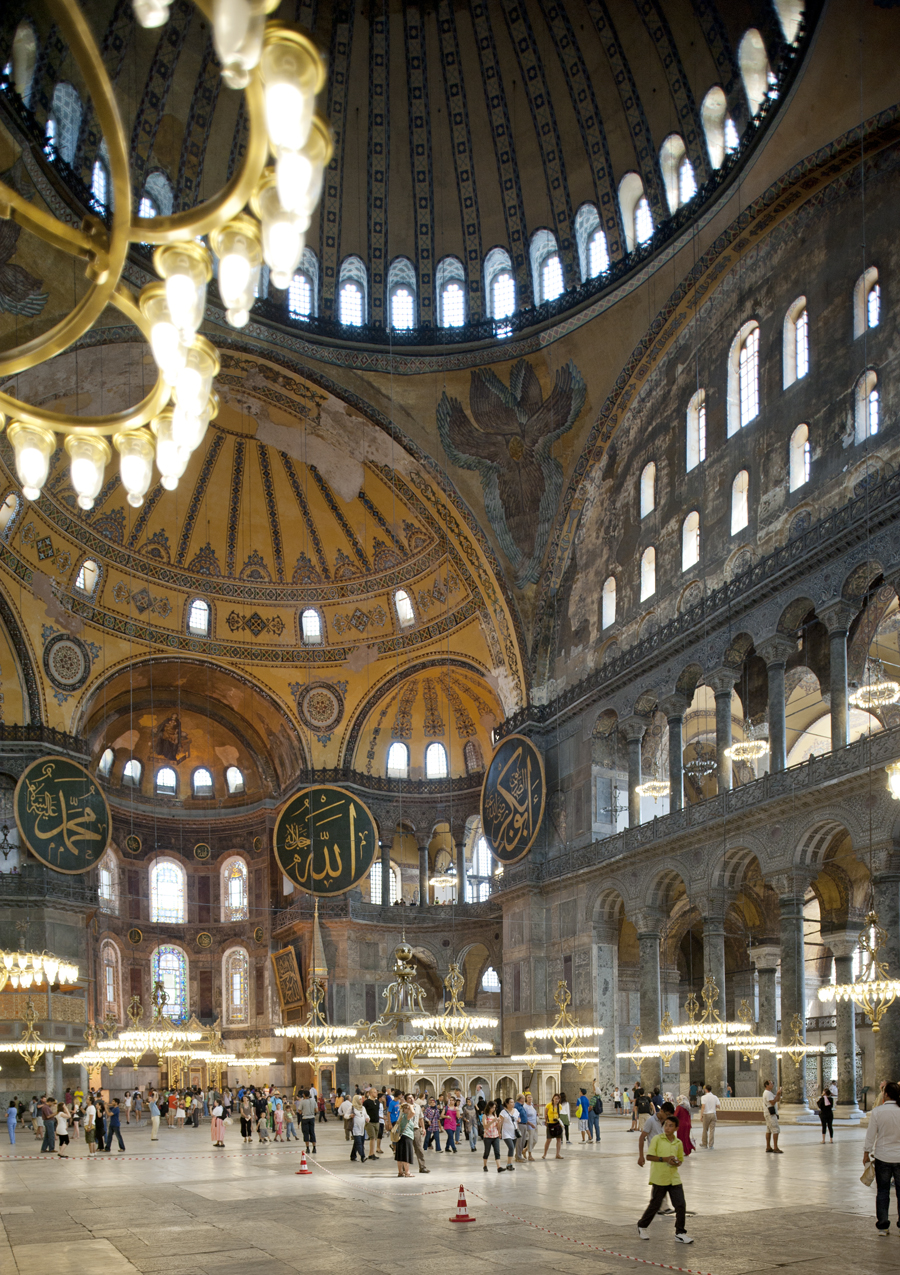
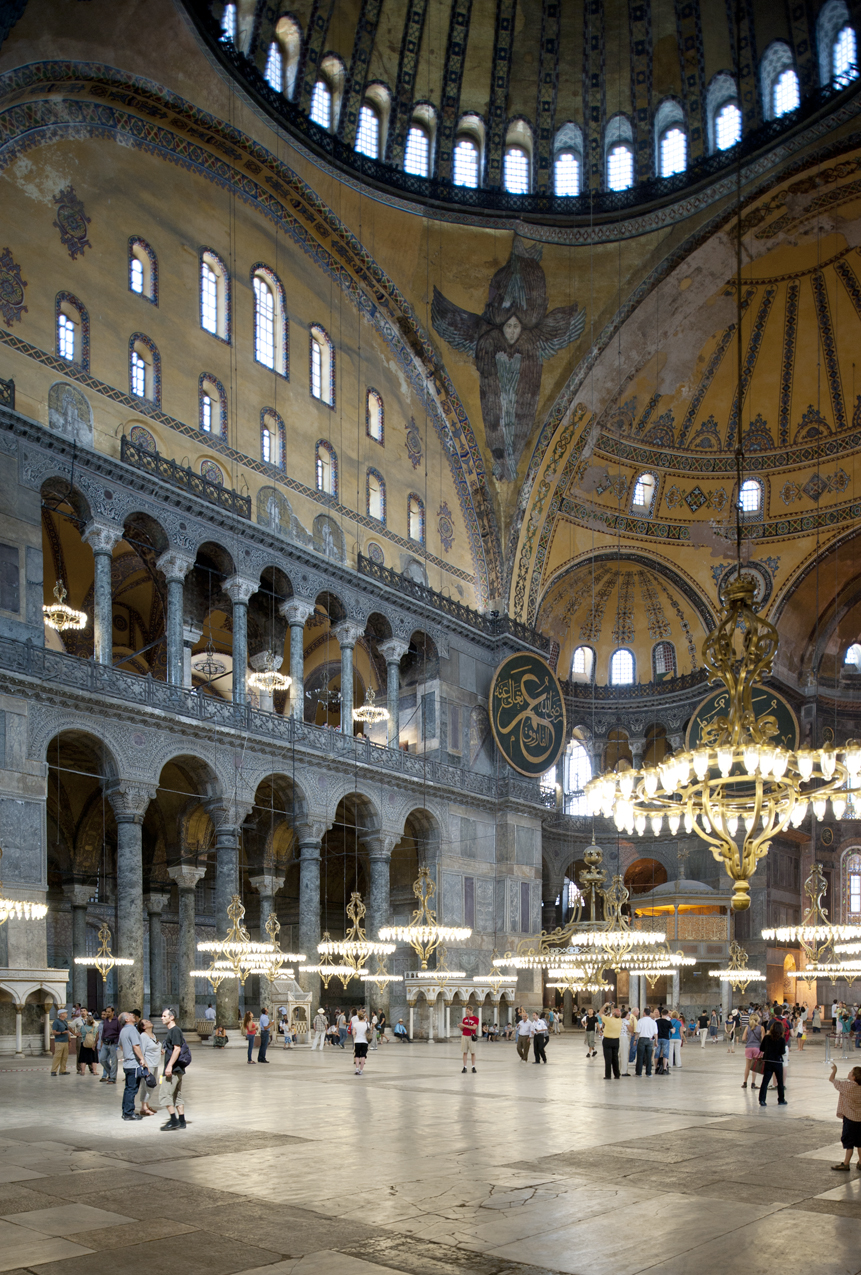
Stepping out into the center of the basilica was overpoweringly awe-inspiring. Is that descriptive enough?

Photographs really can't capture this space. Fortunately, however, there are plenty of scale figures around to give a sense of proportion.

I kept stepping back and forth center and the aisles, trying to relive the moment when I first stepped out there.

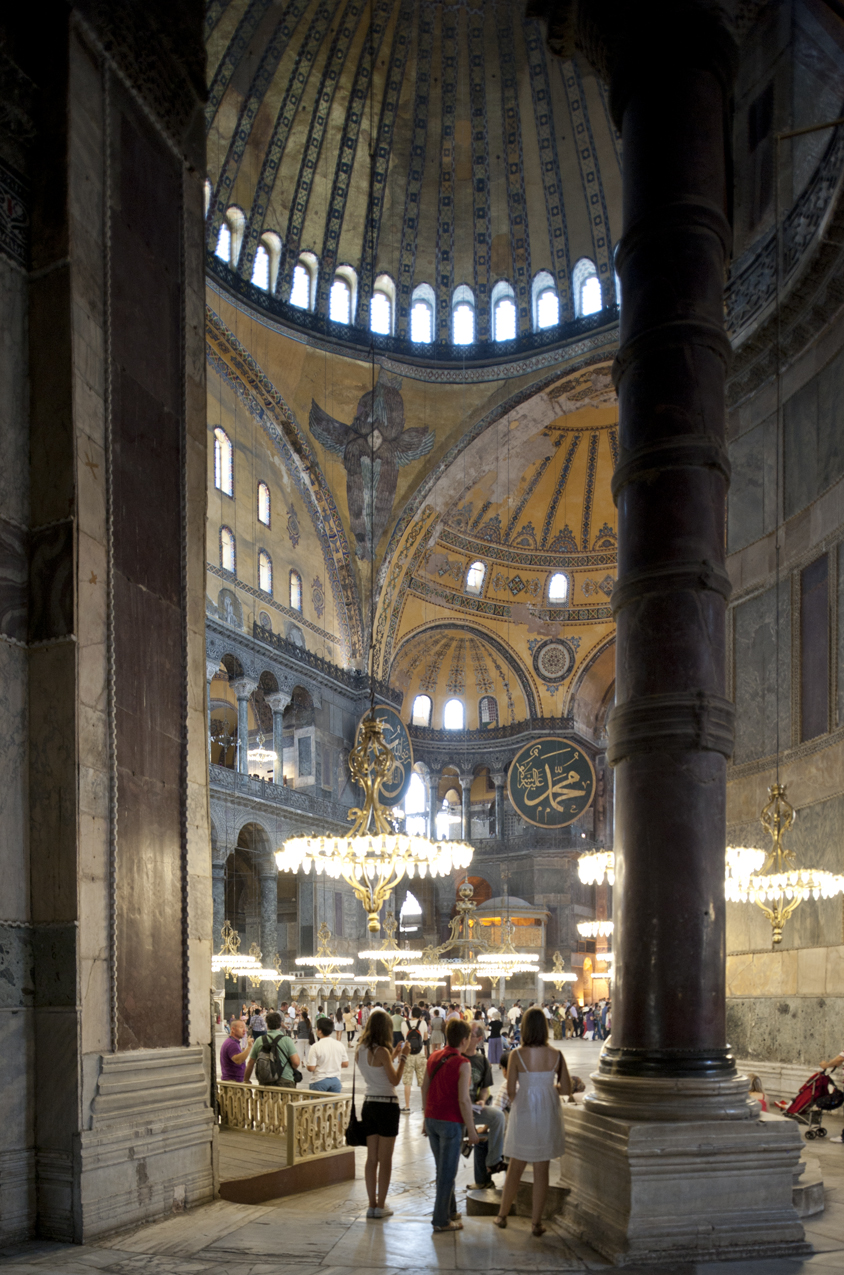
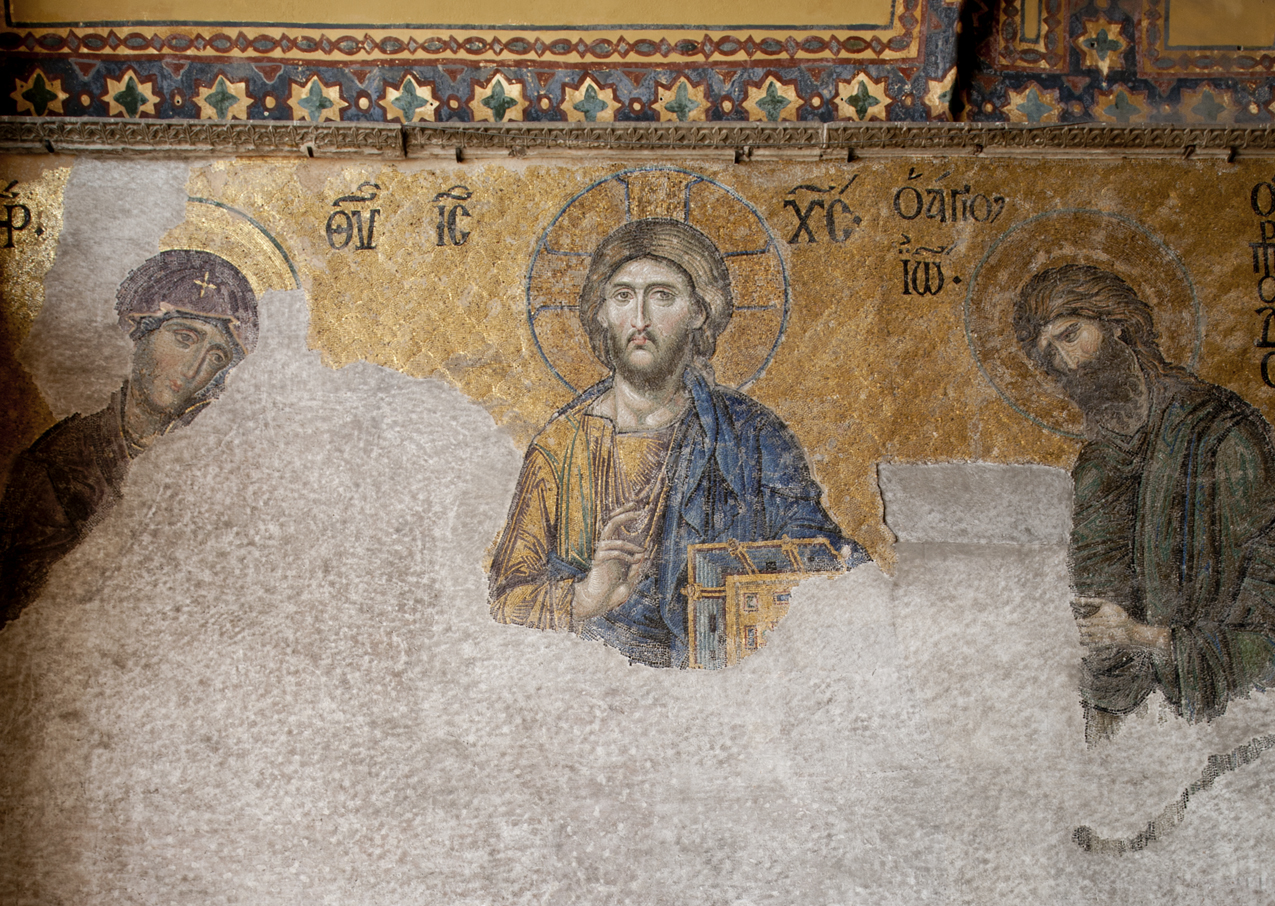
Fortunately, the Ottomans only painted over the old mosaics. The massive medallions with arabic script were added in the nineteenth century.

The original mosaics were uncovered when Ataturk made the building a museum.

Nothing brings back great travel memories like a video of a mosaic.

I can now understand why every Ottoman architect built mosques vaguely reminiscent of this building.


Sinan spent his whole life trying to top this building. I don't think he was ever able to do it, and it must have been incredibly painful for him to live in this city, and see Hagia Sophia every day.

If I had seen nothing else on my trip to Istanbul, this would have made it worth it.

"Look, kids! Another mosaic!" The exit is on the opposite wall of this passage. A mirror was conveniently positioned over the exit door to remind visitors to look back, lest they miss this last mosaic.

Those of you who know me well will know that this is my worst nightmare: a disgruntled clown, smoking a cigarette. I had to close my eyes as I snapped this picture.

My friend and I grabbed a beer at a rooftop restaurant with a view.

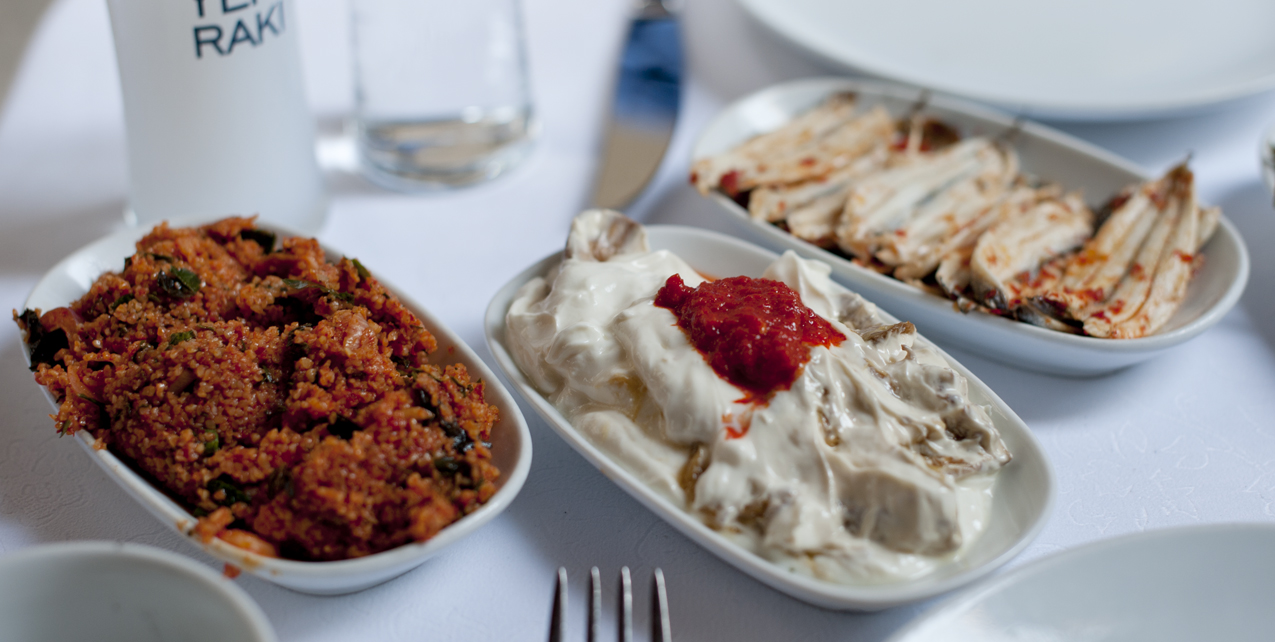
Meze: couscous, an eggplant dish, and some local anchovies (not salty).

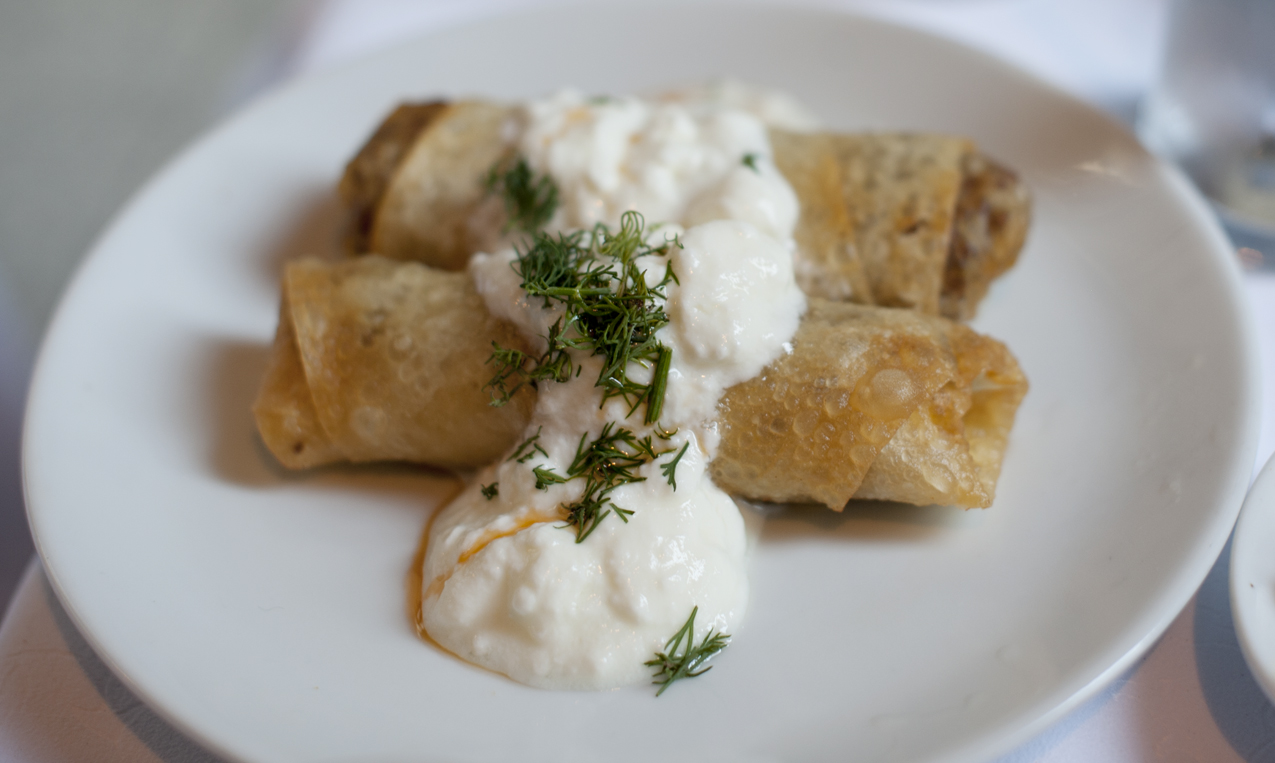
The next course: these were stuffed with meat, and were covered with a yogurt sauce.

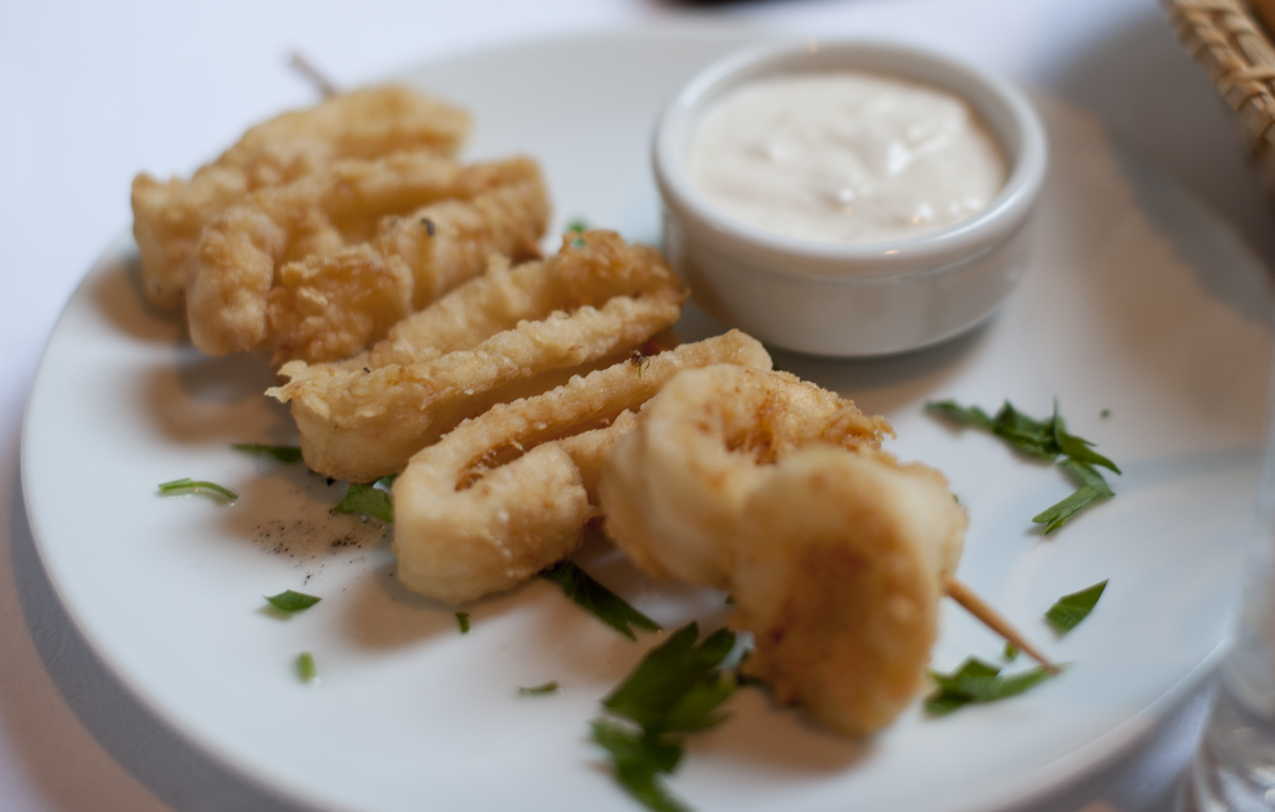
Local calimari

Fresh sardines. These were ridiculously delicious.

The streets in this neighborhood are filled with tables. This was the view from our ours.

A Quick Update

Unfortunately, I’ve just gotten back from a late dinner.  Unknown to me, an old friend of mine from college recently moved to Istanbul, and I met up with him tonight.  I haven’t got the time to give a full update right now, but I promise that I’ll write one tomorrow.

Fortresses, Ferries, and Feasts

Unfortunately, the internet conked out at my hotel last night, so I wasn’t able to update then.  I’m in a bit of a rush to go out and start my day now, so I have to make this post pretty brief.  To make a long story short, I spent a good part of the day at the Topkapi Palace, where highlights included the harem, a large glass box full of huge emeralds (and some other jewels), and the Spoonmaker Diamond.  Afterwards, I left the European (Thracian) side of Istanbul, and took a ferry over to to the Asian (Anatolian) side on a sort of pilgrimage to a restaurant about which I read an article in the New Yorker several years ago.  I timed my return trip to coincide with sunset.

Without further ado, here are the pictures (click to enlarge):

Within the Topkapi Palace's outer fortified walls is this old Romanesque church.

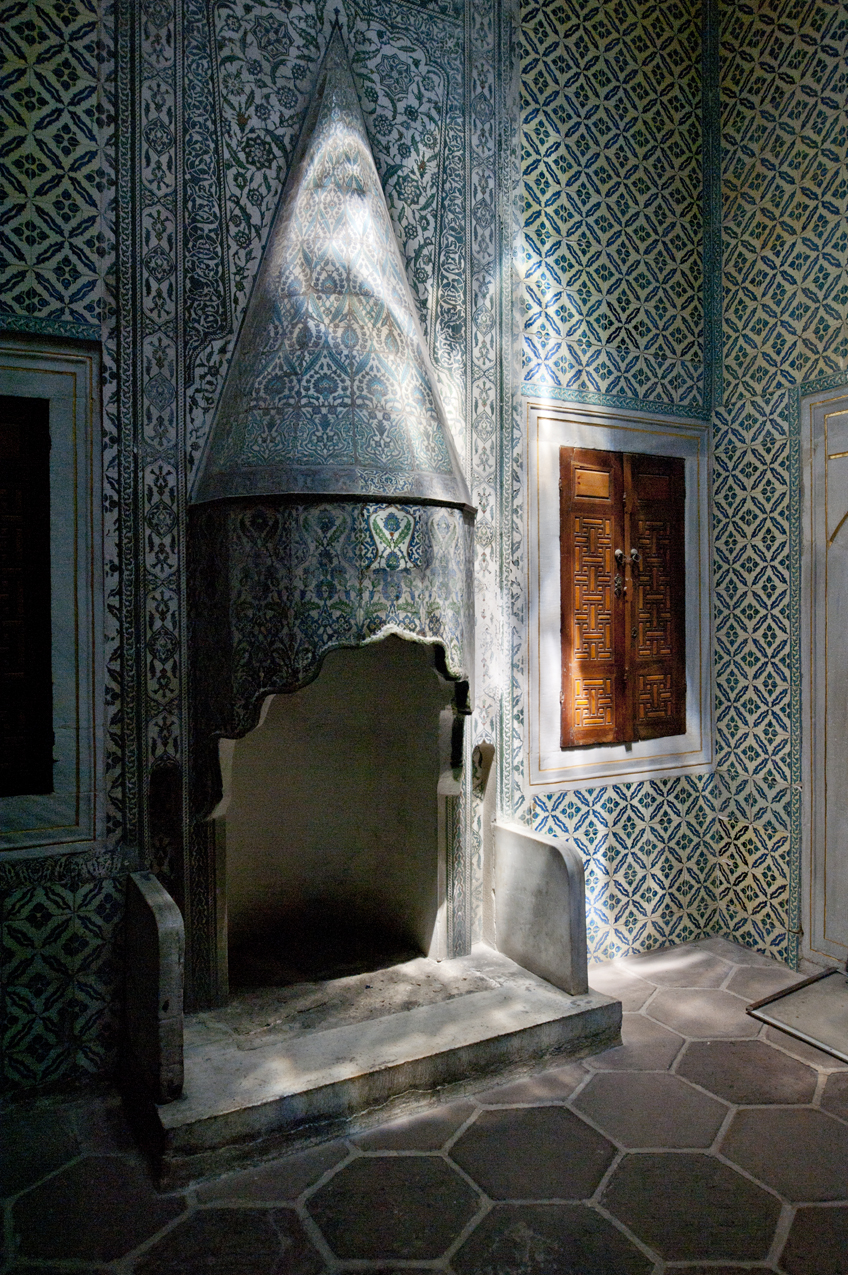
No, this is not a teleporter. It's a fireplace in the harem.

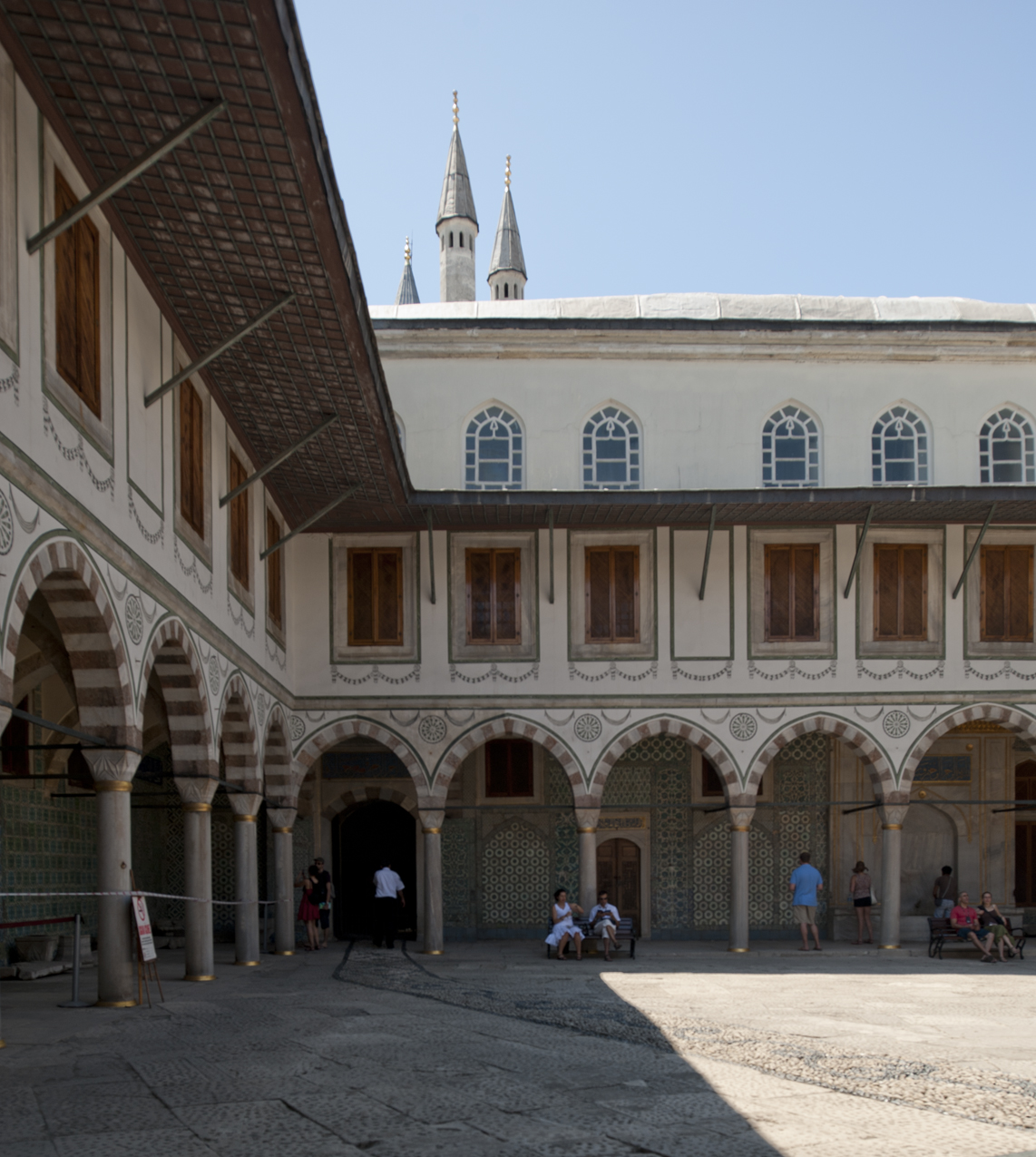
The main courtyard of the harem, this was the realm of the eunuchs.

The light is filtered through a skylight with stone tracery onto this brilliant green wall.

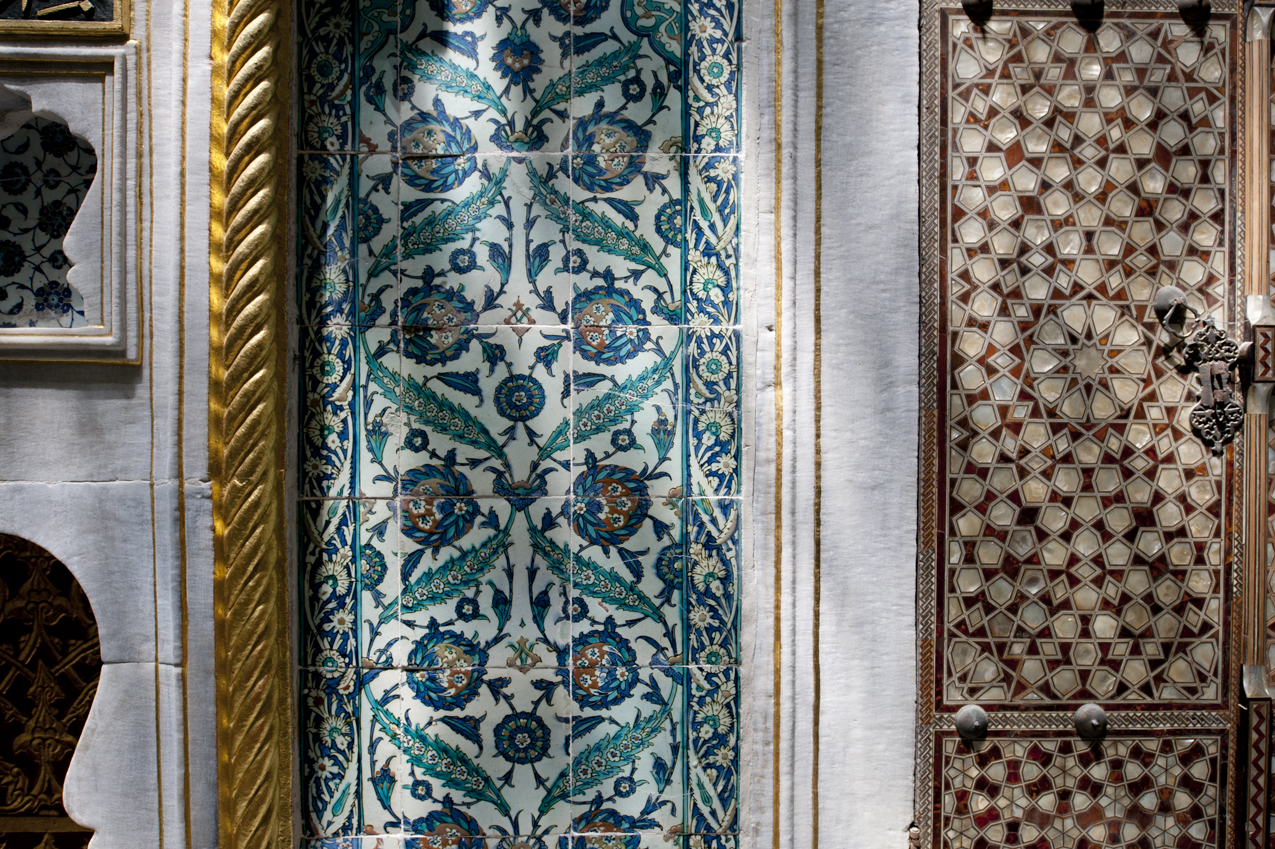
Several layers of detail

I'm not sure why Mehmet the Conquerer didn't choose a more picturesque spot for his palace. This is in the inner court of the palace, back outside of the harem.

There's always a cool breeze under these arcades.

This passageway surrounds a building that houses some ancient Muslim relics, including Mohammed's sword.

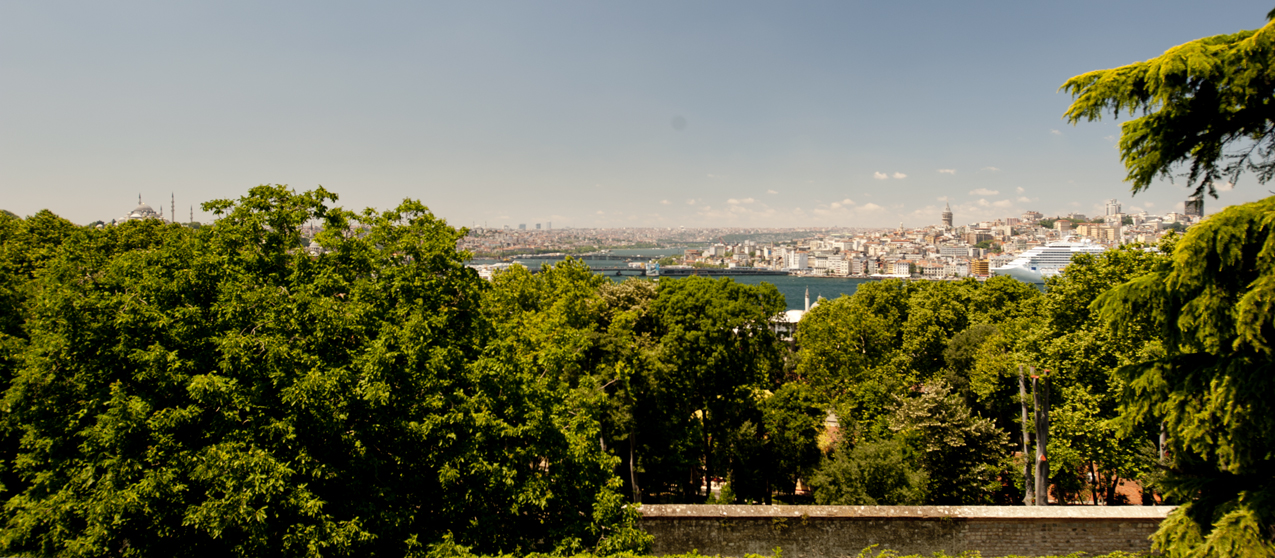
The view from an overlook on the Palace grounds. Over towards the right, you can see the Galata Tower, and on the left, you can see the Suleymaniye.

From overlooks around this tea room, the Sultans had a view all the way up the Bosphorous, and out across the Sea of Marmara.

The individual buildings read like pavilions in a park. I always thought that I would build something like the Louvre for myself, but now I think the Sultans may have been onto something. I'll have to consider this.

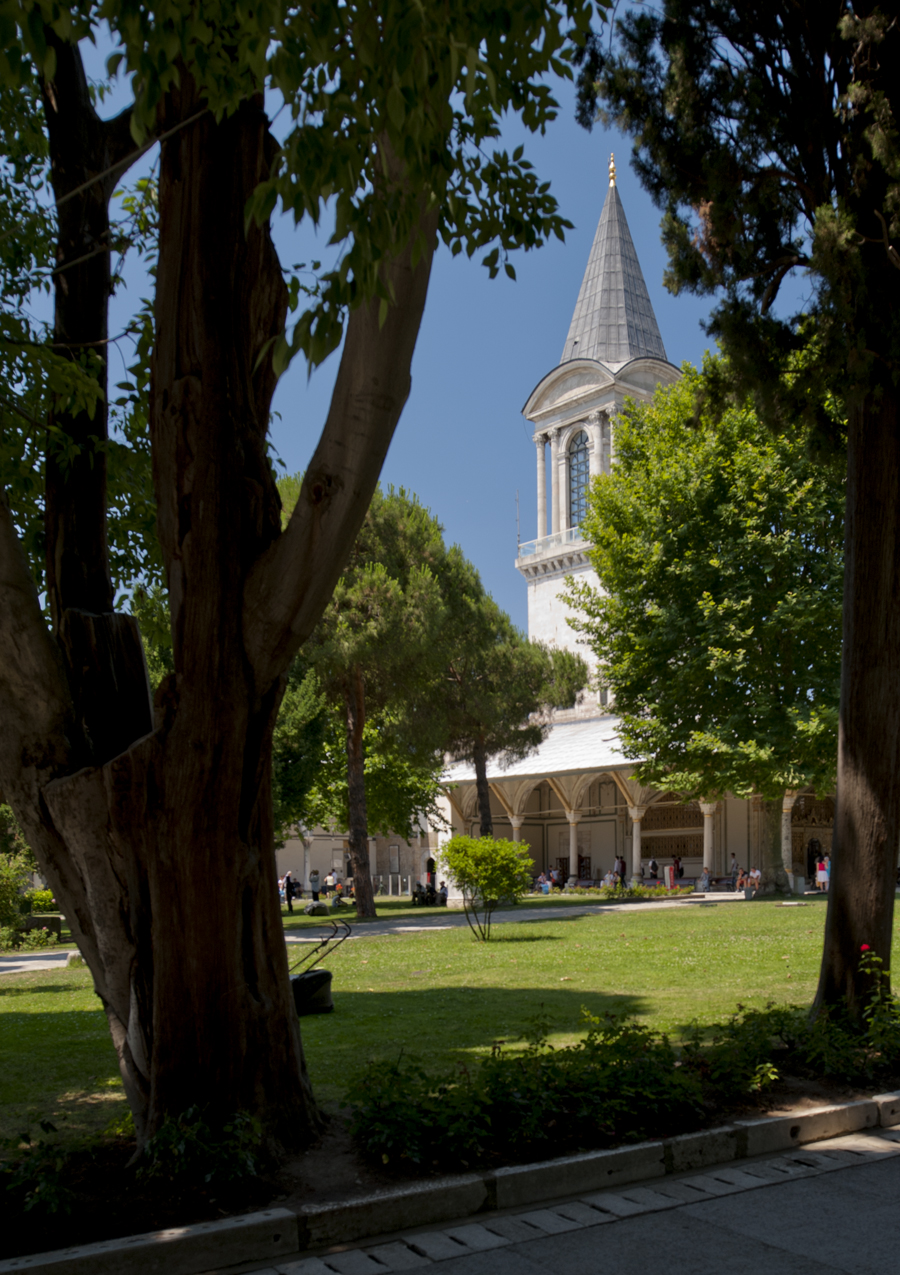
This tower stands over an important meeting room. Around the other side of it is the unassuming entrance to the harem.

The owners of this house really need to take better care of it. It's all overgrown.

I got a good seat on the ferry going to Kadikoy. This is a view towards the Galata Tower that I climbed yesterday.

Kadikoy has a much more quaint fishing village feel to it. Up on the hill, there are narrow alleys with markets spilling out, or packed with tables for al fresco dining.

This was the first time I had seen a real fish market this whole trip. I know these sardines were fresh because they were still jumping around.

This is another type of fish that I saw on the end of the fishermen's lines. I don't know what it is.

Meringue peeps.

Finally, I can easily eat the fresh fruit!

I ordered a sampling of vegetable dishes at Ciya Sofrasi, the famous restaurant that I had been excited to try. Clockwise from the top, there was a Kale dish with peppers, another dish with what looked like kale, but was called something else, a bean dish, and some bulgar pillows with tomato and basil. In the middle is yogurt. The bulgar was the best part.

My meat course: I think that I could best describe this as stuffed peppers, but that doesn't really do the trick.

A view back to where I ate. This was supposedly the best Turkish food around. I haven't had much Turkish food in my life, so I'm not a good judge, but it was pretty darn good food.

I'm at a loss for words on this one. This was the most popular attraction on the docks in Kadikoy.

A view from Kadikoy back towards Thracian Istanbul. To the left of the little lighthouse, you can just make out the Topkapi tower, the Hagia Sophia, and the Blue Mosque. To the right, you can barely see the Galata tower in the distance.

The sun setting over the Galata Tower. I had actually tried to plan this trip to get some good light on the shores, but I waited too long, so I caught the sunset instead.

The bounty from the Kadikoy market: a kilo of cherries, and one enormous peach.

Walk Like an Istanbullu

I walked farther than I could have imagined possible today.  What started out as a gentle morning stroll near my hotel, soon matured into a marathon journey all over this city, only finishing when I made it back to my hotel around 9:00 this evening.  As I reached one landmark, I’d see the next in the distance, and just keep going.  Because I wanted to really explore, I decided not to look at a map.  This wasn’t so tough, though, because I’ve done enough research on Istanbul over the years to know my way around like I’ve been here before.

As I mentioned yesterday, my personal introduction to Istanbul has been a long time coming.  I first became fascinated in the city when, in a high school Art History class, I first learned about the Hagia Sophia.  There’s something about that building’s loose stacking form that drew my attention from a young age.  I was also taken by how different it looked from any other Roman buildings that I had seen.  In college, I took a class called, “Reading Istanbul,” which entailed reading pretty much everything ever translated into English about Istanbul.  Reading about a city is great, but it cannot possibly compare with seeing it, walking it, smelling it, hearing it, and tasting it firsthand.  I was hooked, though, and visiting the city has been an unattainable goal of mine ever since.  Much like Proust’s dreams of Venice after reading Ruskin, I thought about it constantly, and built it up in my mind to an extent to which it could never live up.  Now that I’m finally here, I’m almost a little sad that the anticipation is over, but I’m thoroughly enjoying experiencing the place in person.  Will it meet my expectations?  I’ve still got a week to find out.

By the way, it’s nice to be back by the sea.  This is the closest that I’ve been to any sizable body of water since leaving Boston.  The weather has been perfect here.  There’s been a refreshing breeze all day, and with temperatures in the mid-eighties, it’s downright chilly here compared to Bukhara.  If I sit on my hotel’s rooftop terrace in the evening, I even have to put on a sweater.

Here are the photos from today (click to enlarge):

I have a feeling that Sundays at the Grand Bazaar are not quite as boisterous as other days.

I was happy to see that everything was closed here when I walked through. I needed a break from fighting through crowds today.

Unfortunately, the Suleymanye Mosque's exterior spaces are in the midst of renovations, so I wasn't permitted into the forecourt, or the gardens. It's a shame because I had been really looking forward to seeing them.

I was, however, allowed inside, and I was sufficiently impressed, as expected.

The Suleymanye was built for Suleyman the Magnificent by his court architect, Sinan, in 1557. Sinan was responsible for a whole slew of important buildings in this city. This mosque, which is enormous, is simply, but meticulously detailed. Although its construction was an incredible engineering feat, it remains understated on the interior.

This was the mosque that I was most looking forward to seeing in Istanbul. I plan on going back a few more times while I'm here. The great thing about mosques here is that they're free.

The gardens on the other side of this wall were inaccessible due to the renovations. They look pretty nice from here, though.

Not all of the markets were closed today.

Olives! I must be close to the Mediterranean now.

This is a great city for wandering around, exploring different passages, getting happily lost, and spotting a familiar minaret in the distance.

For lunch today, I sought out the waterfront for fish sandwiches. I haven't had fish since my first skewer in Xi'an, and I was really excited for this.

Delicious. Fish fresh out of the water. A bottle of lemon juice was provided.

After lunch, I crossed over to the other side of the Golden Horn to check out what was traditionally the more diverse part of Istanbul. I encountered this condition a lot today: The upper floors are cantileverd over the street to bring in more light. in this case, they are canted at an angle so that the apartments deeper in the block can still get some light and views. This usually works well, until everyone of the block decides to take up the air space over the street, and the buildings on either side almost touch at the top.

The Galata Tower is an old landmark that dates back to Roman times, although it's been rebuilt a number of times. It was once a lighthouse.

Now, the tower functions as a place from which tourists can snap panoramas of the city. It might be worth going back up here when the light is better. In the foreground is the neighborhood of Galata, and the Golden Horn is the body of water behind it. Sultanahmet, the old city, is on the opposite side, and beyond that, you can see the Sea of Marmara. On the Sultanahmet side, you can see the Topkapi Palace all the way on the left. The Hagia Sophia is the first mosque to right of that, and then the Blue Mosque is just to right again.

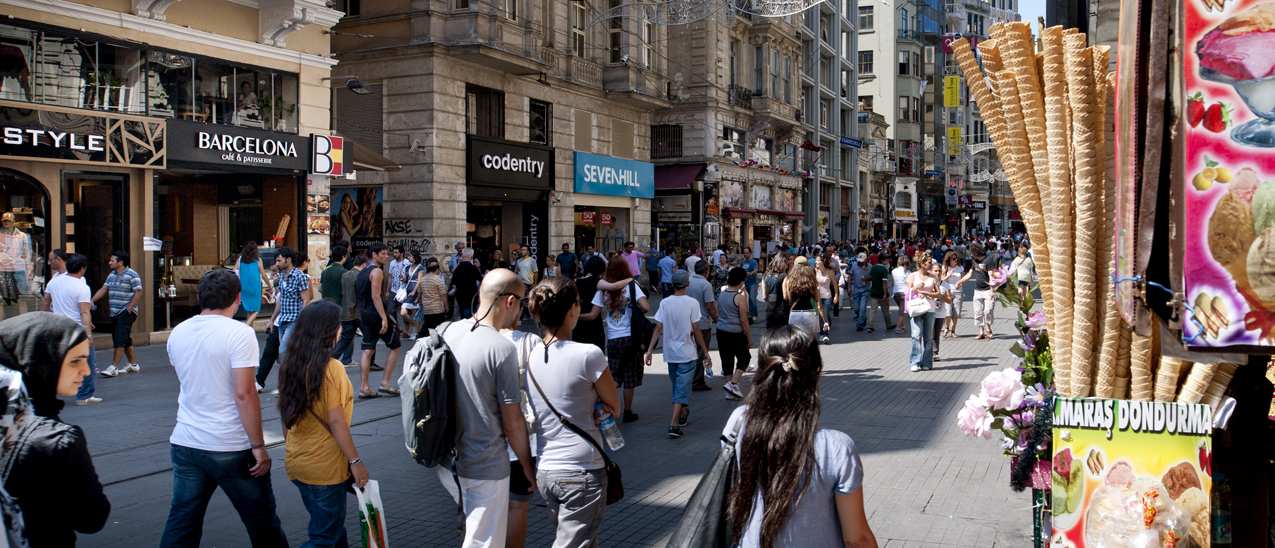
This side of the Golden Horn was always more western than the old city, and today, it's a big destination for western-style shopping.

This 19th Century mosque, on the Bosphorus, would be right at home in a turn of the century World's Fair.
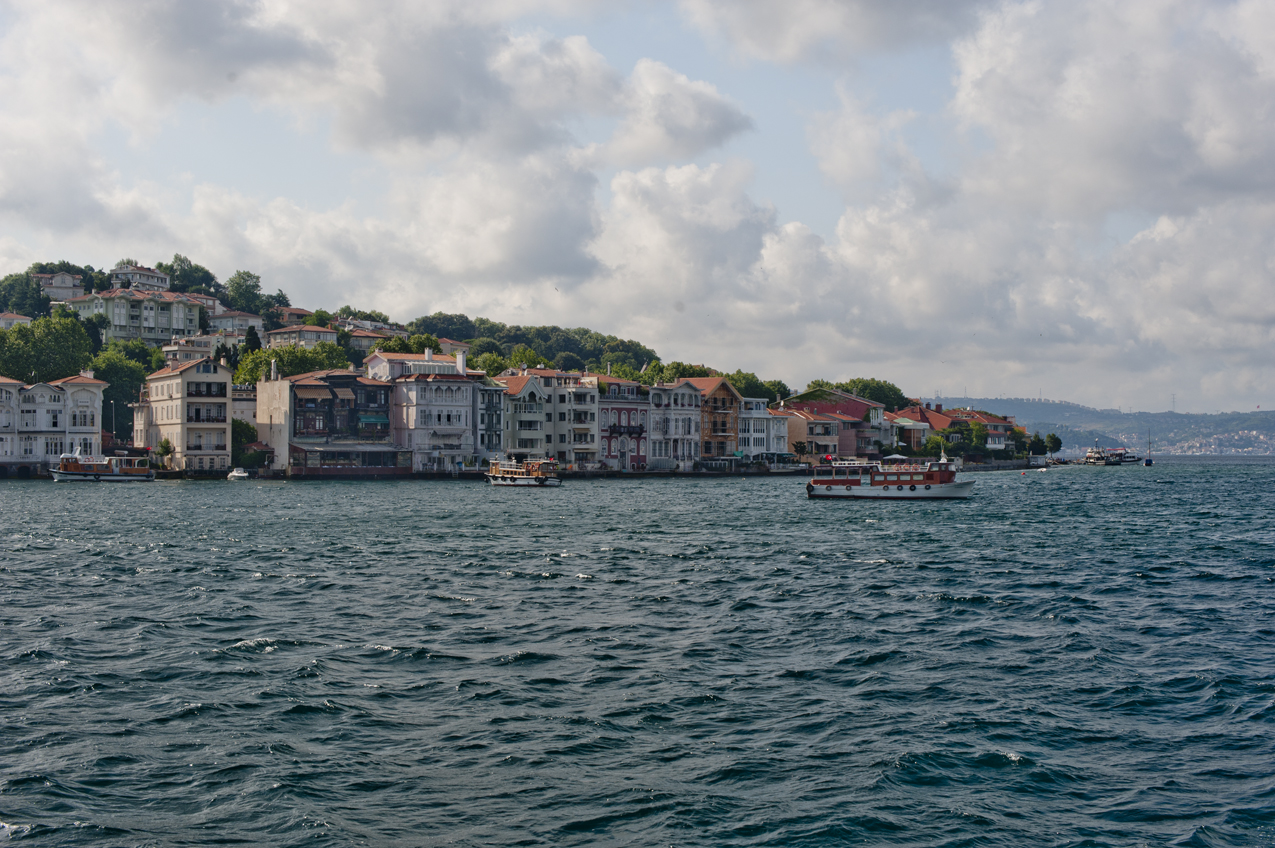
Evidently, local kids like to swim in the Bosphorus, although they have to dodge the fishing hooks of the countless anglers who line up on the shores.

Hasn't this kid ever heard of a cannonball? I give him a 2.

I figured that, for the sake of research, I need to sample ice cream everywhere I go. It's very different here. They have special tools for digging it out of deep tanks, and pull it out in rather thin slivers. The texture is a little gummy, but the flavor is superb. You'll notice that I went for all five flavors here, for the sake of research.

Not far from the last mosque, this one almost has an art-nouveau look to it.

Prayers had just started when I got here, so I couldn't make it inside.

After an epic day of walking, I ended up having an early dinner at a delicatessen. The waiter told me that these were the best meatballs in the city. They were actually pretty good. The rest of the stuff was good, too, including the artichoke salad, and that red substance in the corner, which ended up being a spicy sauce for the meatballs.

If there is an open patch of waterfront, you will find Istanbulus fishing. Just make sure you don't get hooked, though.

It turned out to be a beautiful evening, with a refreshingly cool breeze.

Passage to Istanbul

After a morning that began with a 2:30 departure from my hotel, I finally arrived in Istanbul.   I set out with time to spare before my flight, and at the Tashkent airport parking lot, I was able to surreptitiously change the rest of my Uzbek money back to dollars through the window of a shadowy woman’s Chevrolet.  The customs procedures in Tashkent ended without incident, although I will not keep any fond memories of the airport, often called the most frustrating in all the world.  Although I haven’t been to every airport in the world, I can’t really think of any worse airports to which I have been.

The gates were not manned by airline staff, and when the announcements were made for flights, a mad stampede took place as people rushed to get to the doors, down the stairs, and onto the waiting buses that shuttled people to the planes.  Grandmothers, people with canes, and children were all swallowed up in the crowd.  When my flight was called, as people were rushing down the stairs, someone decided that they were at the wrong gate, and turned around.  In the mass confusion that ensued, everyone who had pushed their way to the stairs suddenly turned around, as if propelled by the same instincts that make schools of fish collectively change direction.  Of course, not understanding anything, I meekly followed along, assuming, like everyone else, that someone else knew where we were going.  We ascended the stairs, scurried across the waiting room, and struggled to get through another gate, only to turn around again when it was discovered that the leader of the pack was on a different flight.  When we finally made it back to the correct gate, and were waiting for the tarmac buses to take us to the plane, people had begun shouting in frustration.  Of course, there was no staff to which to direct these cries, so people just started yelling at themselves.

Eventually, I made it onto the plane, and enjoyed the window-seat ride over some stunning landscape.  Seeing the changing terrain below reinforced an issue that has been weighing heavily in my thoughts:  that by flying over such a huge swath of my route, I was going to miss out on all of the transitions between Central Asia and Europe.  Arriving here, I discovered that my apprehension was somewhat justified.  Suddenly, after five weeks of gradual transition from Xian to Bukhara, I had been transported someplace completely out of context.  Obviously, due to political situations in the countries which I skipped, the decision to fly here was the safest choice, but I can’t help feeling that I’m missing out on something.

Of course, I’m probably exaggerating a bit.  This place is not quite as far removed from the rest of my journey as I’m making it out to be, and it will fall on me to draw the connections to the places I’ve seen as I spend more time here.  At some point in the future, and I don’t know when I’ll ever get around to it, I would also like to spend more time exploring the rest of Turkey, which could take two months alone.  This might also help me fill in some of the missing pieces, barring a trip through Afghanistan, Iran, and Iraq.

Unfortunately, once I arrived here, I was pretty exhausted, and ended up sleeping through much of the day.  I made it out for a nice stroll in the evening, and had a good meal, but I don’t have too many photos to show for my first day here.  I’ll have many more tomorrow, and much more on my first impressions of the city that has been on the top of my “Dream Cities to Visit” list for at least fourteen years.

Here are the limited photos that I have:

The Haya Sophia, a building that dates back to 537, is one of the structures that I've most wanted to see. I'll explore it more, and head inside tomorrow.


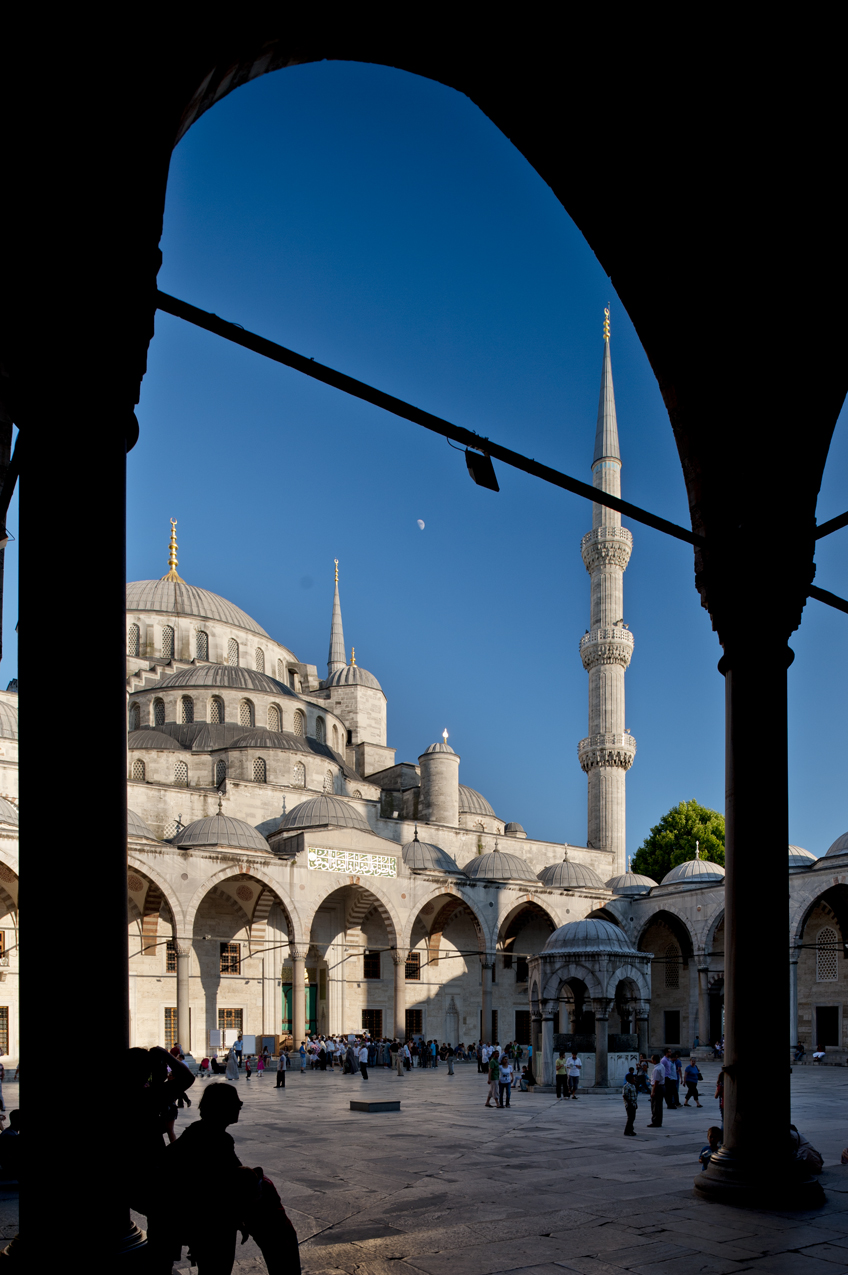
Just across a public square from the Hagia Sophia, sits the Blue Mosque.


Old Istanbul was built on seven hills, and the city has a layered feel. In fact, this is the only city that I've visited over the course of this entire trip that has not been on a flat plain or valley.

Istanbul's vast mosque complexes were once the city's centers of education, medicine, social interaction, bathing, and charity.

I was able to step into the Blue Mosque's courtyard before closing time, and discovered that the actual mosque was still open, too.

The great dome of the Blue Mosque. Upon entry, visitors are given a plastic bag in which to carry their shoes. The bags were not designed for people with shoes my size.

I'm trying to pace myself while I'm here, delaying gratification, and saving some of the sites that I've really been dreaming about visiting for later days. However, it's no exaggeration to say that visiting the interior of this space was the fulfillment of a long architectural dream of mine. It was a moving experience, and I know that there are more like this to come.

This puffy bread seems to be pretty popular here. I saw it on a lot of tables as I walked around. It's really a very thin layer of bread, filled with air, and was served with a chickpea paste.

My dinner: Turkish ravioli, filled with meat, and covered with a light yogurt sauce, chili oil, and mint. My stomach has shrunk a lot over the past few days, and this was way too much for me to eat.

To my surprise, there was an entrance to an ancient Byzantine palace in the back wall of the restaurant where I dined. The palace is now completely underground, and is currently being excavated.

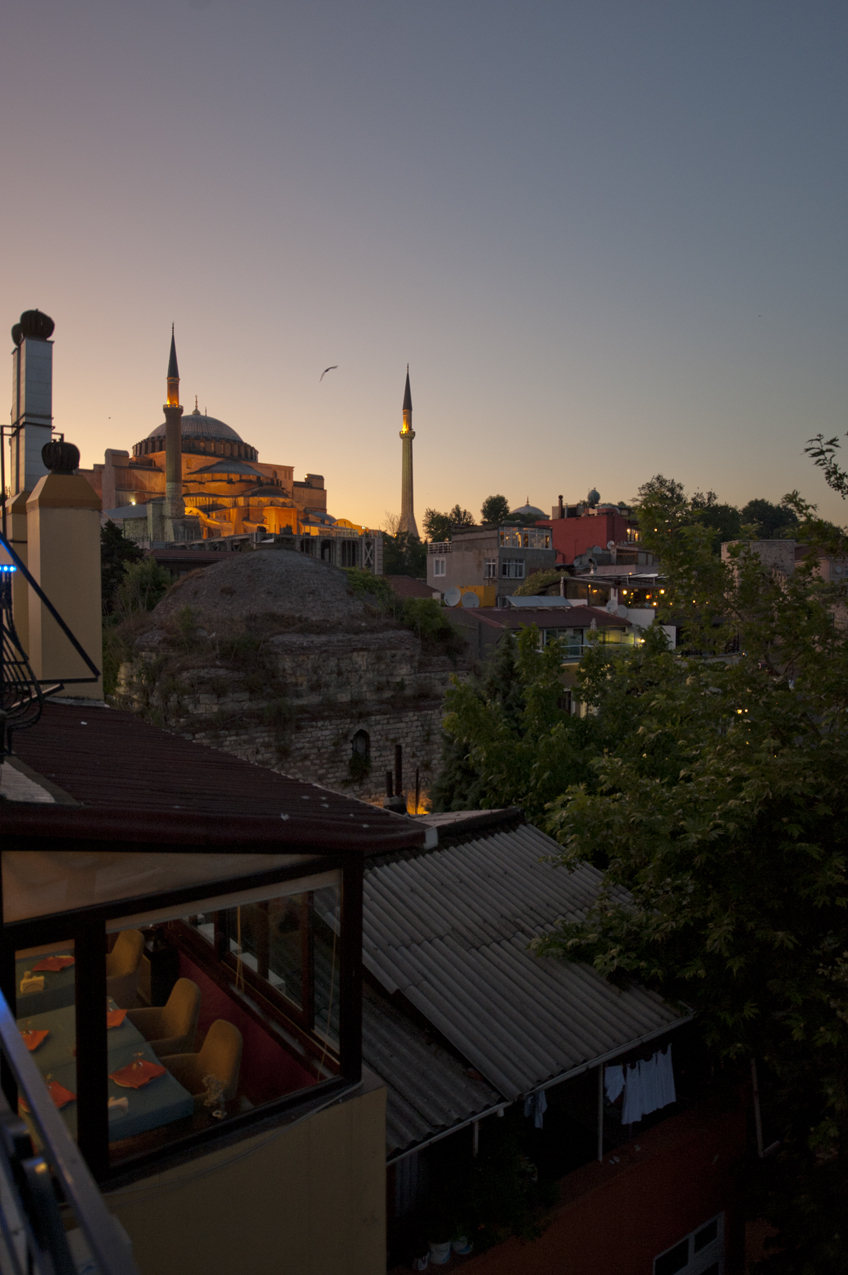
My hotel has a fantastic roof terrace. This is a view up towards the Hagia Sophia.


An Uzbek Farewell

At long last, I’m feeling well enough to provide an update.  Today is my last day in Uzbekistan, and I’ve spent most of it in bed, trying to recover from a pretty terrible stomach bug.  As I did a tally of the possible culprit meals, I’ve come to the conclusion that a salad that I ate the night before leaving Bukhara is most likely to blame.  Although I vaguely remember hearing that I should not eat salads because they are most likely washed in contaminated water, I stupidly succumbed to temptation.  Unfortunately, now that I’ve learned my lesson, it’s a little too late.

I have some mixed feelings about leaving this part of the world.  Tomorrow, when I arrive in the Thracian part of Istanbul, I’ll be venturing into Europe for the first time on this trip, albeit the easternmost extreme of the continent.  I have a feeling that I’m in for somewhat of a cultural shock.  Although some of the experiences that I faced as someone who was obviously a foreigner in this region were annoying, and even troubling, I’ve grown accustomed to them, and might even miss them.  Although I don’t exactly look Turkish, I think that the days of children running up to me, and begging me to take their photographs are over.  Gone, too, I’m guessing, will be the big smiles, and friendly “Hallo!” as I casually walk down the street, and the excited offer for a cup of tea.  But, I don’t quite know what Istanbul will bring me, and that’s part of the excitement.

One thing is certain, I am not looking forward to my 6:00 AM flight, for which I need to arrive at the airport at 3:00 to face the outrageously complicated customs process at the airport.  It has been drawn to my attention that I did not declare everything that I should have, including medications and my Kindle, when I arrived here.  The customs forms were somewhat unintelligible, and I have no idea what difficulties I will face when trying to leave.  I only hope that I am able to get out of here, and that I am not slapped with exorbitant fines.

The photos from a couple of days ago are posted below.  Just as a primer, the night before these photos were taken, I ended up having dinner with a German motorcyclist who was a dead ringer for Tim Robbins’ character in “High Fidelity.”  I was about to dine alone, but the waiter ended up seating me with him.  He recently sold almost all of his possessions, bought a BMW motorcycle, and set off from Koln.  He’s planning on driving all the way to the eastern edge of Mongolia, and then heading back through Russia.  As we finished up a pleasant dinner, he said, “So, I am waiting for you tomorrow at my hotel at 9:00, and we are spending the day together.”  With that, I guess I didn’t really have a choice.

Alas, I have none for today or yesterday, as I was feeling too terrible to even think about taking a snapshot.  Plus, other than a venture to the bank, and a successful solo black market exchange (I’m actually proud of this because the hotel bellhop who first helped me exchange money told me that there would be no way that I could get a good rate on my own), there is little new to report.

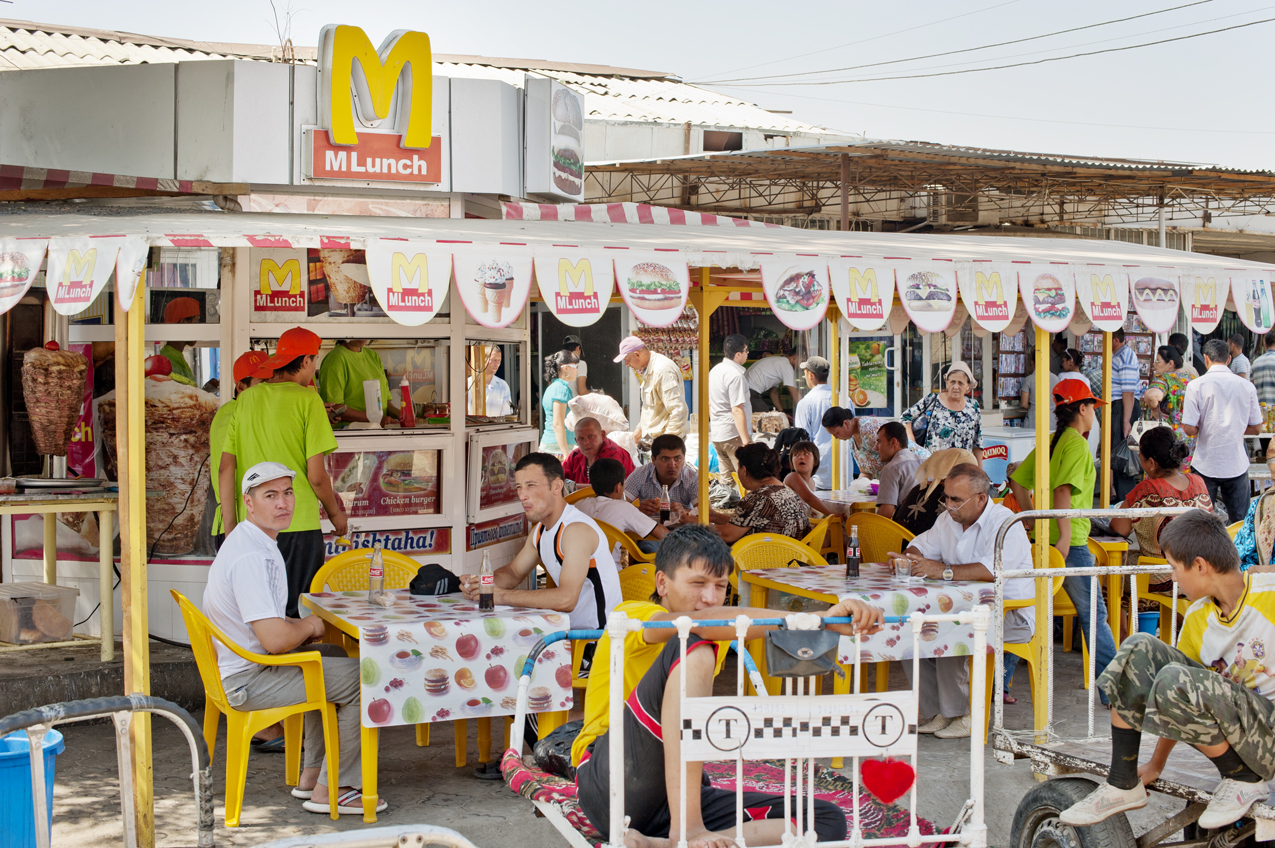
"See, they're McDonald's... I'm McDowell's. They got the Golden Arches, mine is the Golden Arcs. They got the Big Mac, I got the Big Mick. We both got two all-beef patties, special sauce, lettuce, cheese, pickles and onions, but their buns have sesame seeds. My buns have no seeds." A little quote for fans of "Coming to America."

The German motorcyclist and I took a trip to Bukhara's produce bazaar. Although these bazaars may all look the same in photographs, they have each had a unique character.
After I took this photo, this woman handed me a necterine. It smelled great, and I made it look like a took a bite, but I was afraid of getting sick, so I ended up throwing it out. Who knew that I'd get sick the next day?

The women who run the produce stands spend most of their time rearranging their goods to make them look absolutely perfect.

Uzbekistan is not a place for those offended by clashing patterns.

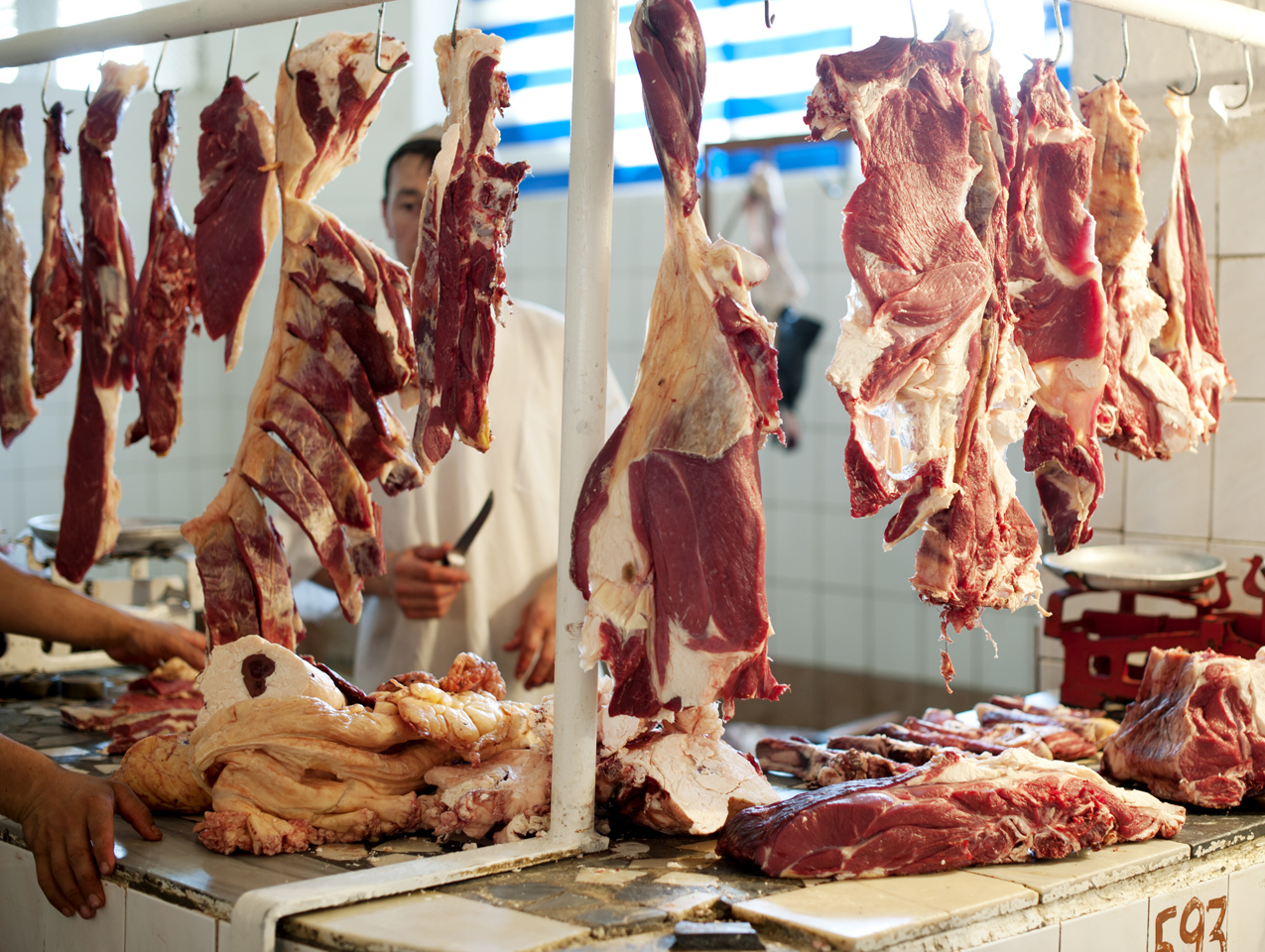
Apologies to those who are offended by the site of meat, but for documentation's sake, I had to show the butcher area of the bazaar.

Would you care for some chicken with your salmonella?

This woman's tripe stand was very popular.

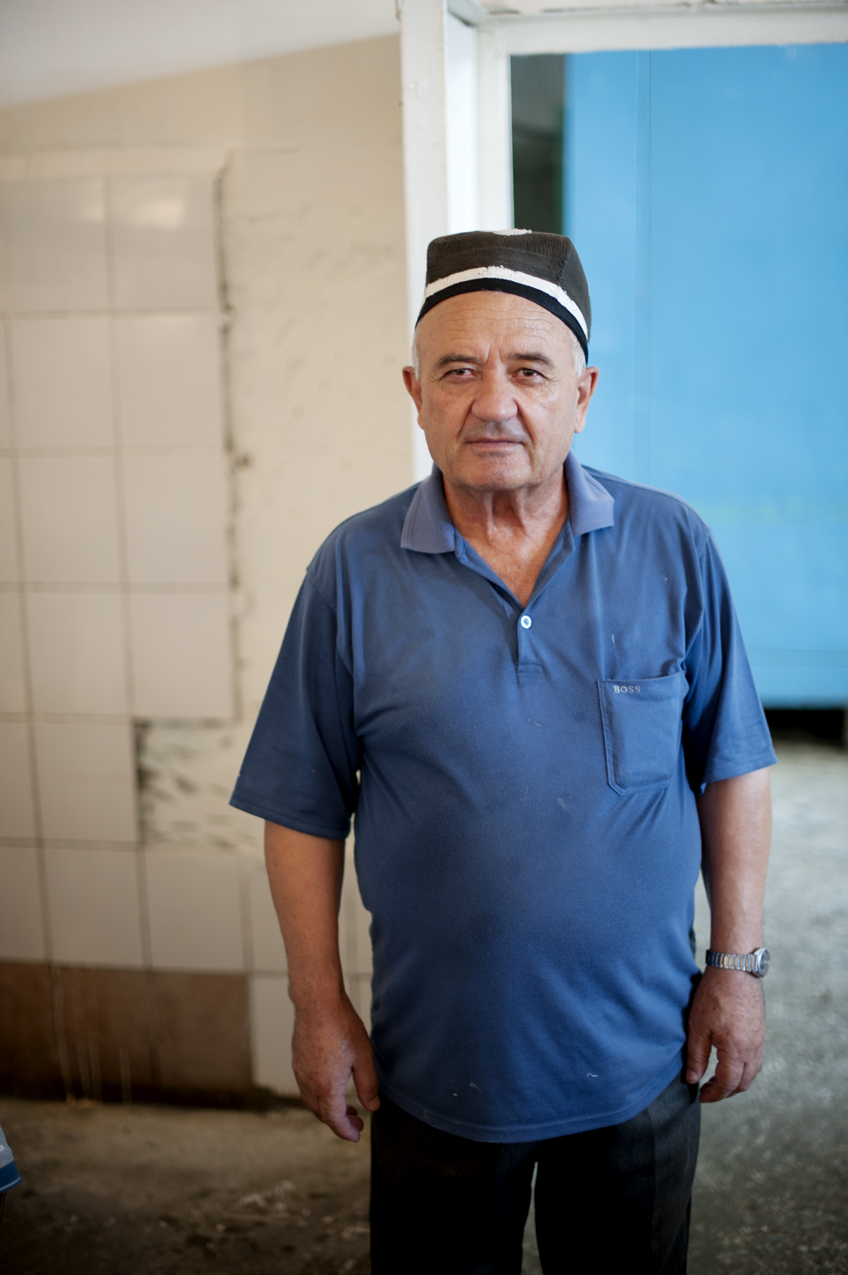
Another friendly, but unsmiling Uzbek, this man runs a horse meat shop.

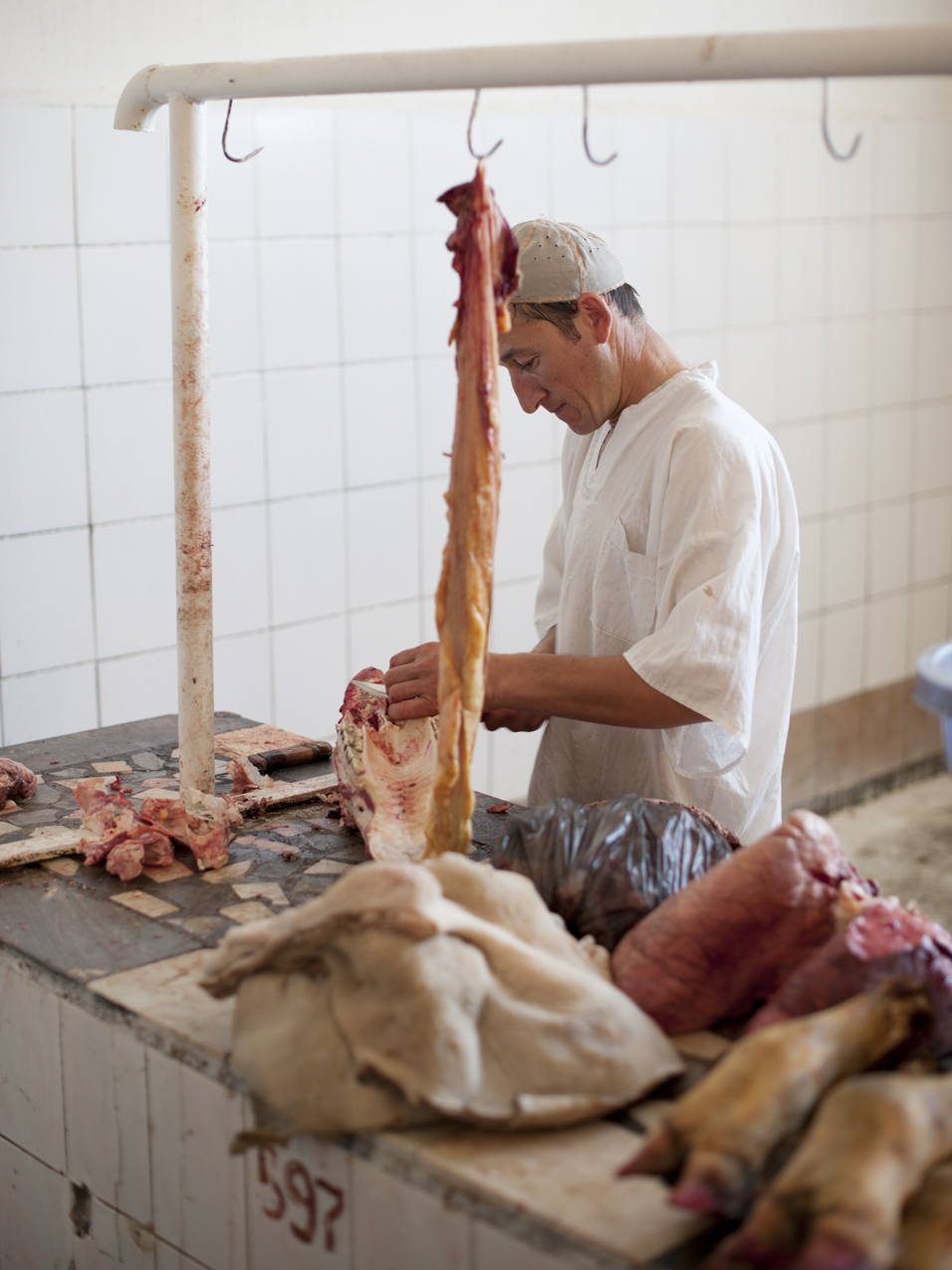
This butcher was hard at work on a large animal.

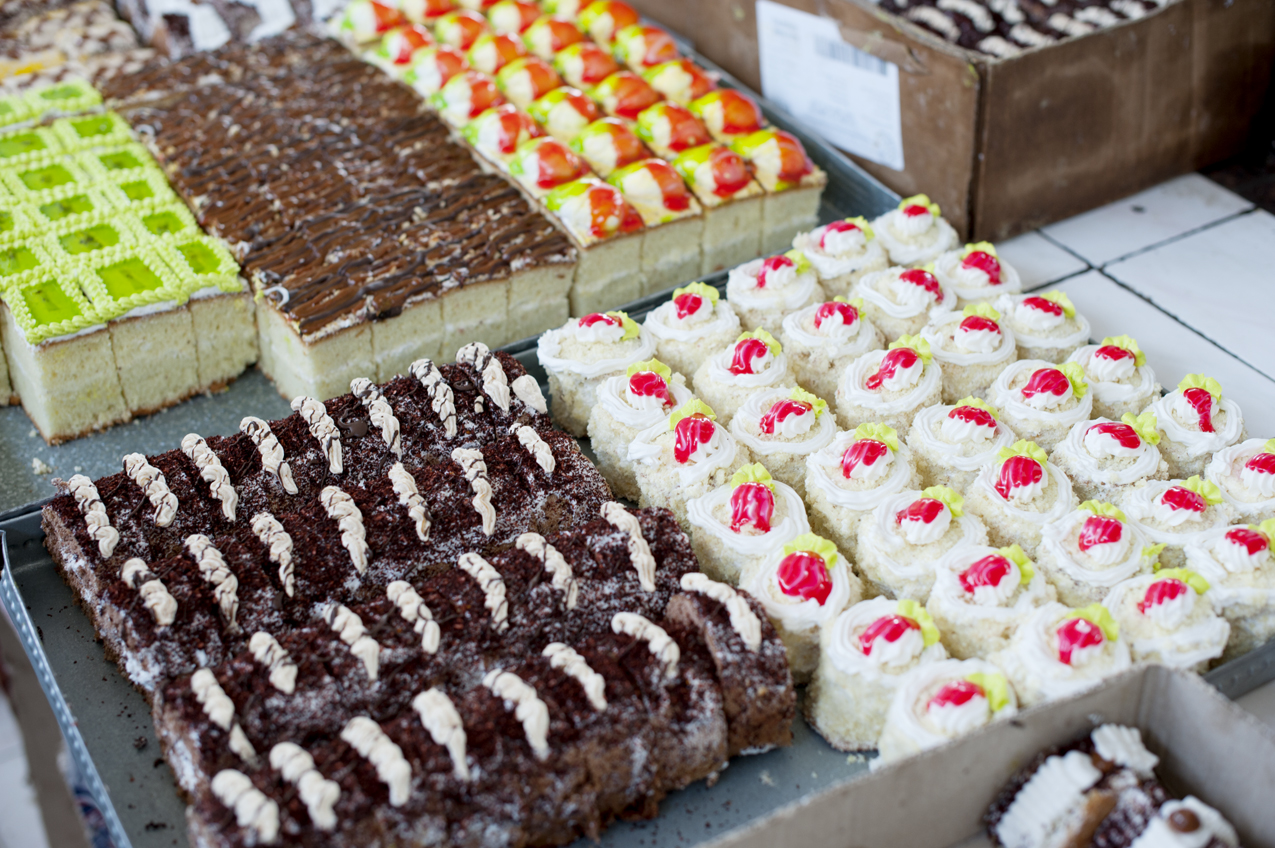
A little respite from all the meat, the sweets area of the bazaar had some treats that looked pretty good.

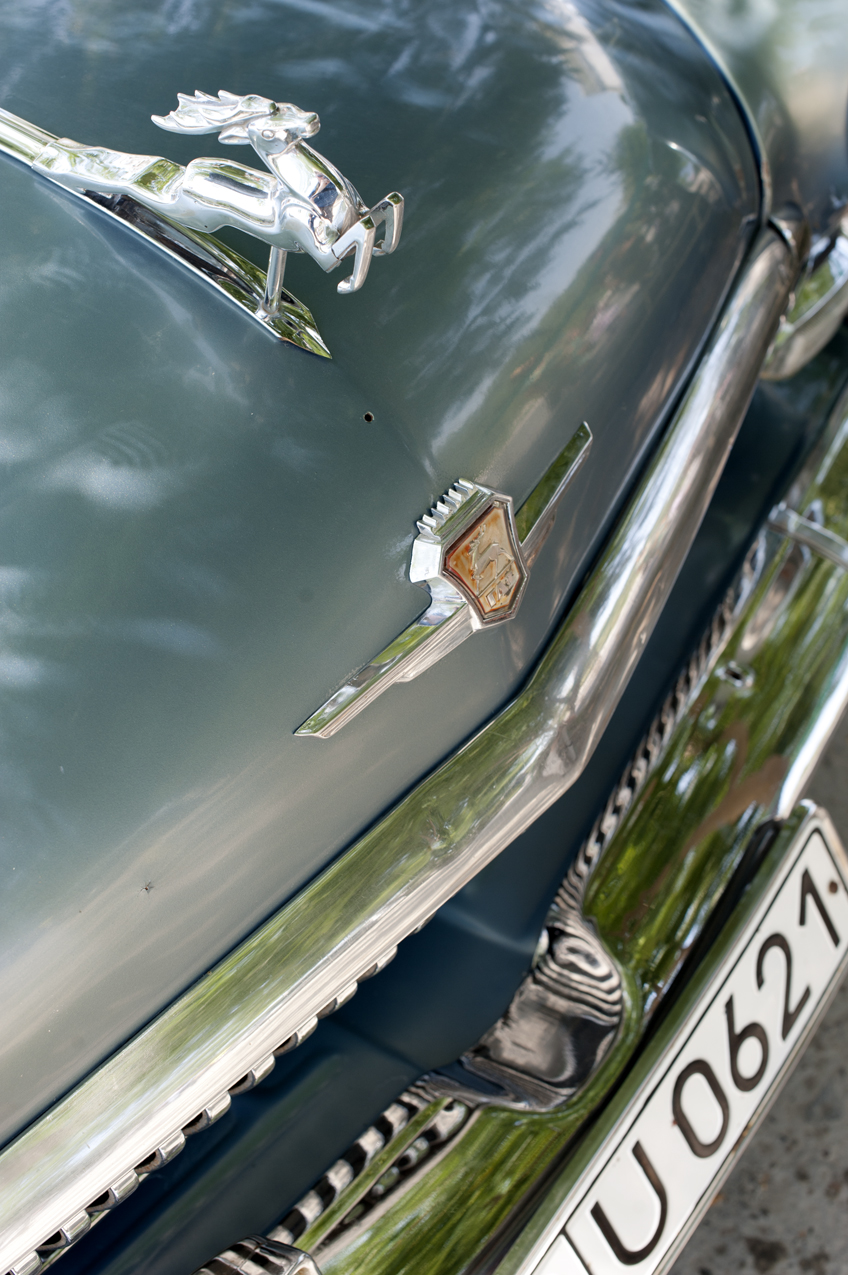
An old soviet classic

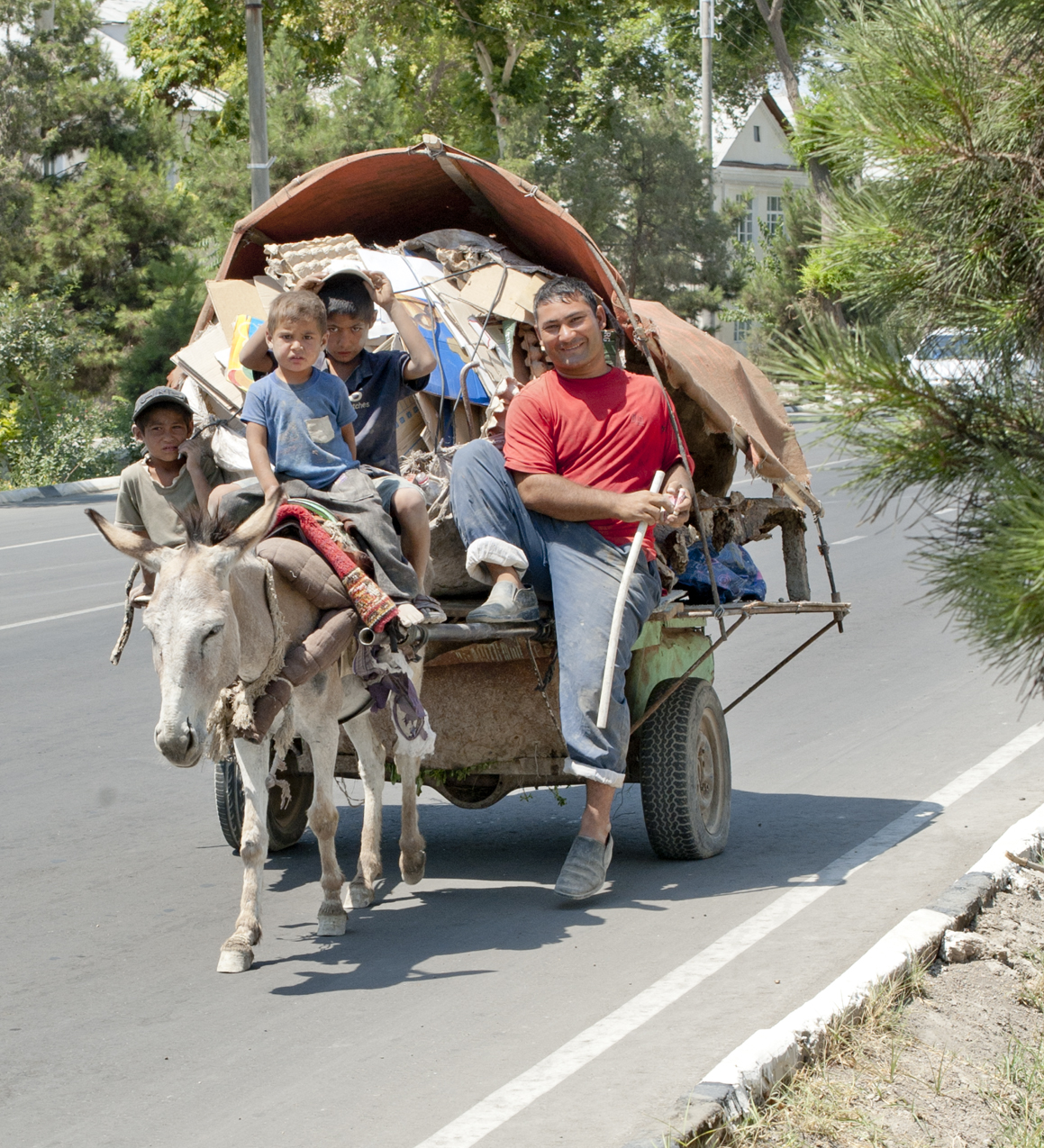
Off to the market!

I wonder how this truck cab got up there.

This somewhat funny-looking mausoleum is called "Four Minarets." I wonder where they got the name.

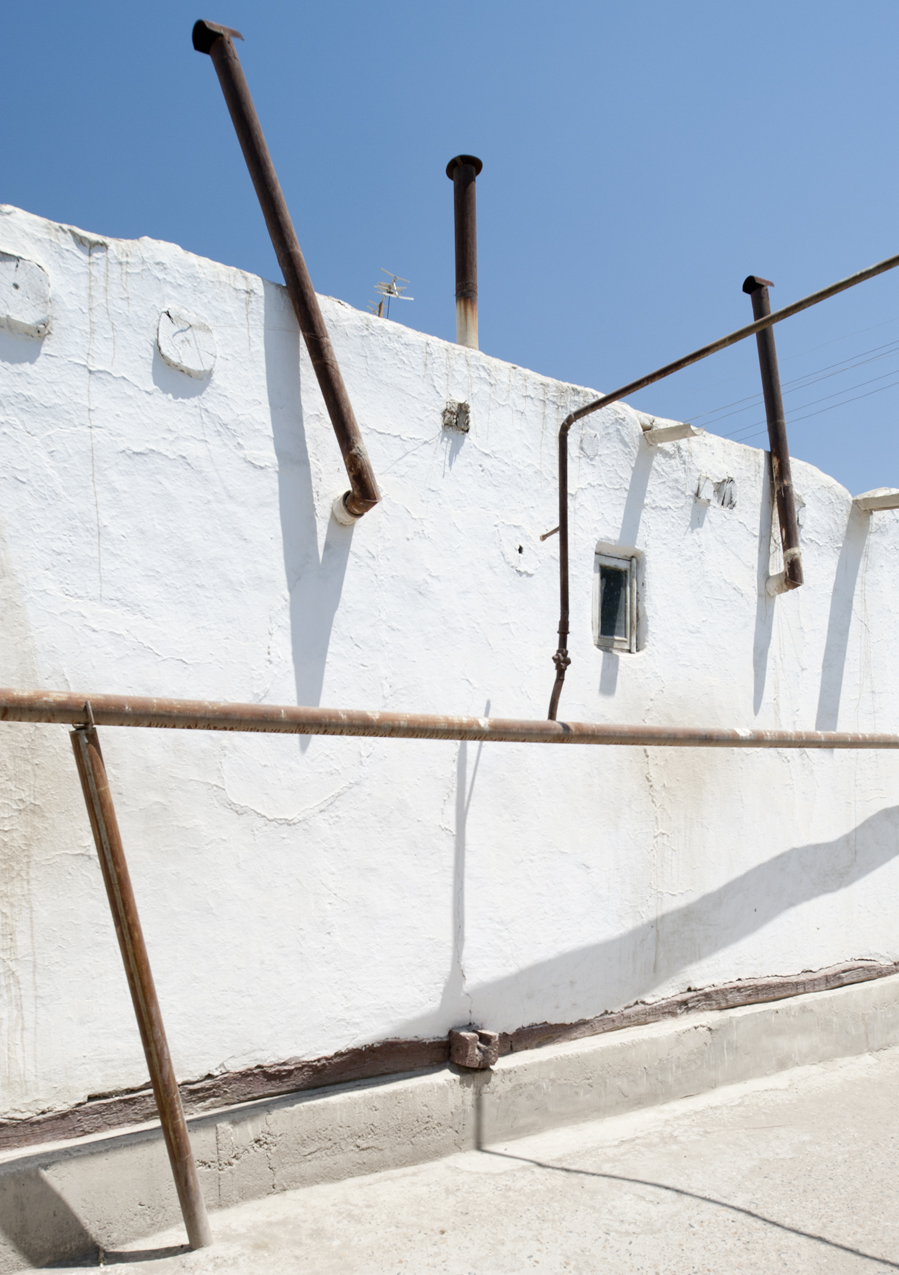
Bukharan neighborhoods are full of all sorts of pipes poking out in all directions.

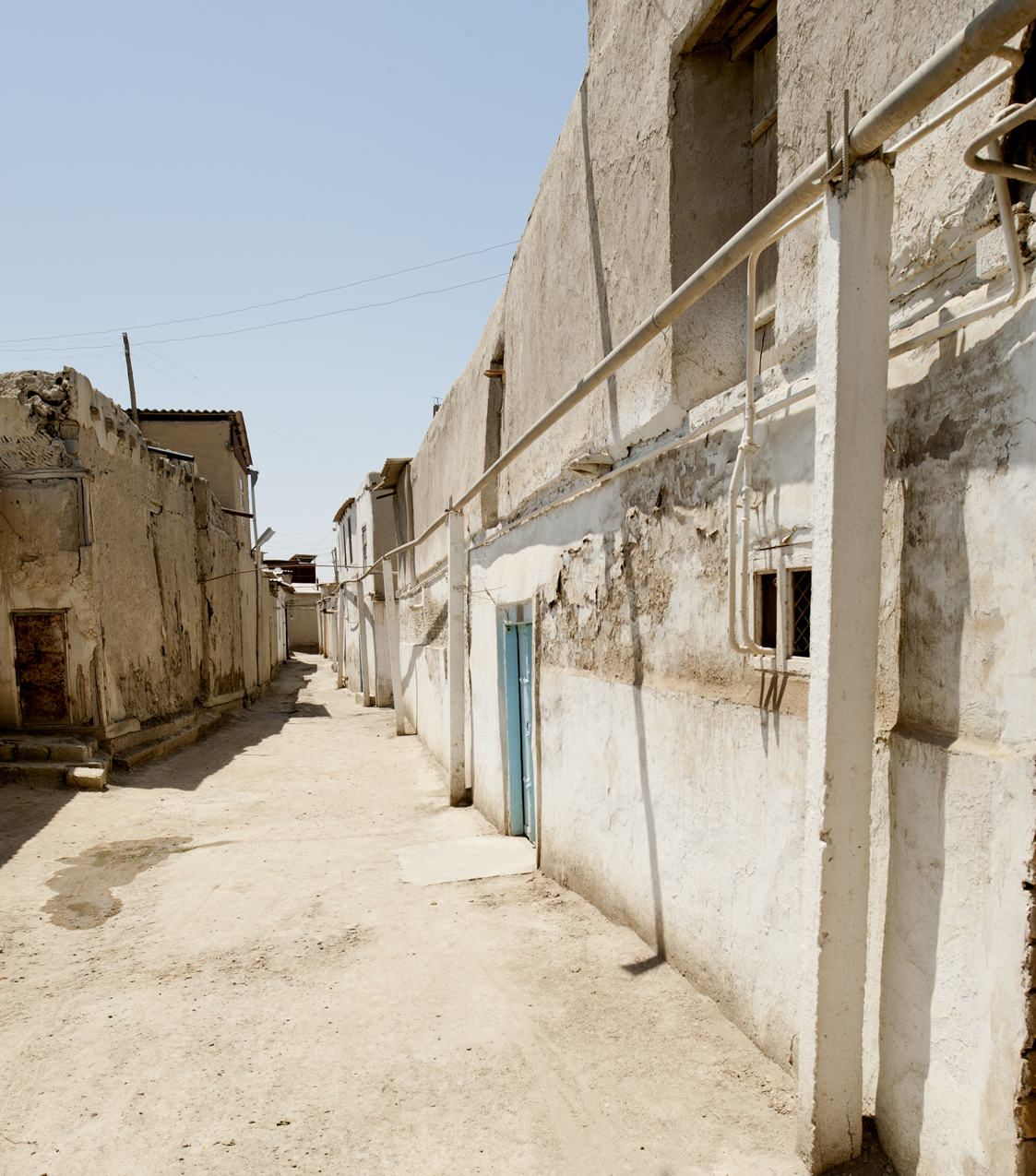
Only noon, and the streets are completely deserted.

Another way to beat the heat, head to a hammam. This bathhouse is 600 years old, and still in operation.

The cavernous interior was composed of a series of interconnected domed rooms, lit from above by oculi. According to the proprietors, the water and floors are heated by "underground fires." My visit here will remain one of the architectural highlights of my whole trip. It was a little too foggy for photographs, however, and way too wet for sketching.

Most of the medrassas have been converted into craft shops.

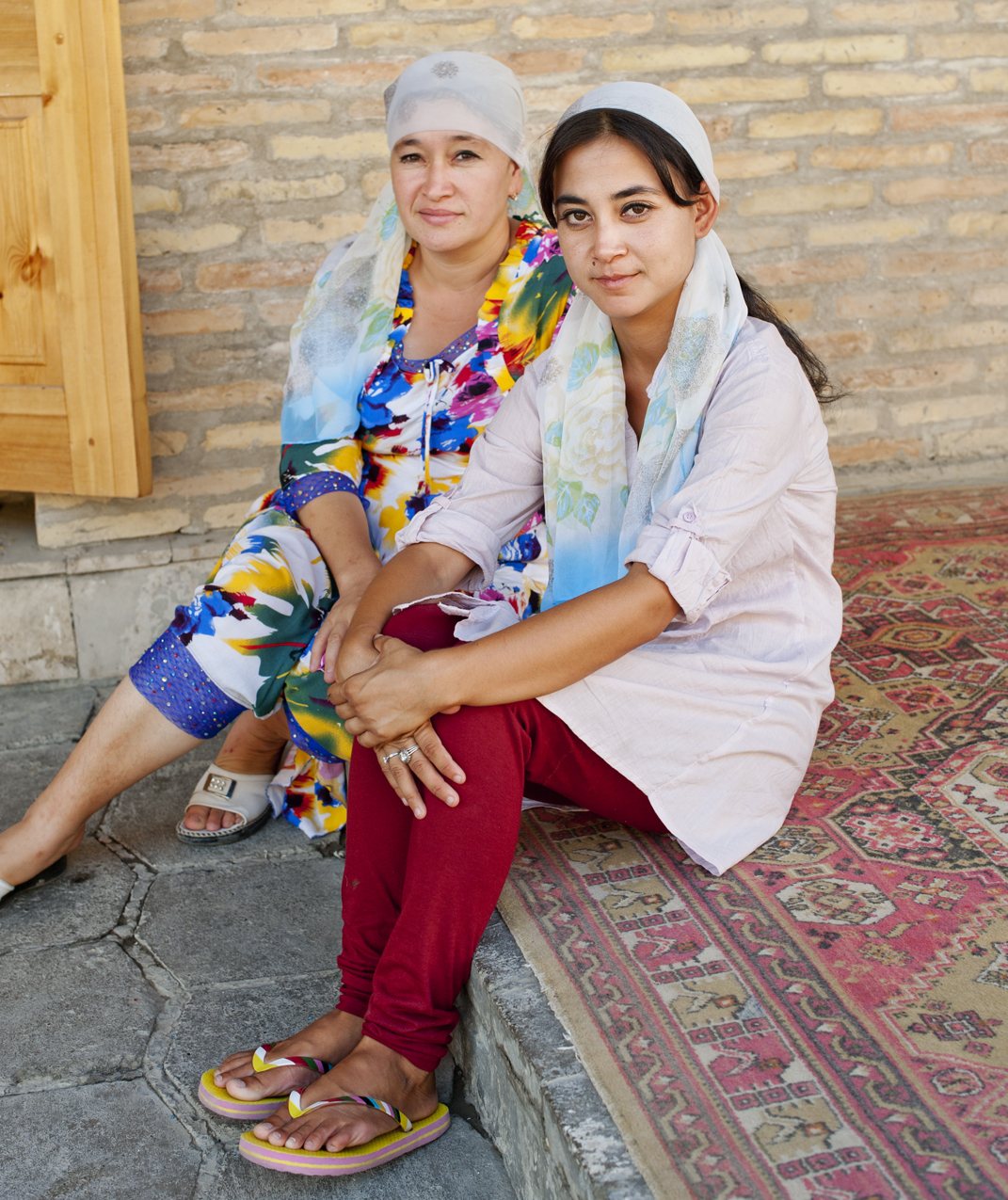
One of the persistent scarf-salespeople who would not leave me alone, this woman and her mother also sold table cloths and ceramics.

I spent my last evening in Bukhara trying to soak up all of the details of the city. I'm headed towards a very different type of architecture in Istanbul.

On approaching the ornamental details, it becomes clear that every little niche is different.

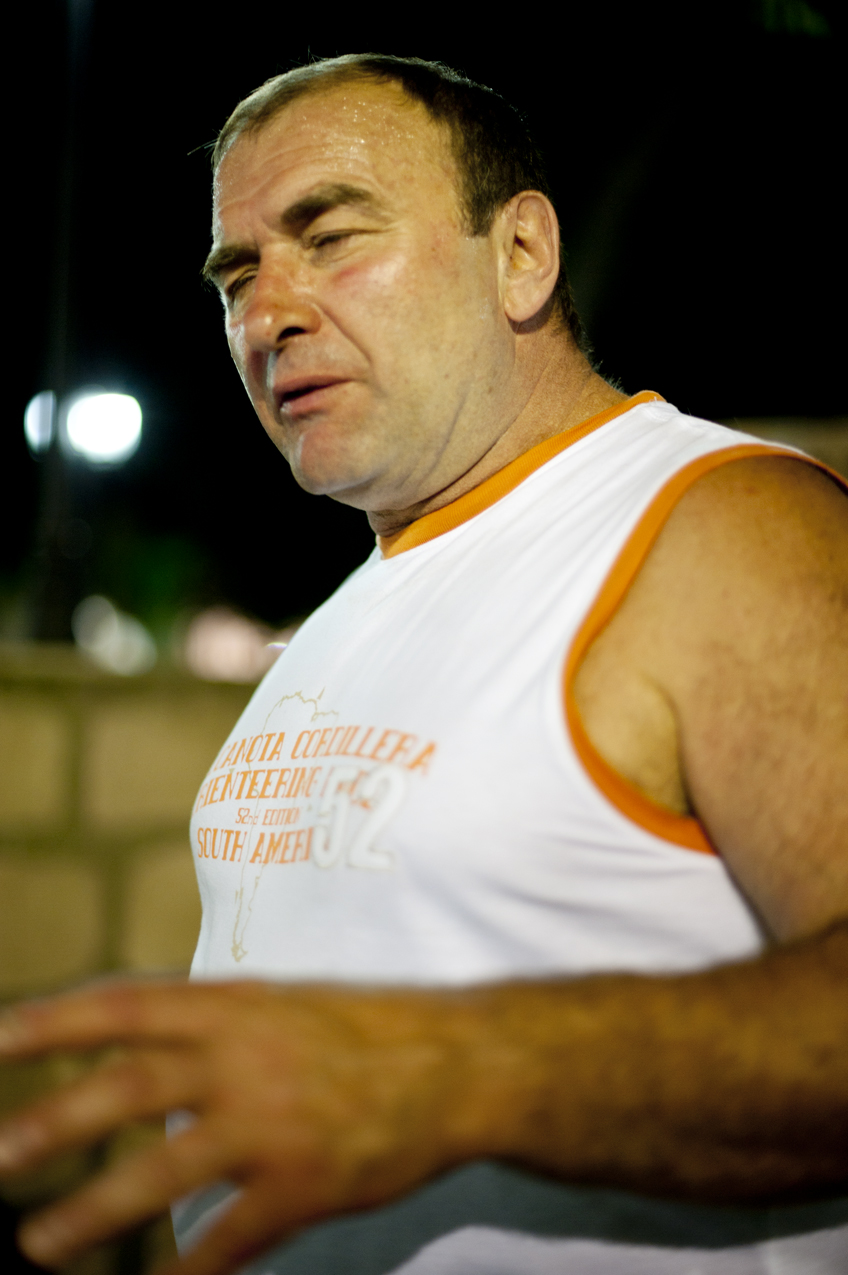
A former Kazakh weightlifter, this guy invited us over to his table, which he was sharing with some old weightlifting buddies who have become Uzbek bigshots.

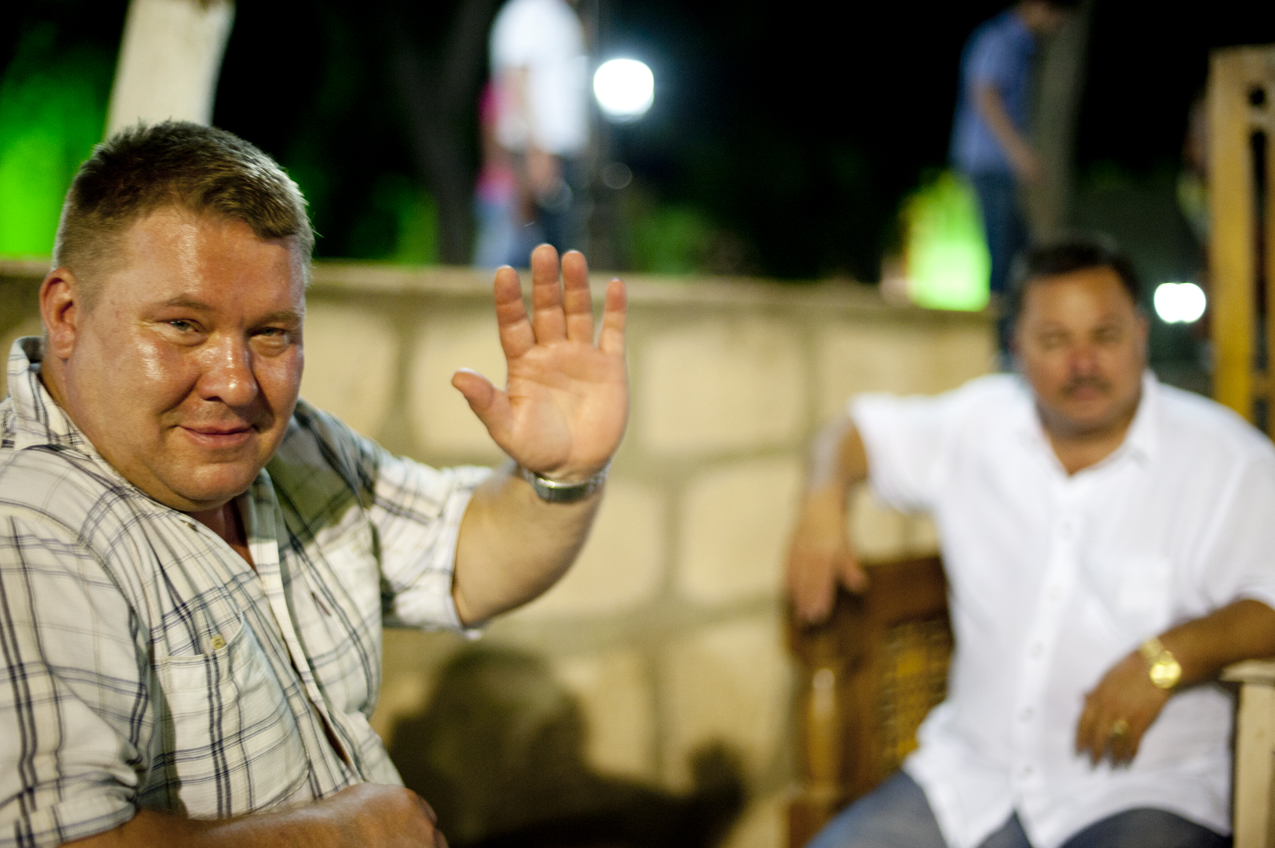
I never would have thought that these guides were former athletes, but they claimed to have been competitive weightlifters. The guy in the background is evidently extremely wealthy, and very well connected in this country. I was told to mention his name if I run into any problems. Hopefully this will come in handy at customs tomorrow morning.

Sick Again

Unfortunately, after a grueling 8.5-hour train ride with broken air conditioning, I am again in the throes of a violent stomach illness.  I know that many of you have been waiting for an update with photos, but unfortunately, I just don’t have the energy to do it right now.

I’ll try again tomorrow.