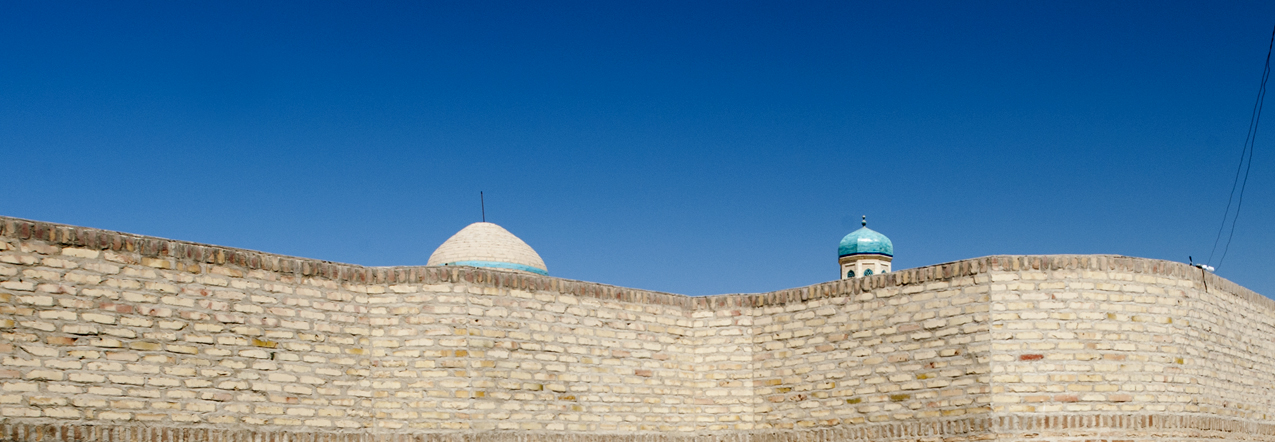
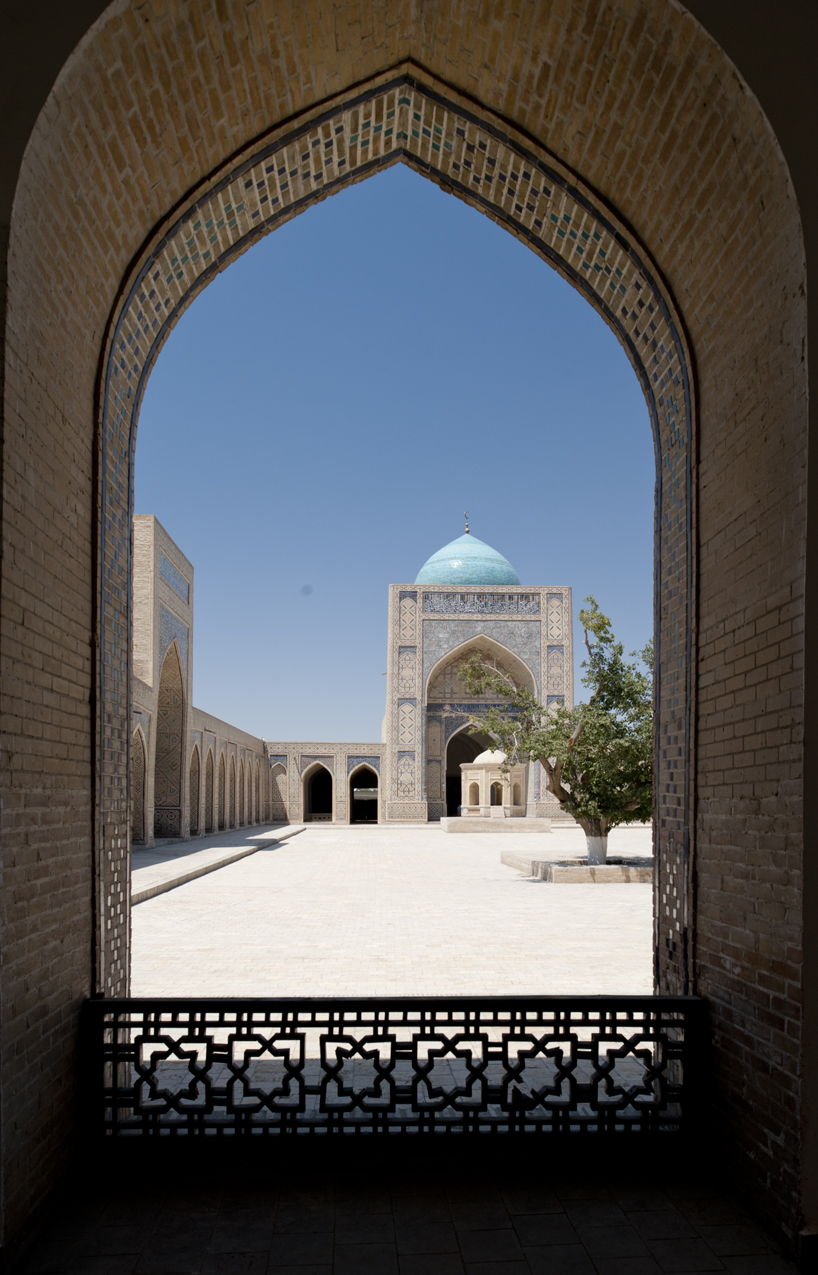
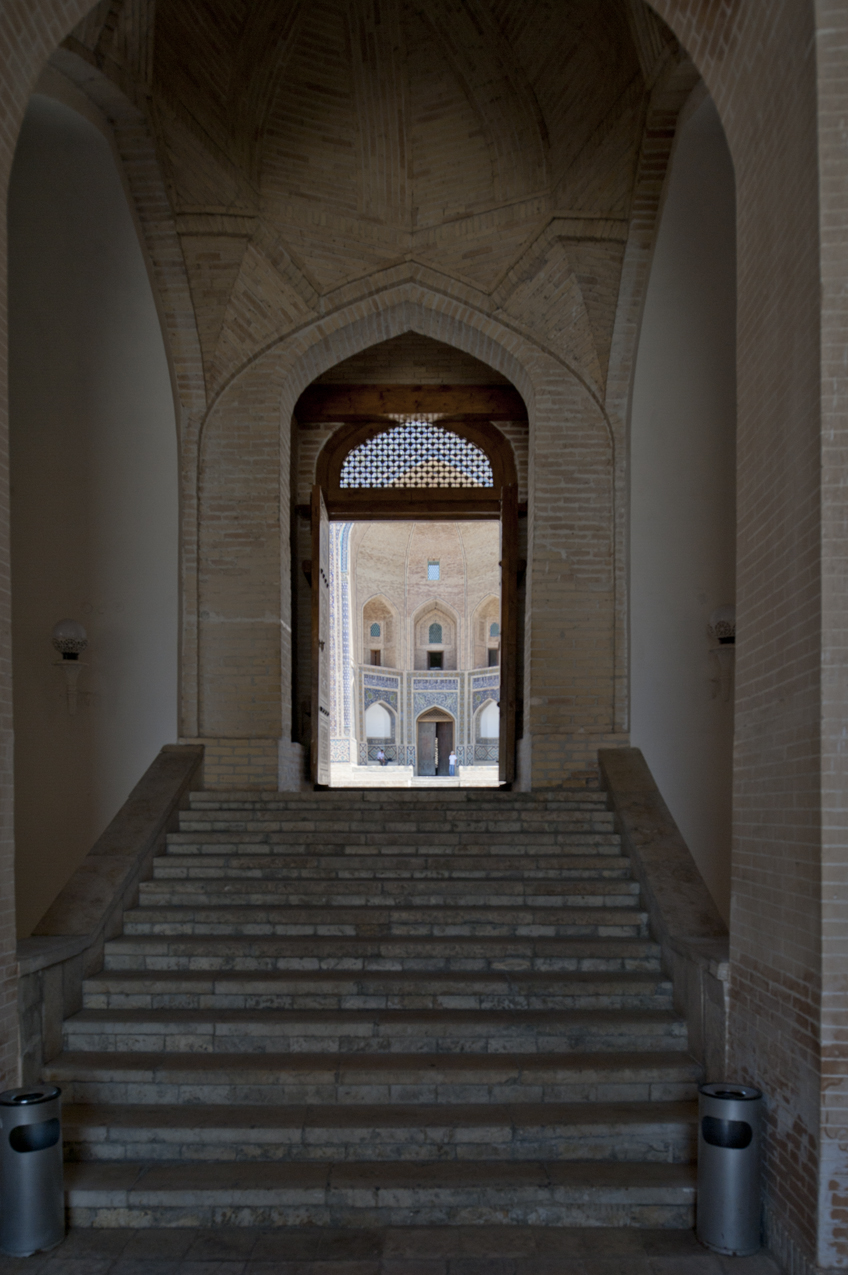
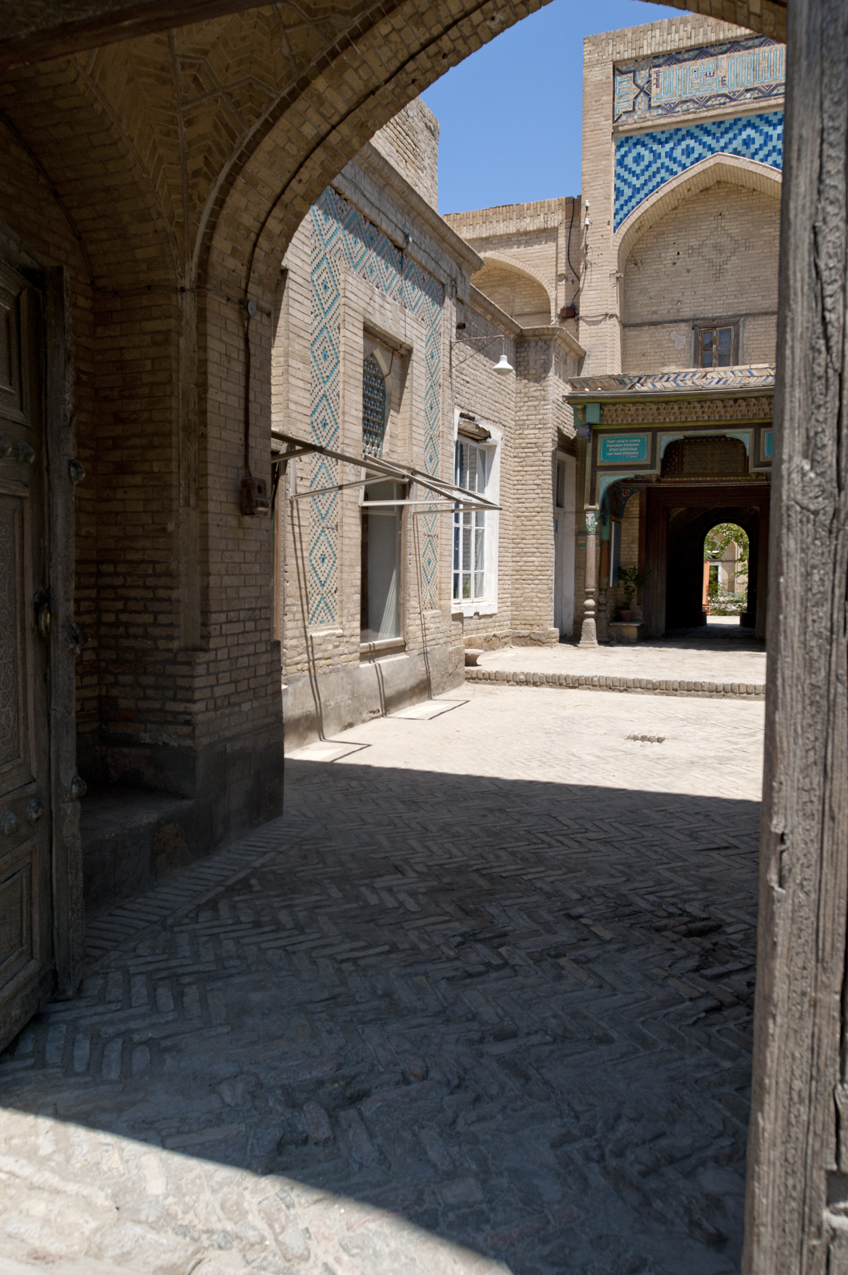
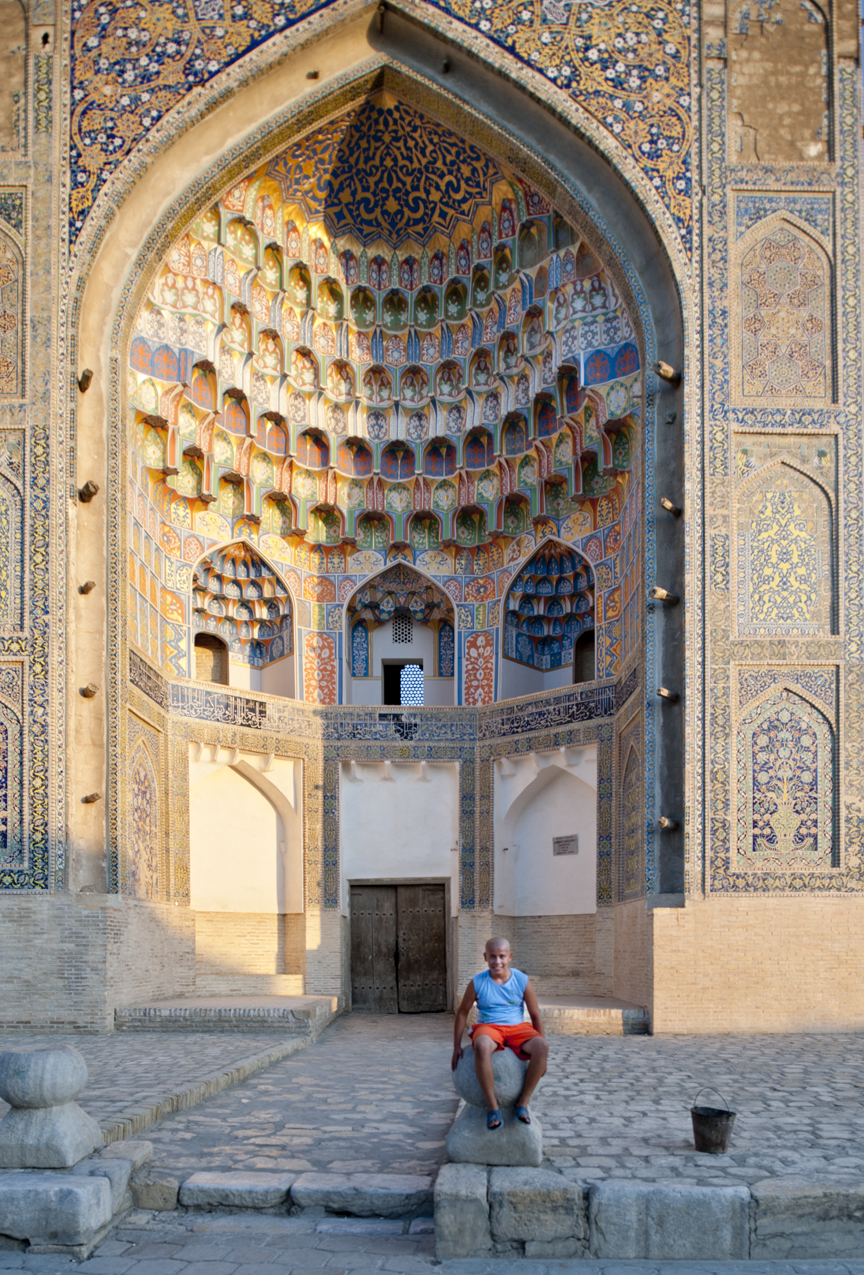
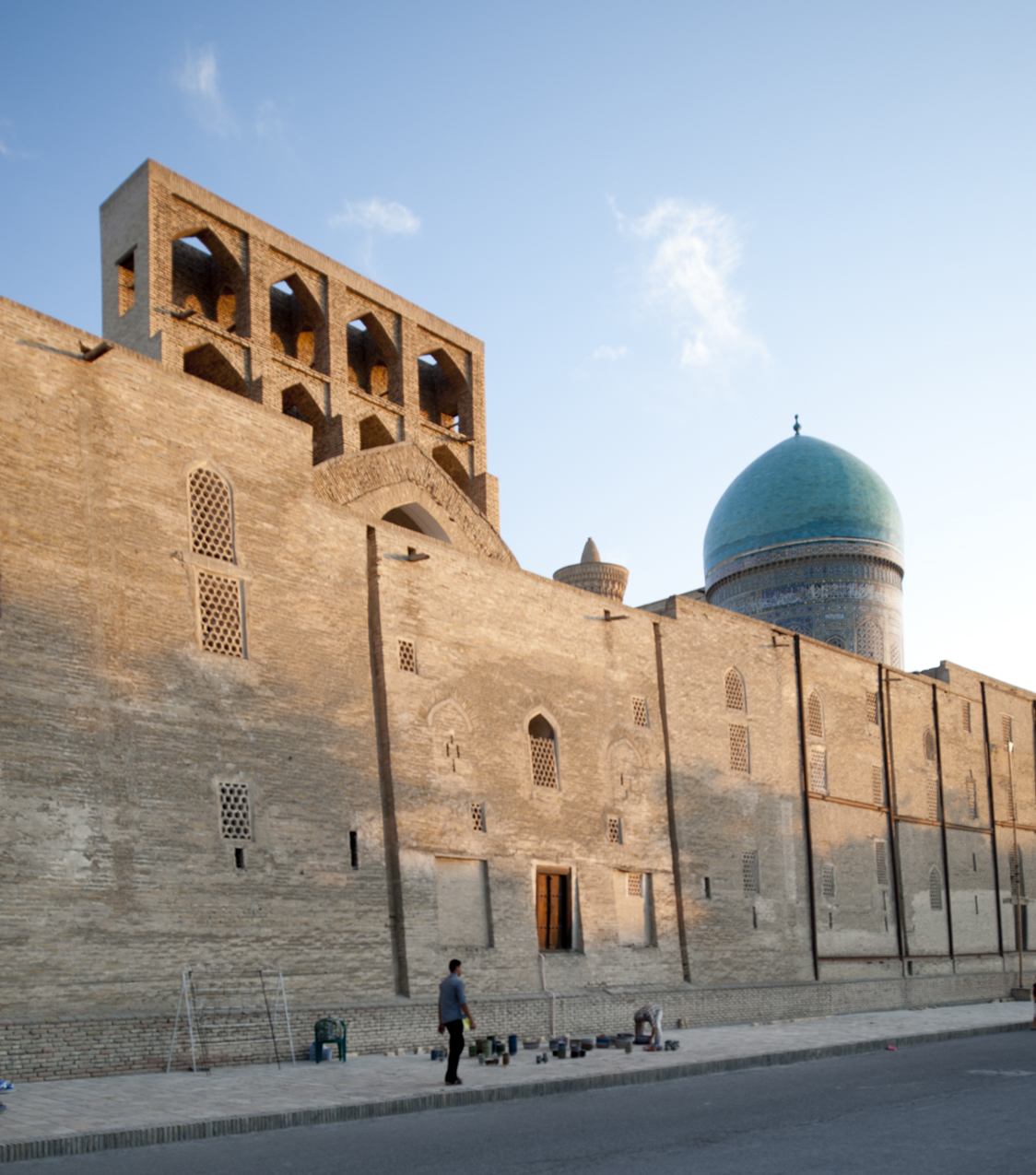
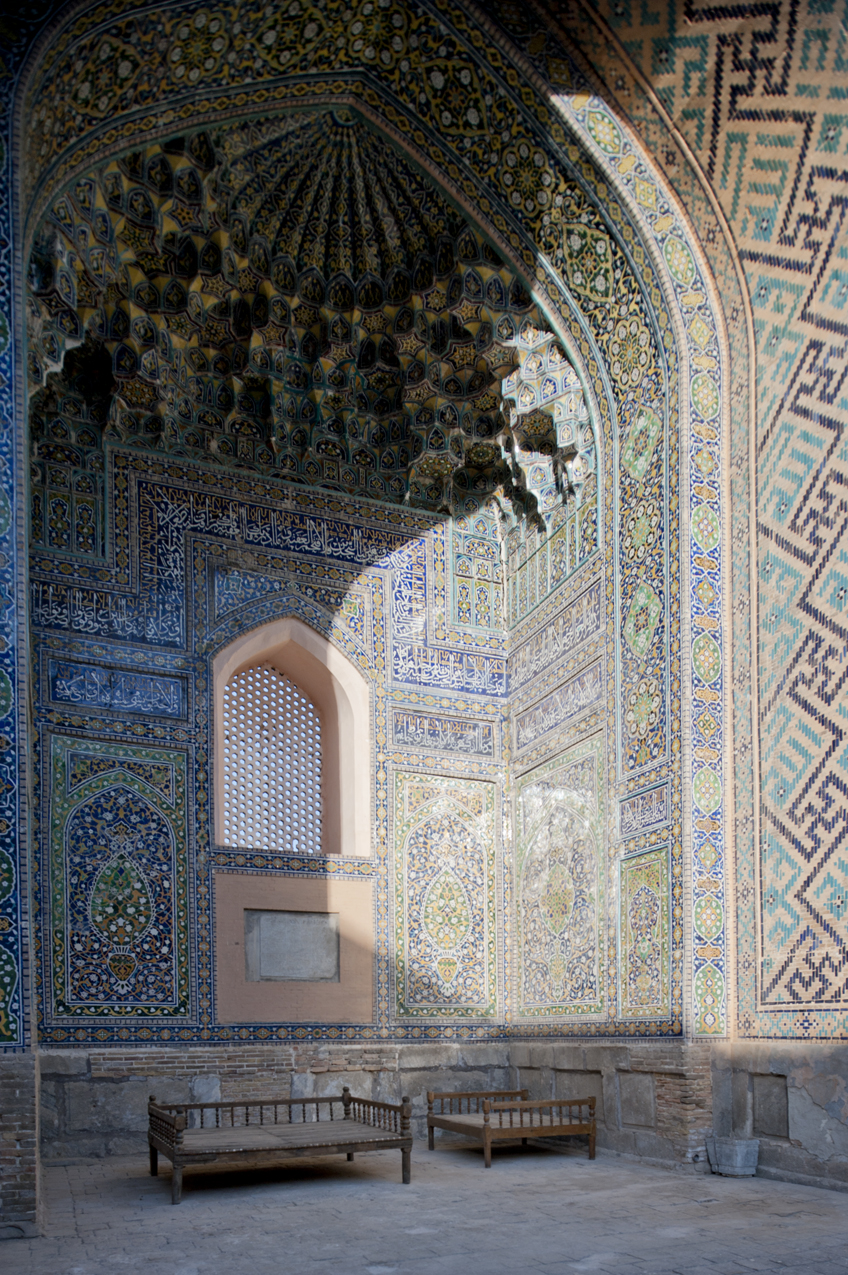
Bukhara Nights


Unfortunately, I’m only going to be able to post the above photo for now.  The rest of the documentation from today’s adventures will have to wait until tomorrow.  I’ve only now just gotten back from an evening spent with some Uzbek big wigs, and it’s too late to go through the photos before my early morning train tomorrow.

To make a long story short, I went to a produce market, and spent the afternoon at a hammam today.  In the evening, I somehow met a group of former Kazakh weightlifters, and enjoyed the evening with them.  One of them has invited me to dinner in Tashkent sometime in the next couple of days, so I look forward to taking him up on his offer.

I’m headed back to Tashkent tomorrow morning, and I have to say that I’m more than a little bit sorry to leave this town.  At first, I didn’t think that I would find much to interest me here, but I have grown to really enjoy the place.  I’ll be sorry to leave, and especially sorry to head back to Tashkent.

I’ll have more in my post tomorrow, so check back then!

-Tad

Another Bukharan Scorcher

After heading out this morning, I soon realized that it was too hot to accomplish anything today.  Even sketching in the shade was painful, and it was impossible to prevent the sweat from dripping from my brow onto the paper.  Temperatures reached 48 degrees (118 Fahrenheit), and are expected to climb to 50 degrees (122 Fahrenheit) tomorrow.  I learned first hand today that this is just plainly too darn hot, and the fact that I was about a mile and a half from my hotel at 2:00 was a big mistake.  I have begun to think that perhaps heat exhaustion is responsible for my upset stomach the past couple of days.

I made it over to the Ark, Bukhara’s ancient fortress, and then spent a couple of hours wandering from one site to another, not having the energy or motivation to actually spend time at any of them.  Eventually, I decided that my health was at stake if I did not get back to my hotel quickly.  Once I finally stumbled back, I spent the next four hours in a state of semi-consciousness, trying to hydrate whenever I could lift a water bottle to my lips.  By 7, though, I was ready for some more exploration.

Here are the photos (click to enlarge):

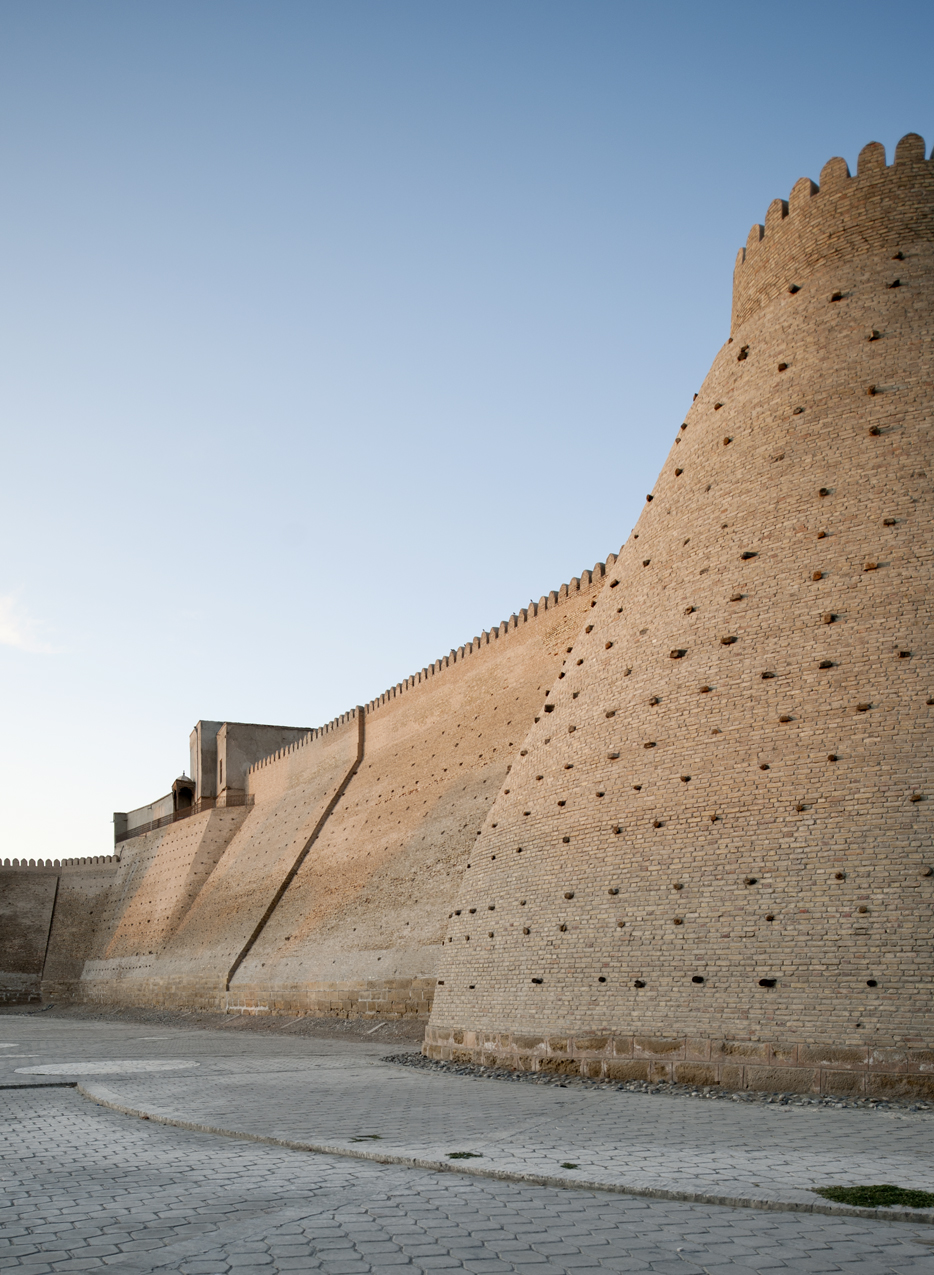
Bukhara's ancient fortress is called the Ark. I walked by it last night, and snapped this photo and the next one, and took a trip inside today.

Two British officers were once forced to dig their own graves in this plaza in 1842. When the holes were sufficiently deep, they were summarily beheaded. One of them, Stoddart, had just spent three years in a nearby dungeon, where he was housed in a bug pit. The other, Connolly, had been sent to negotiate Stoddart's release. He was evidently not successful.

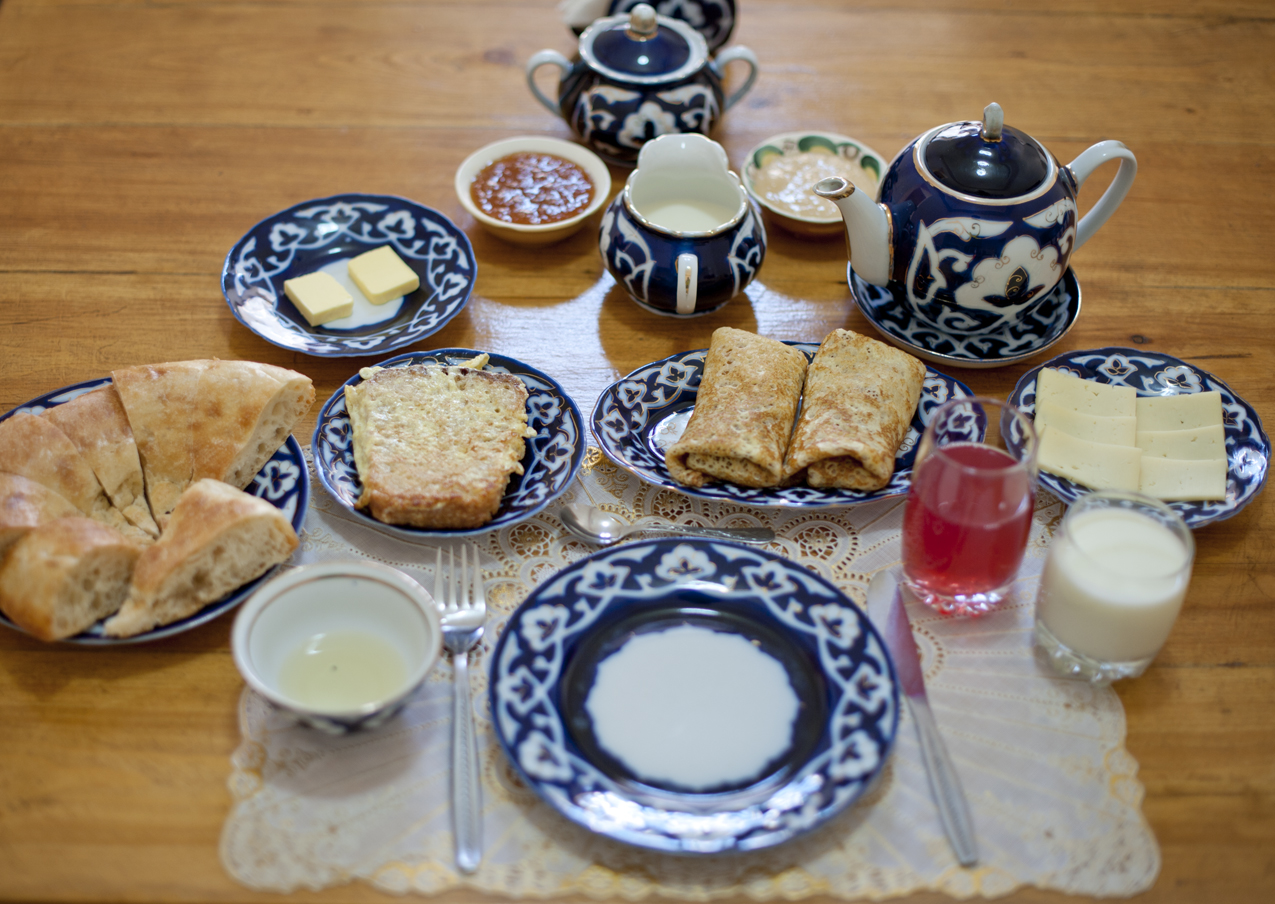
My breakfast at this place has been pretty good. I try to eat enough so that I only need a small snack at lunch.

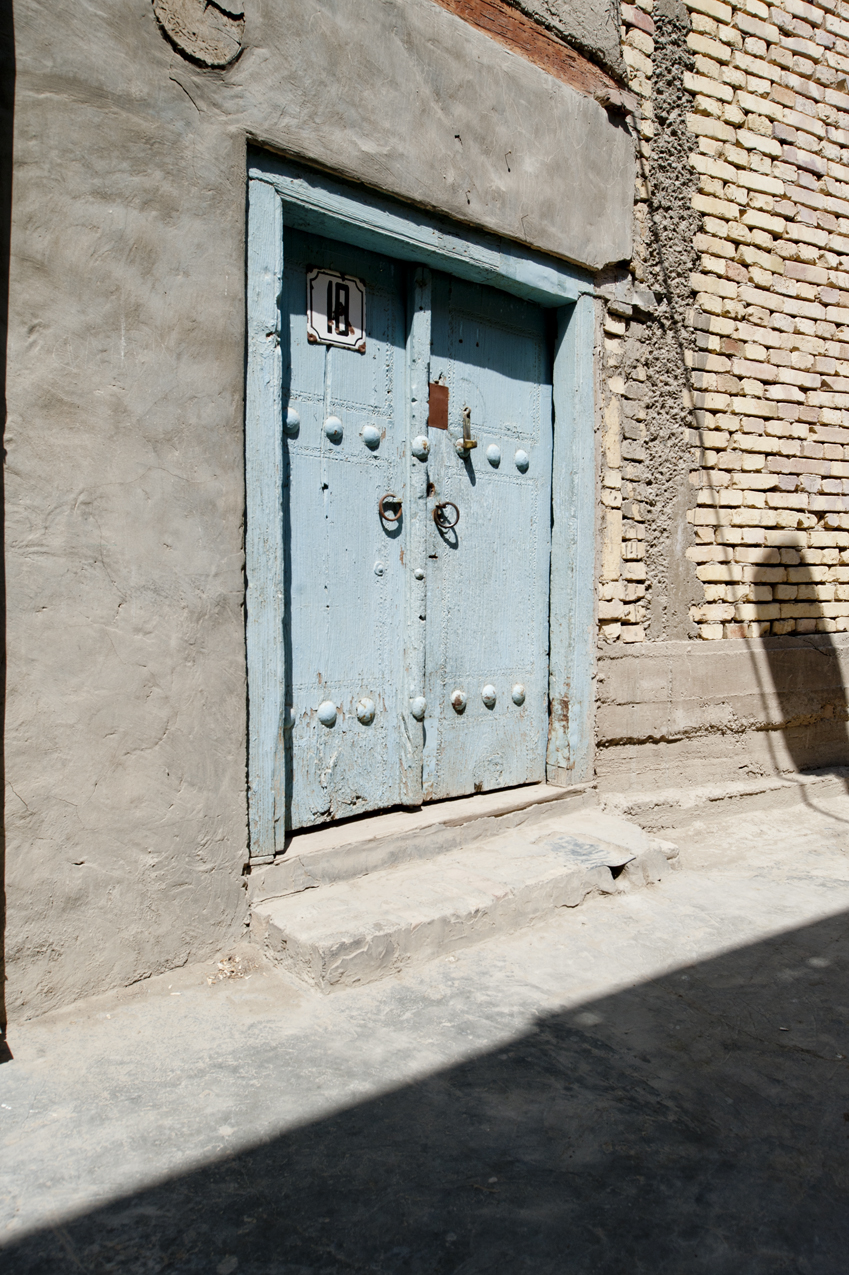
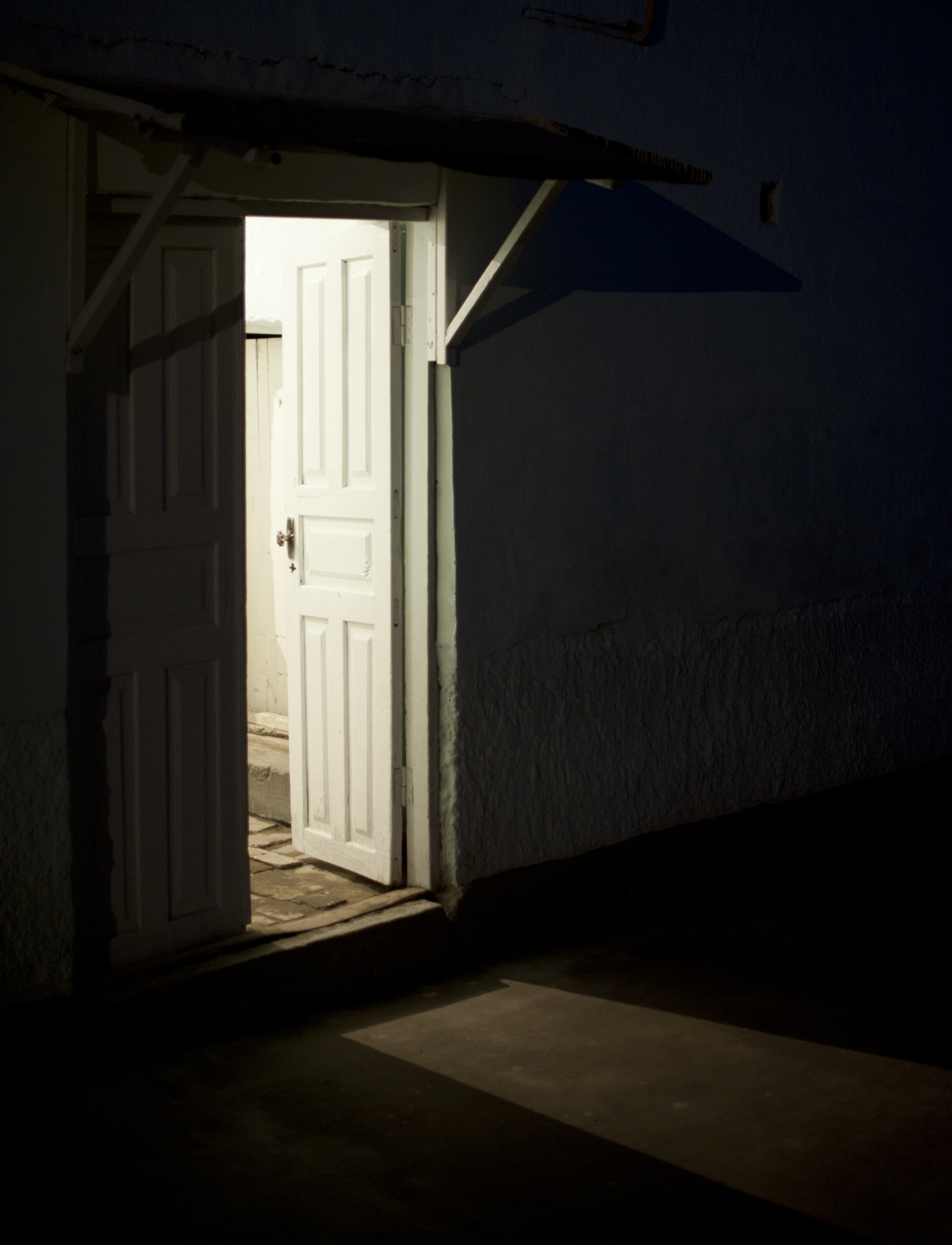
The residential section of town is filled with these old doorways that lead to courtyards. There's no scale to the photo, but the doors are only about 4.5 feet tall.

It was already getting painfully hot by 10 AM. In this photo, you see one of the few signs of life that I encountered in the old section of town: a boy on his bycicle, presumably trying to get home to the shade (he's on the right side of the picture).

Fans of narrow passages will have much to celebrate in Bukhara.

The interior of the Ark was surprisingly vacant, and unremarkable. Perhaps it was the heat, which made me incredibly uncomfortable, but I was a little disappointed. Much of the complex was bombed by the Soviets in 1920.

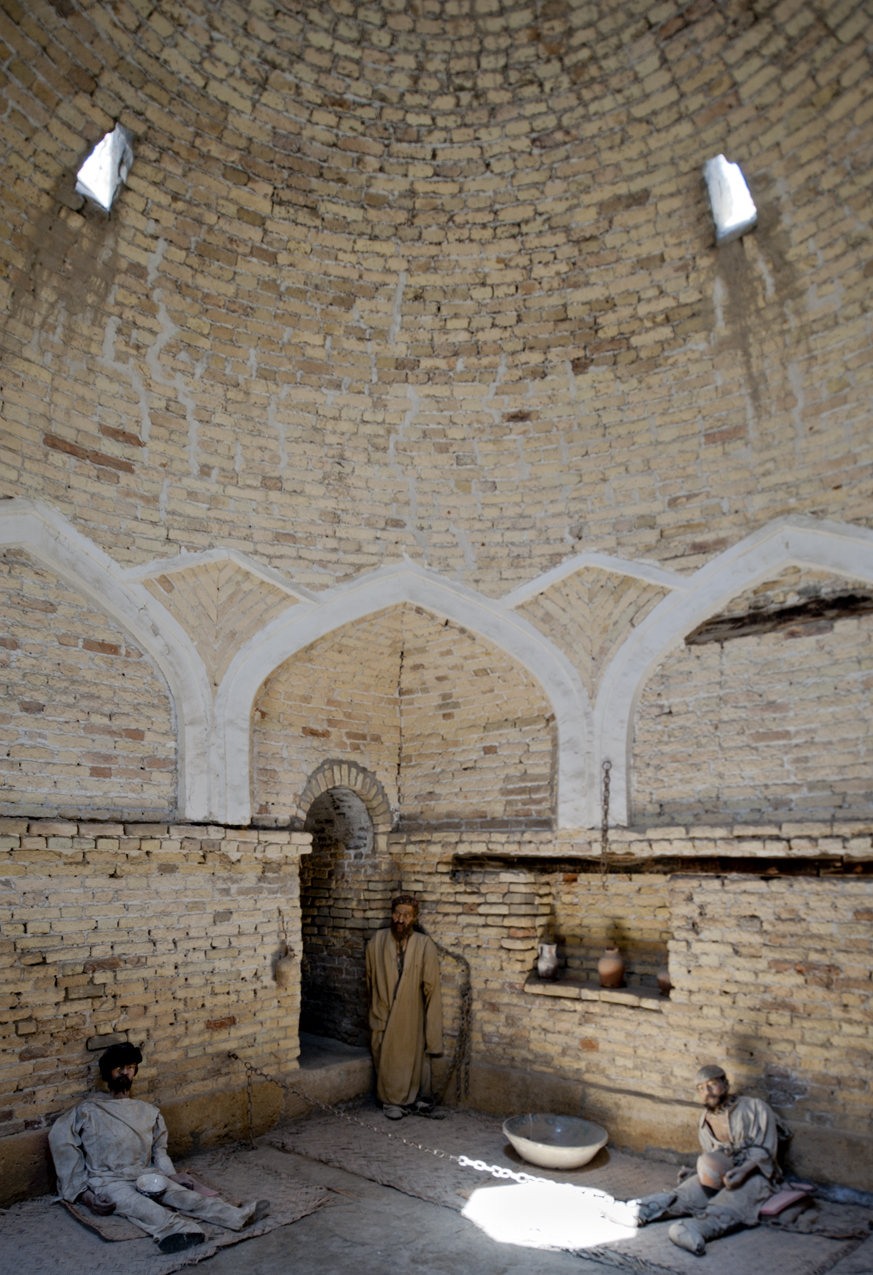
This is the jail in which Stoddart and Connoly were held before their beheadings. It was somewhat of a morbid curiosity that led me to make the visit. I had read extensively about their ordeal before making the trip out here, and a part of me wanted to see the bug pit.

The rooms within the jail have funny papier-mache people chained to the walls. The bug pit is next door to this room, but it was too dark for photos. It looked about how one would expect a bug pit to look, only without the bugs.

The emir attended this mosque, which across the street from the Ark. There's also a mosque withing the Ark, so I'm not quite sure why he went to this one.

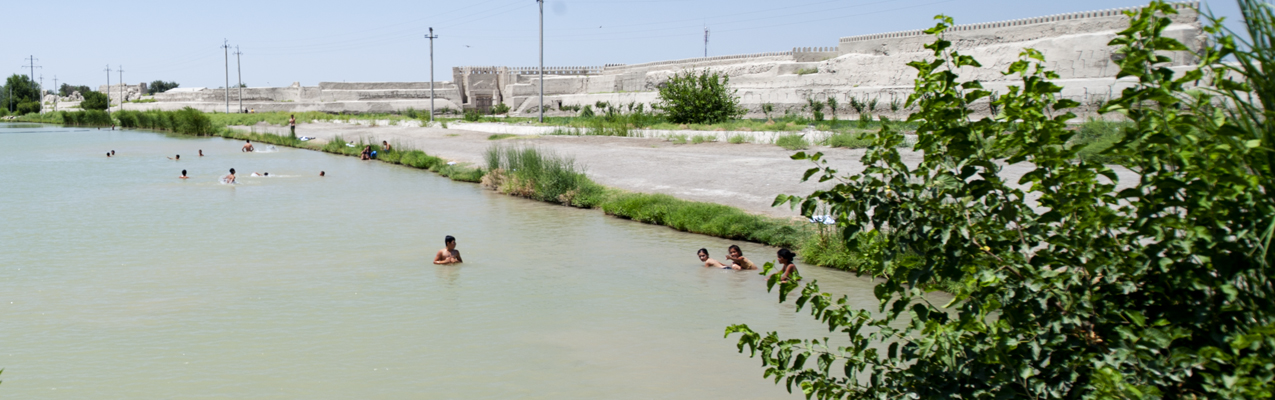
The best way to beat the heat? Unfortunately, not with my complexion. The water was really warm, too. Those are the ancient city walls in the background.

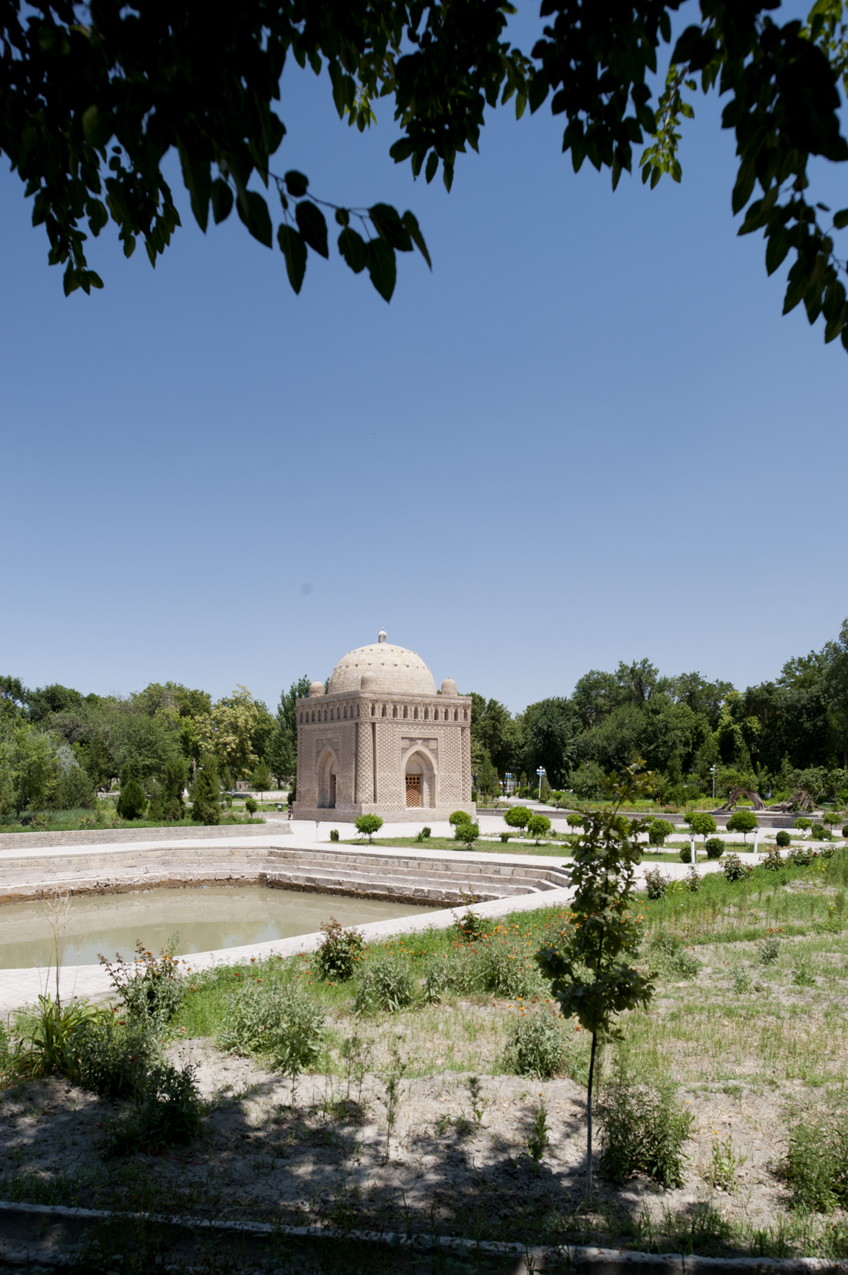
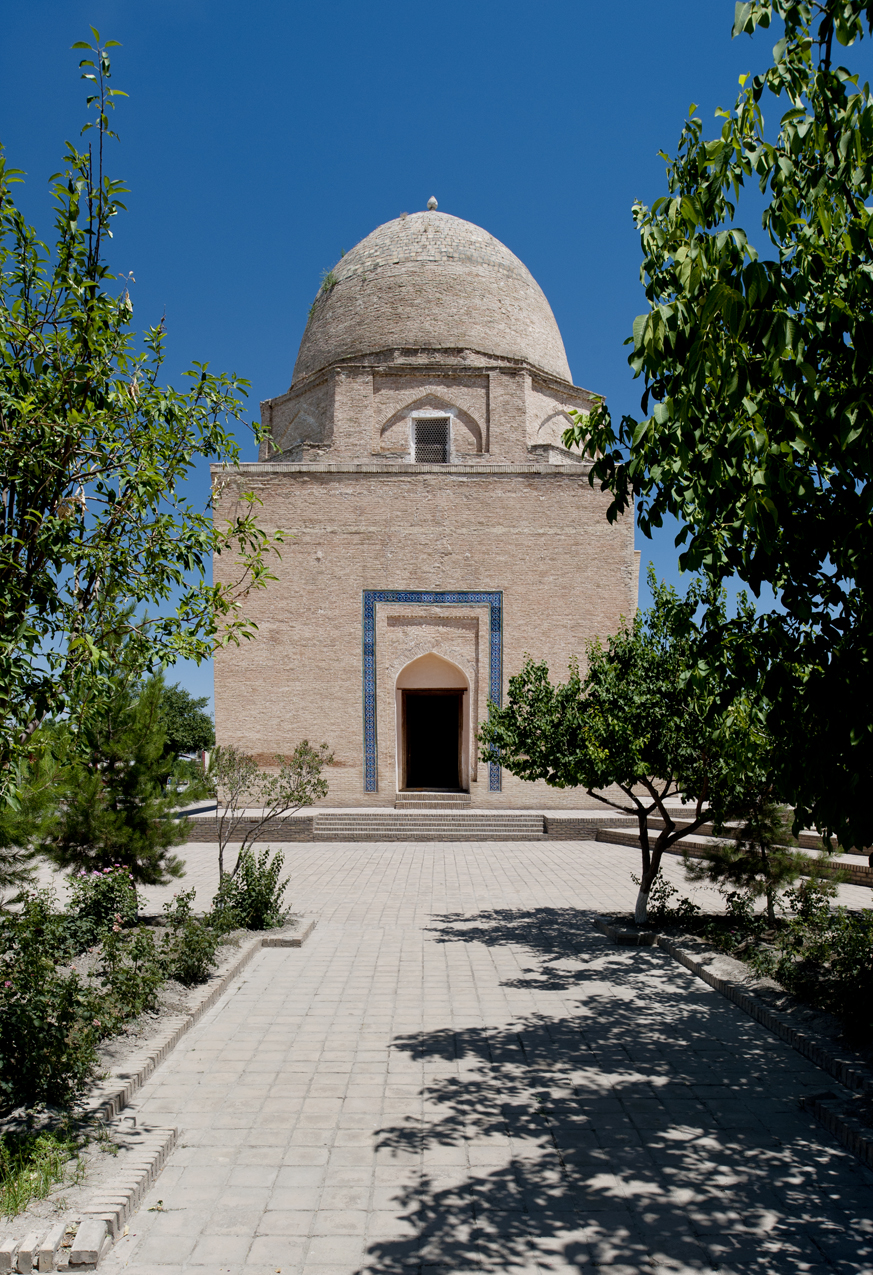
This mausoleum was built around 900, and is one of the oldest surviving Muslim structures. It's 2.5-meter thick walls have withstood countless earthquakes and invaders. One might think that the park surrounding it would provide a little cool shade, but it was little help.

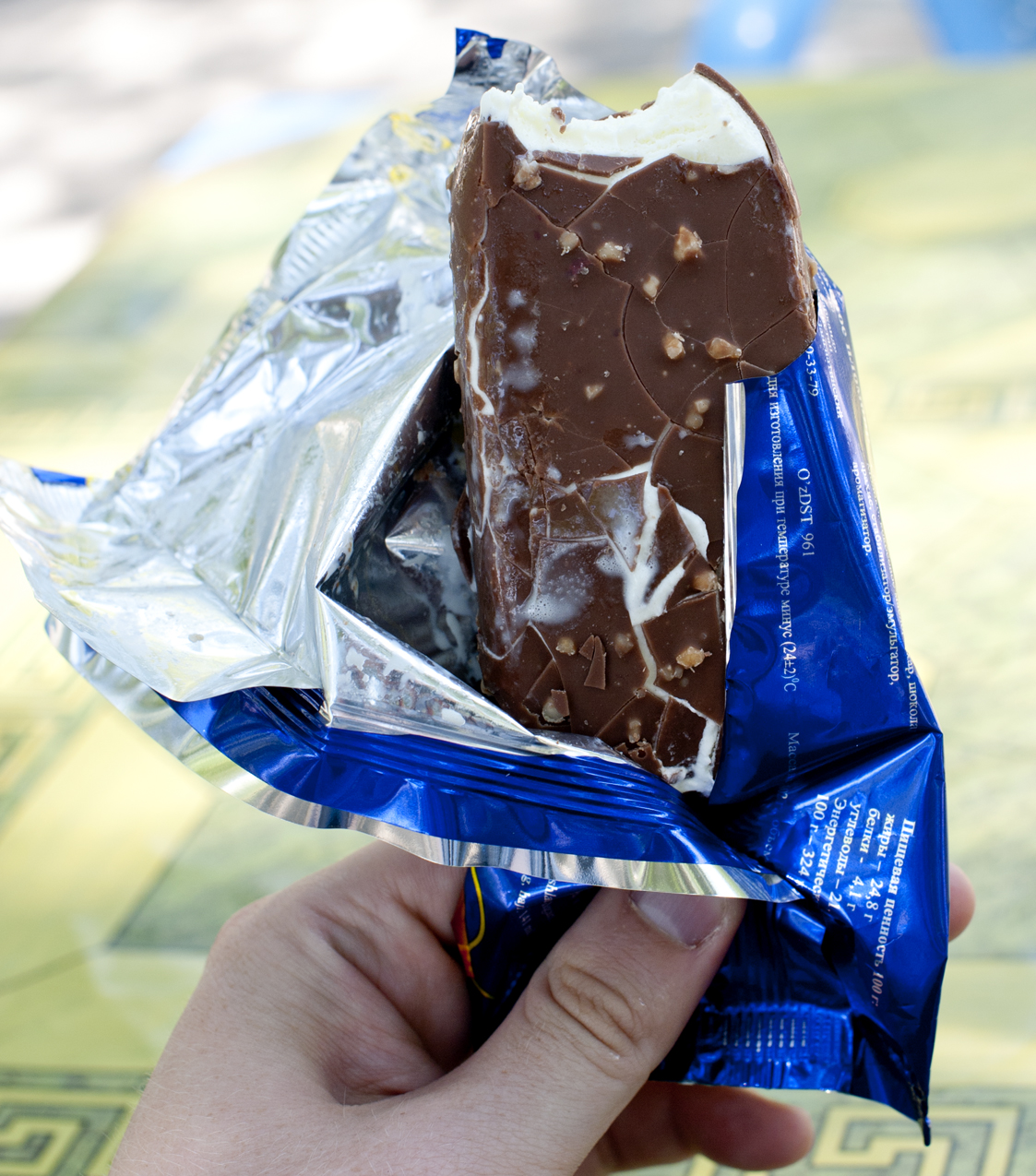
i saw a bunch of people eating these. In the hot sun, It began melting and falling apart as soon as it was taken out of the freezer, and no, it didn't help.

This terracotta has withstood 11 centuries without a touch-up.

After spending a good portion of the day out of the sun, I ventured out to explore more of the town around 7 PM. It was still stiflingly hot, but was beginning to cool a little bit. This is a small mosque that I discovered in the middle of a maze of narrow streets.

Another mausoleum, buried in a neighborhood. This one is a holy site, and supposedly, it is so popular as a place to be buried that people are stacked 30 meters deep around it.

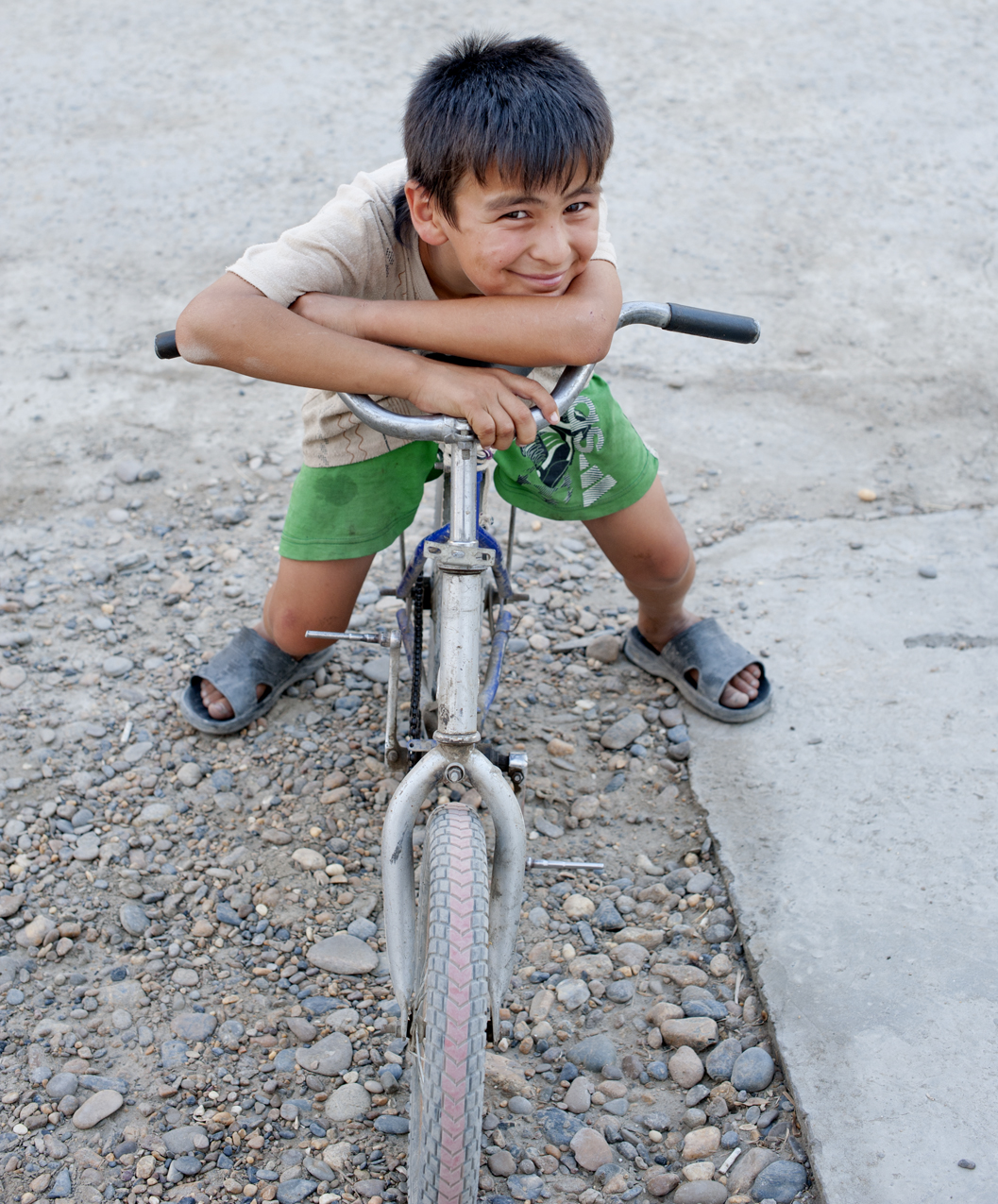
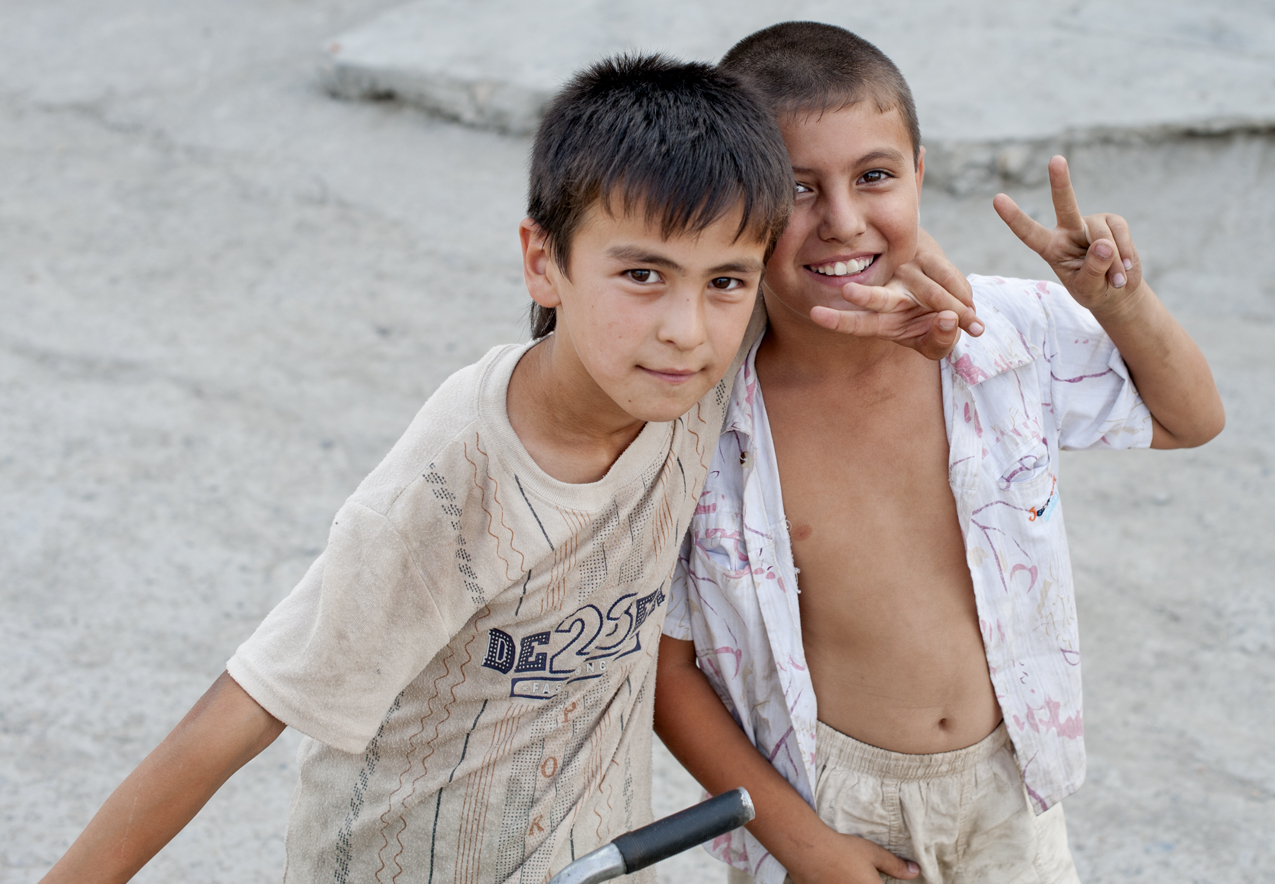
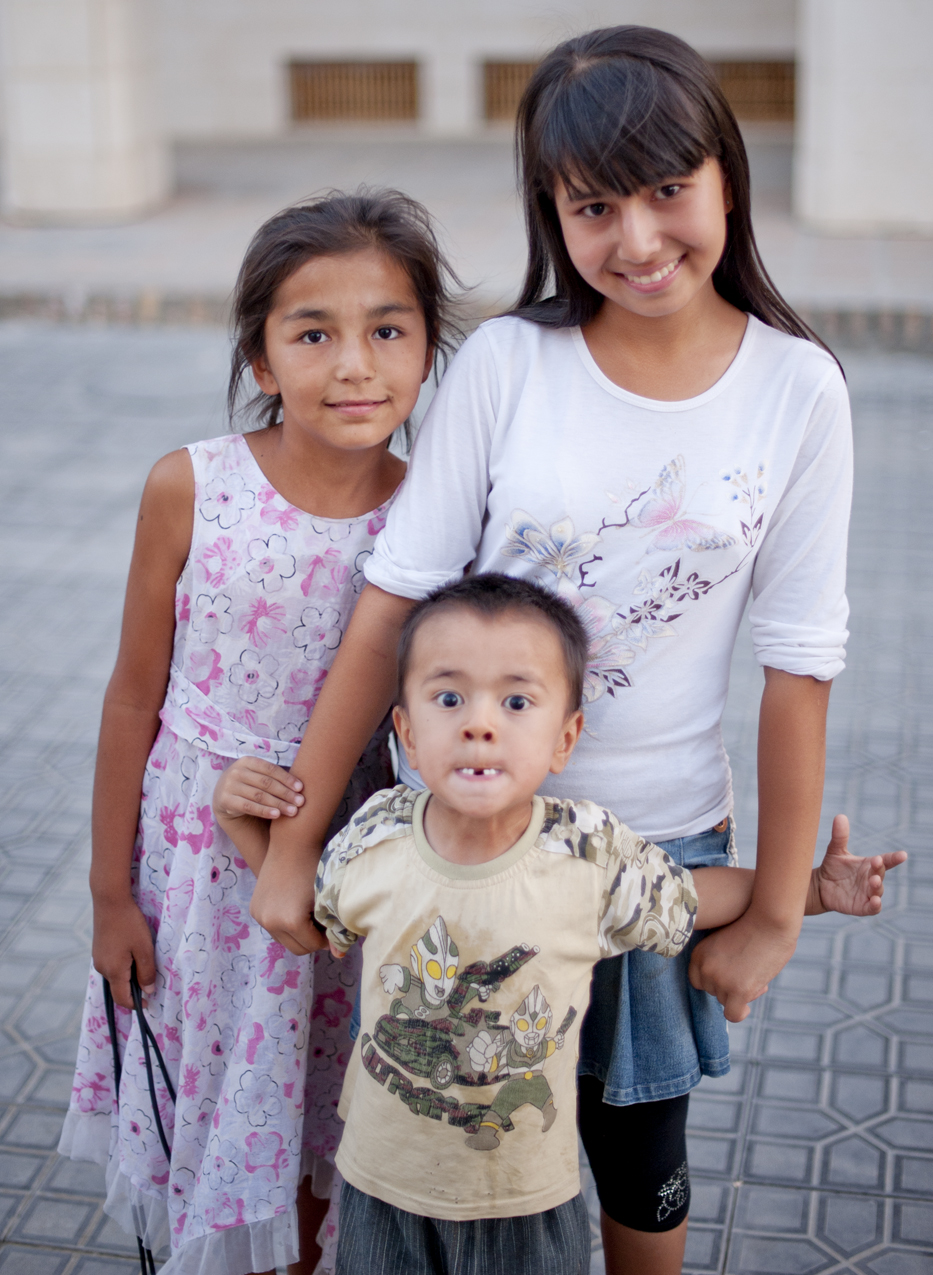
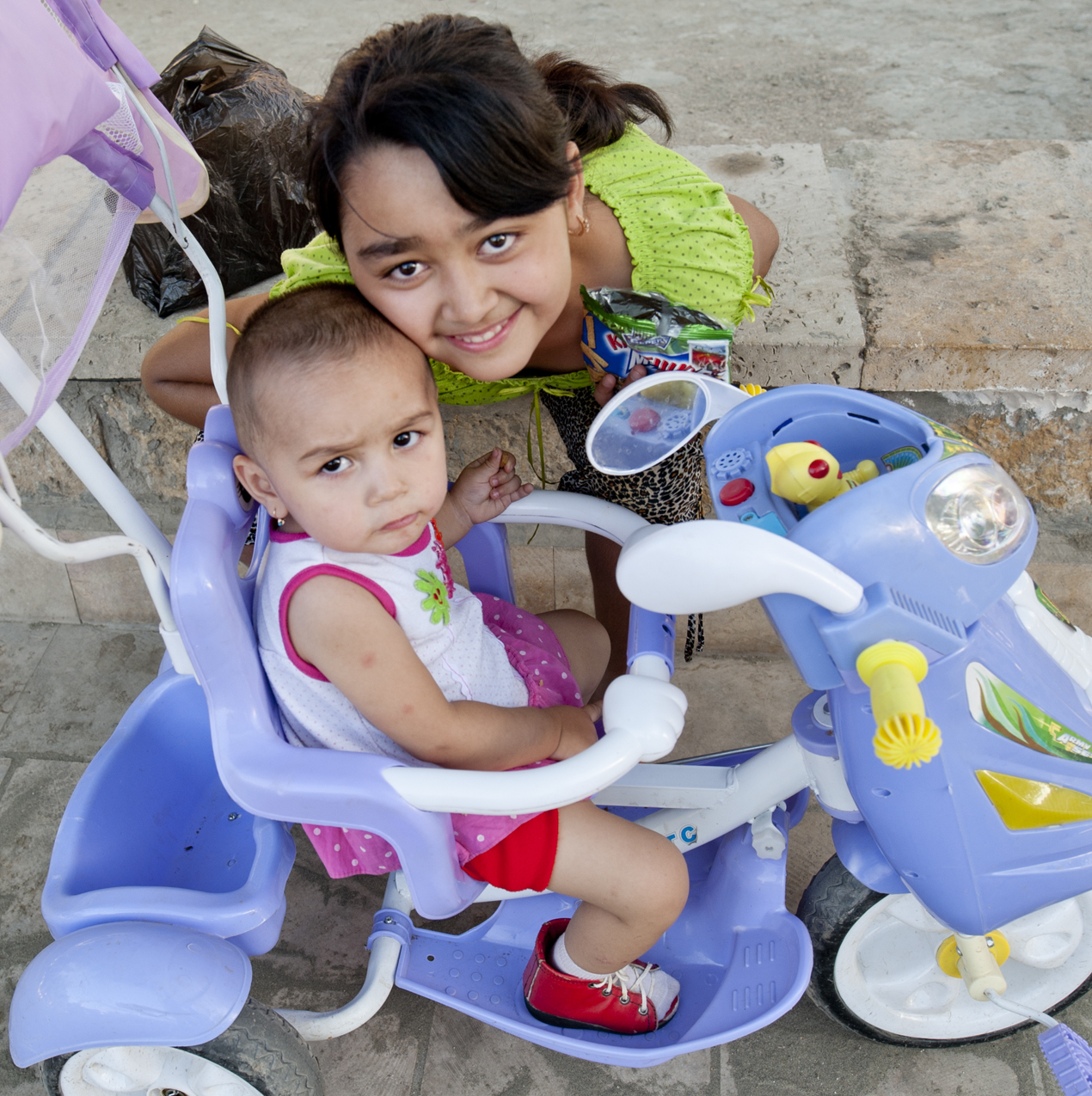
There were plenty of kids asking me to take their photos in the old neighborhoods this evening. None of them asked for money, either.

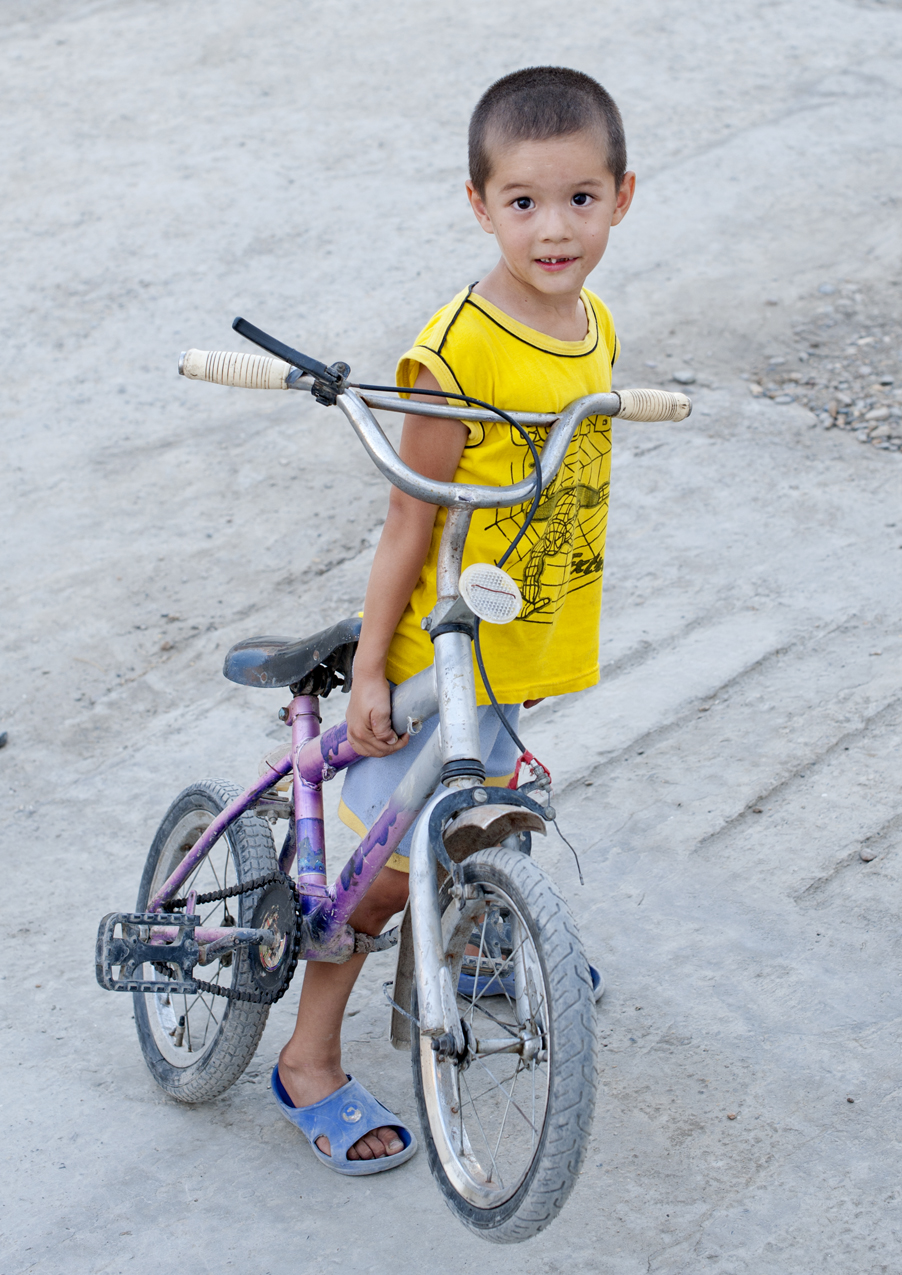
This kid took a break from bike racing for a photo.

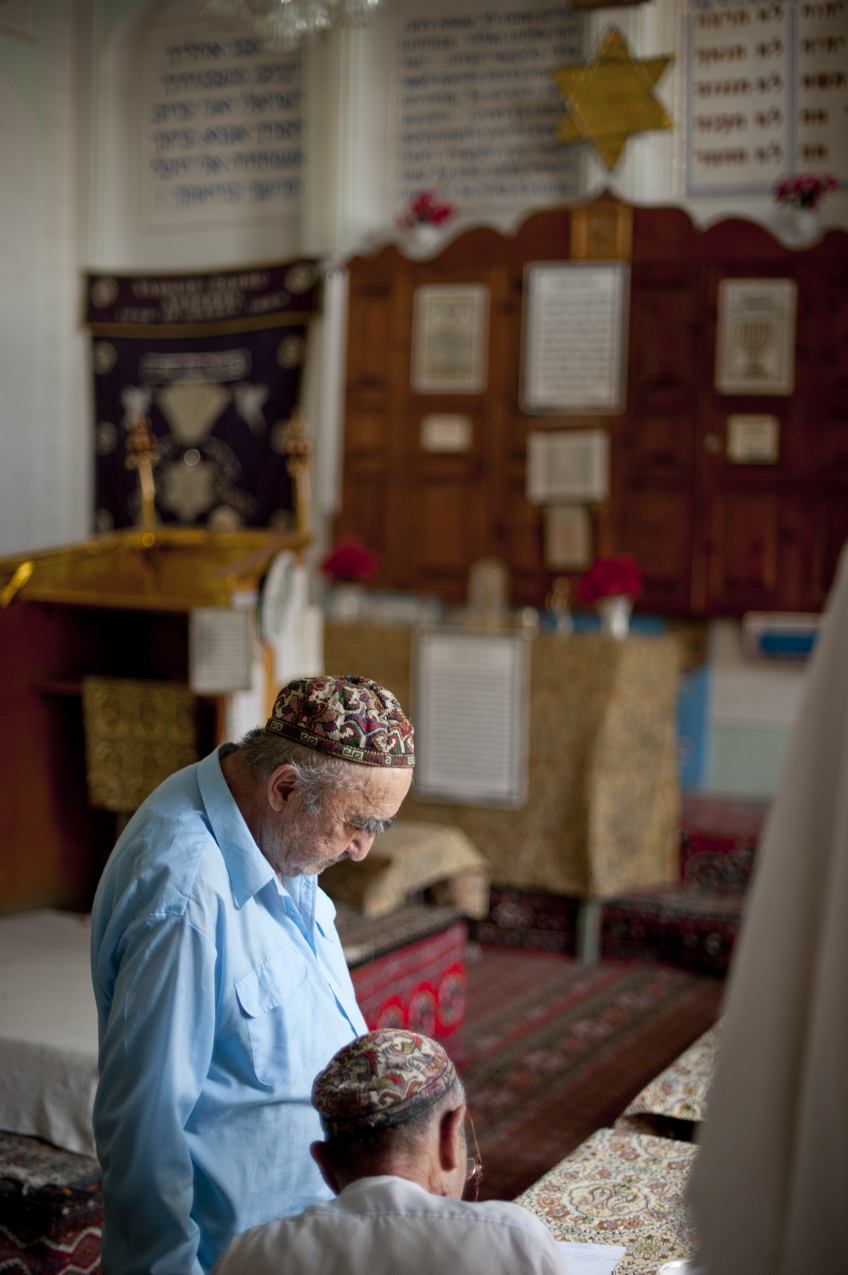
Also buried in one of the old neighborhoods, an old synagogue remains active among a dwindling population of Jewish Bukharans. For centuries, Bukhara had a thriving Jewish population, numbering in the tens of thousands. They even developed their own language, known as Bokhori, which is still spoken around here. Since independence from the Soviet Union, however, the population has fallen to only a couple of hundred. Seeing that I was a little lost, a kindly old man showed me the way to the synagogue, and then showed me around.

The rabbi's granddaughter is most likely one of the last Jewish Bukharans to be born here.

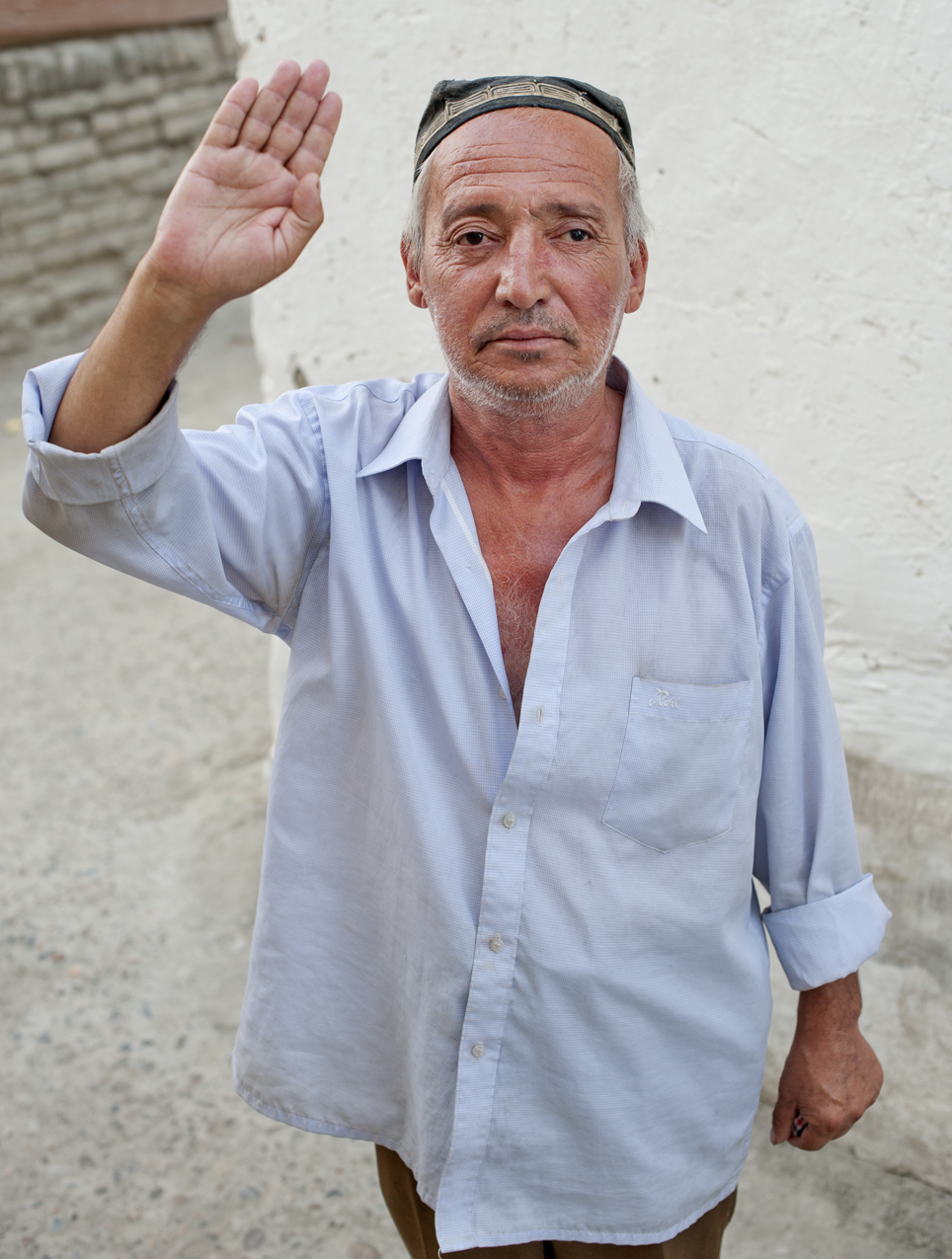
Although he looks much younger in the photograph than I remember him being, this is the old man who showed me to the synagogue. At the time, he was pushing a rickety wheelbarrow full of mortar down the craggy street.

"Hallo! Hallo! Mister! Photo!"

The cool kids in the neighborhood, these guys shooed all of the other children away from their photo.

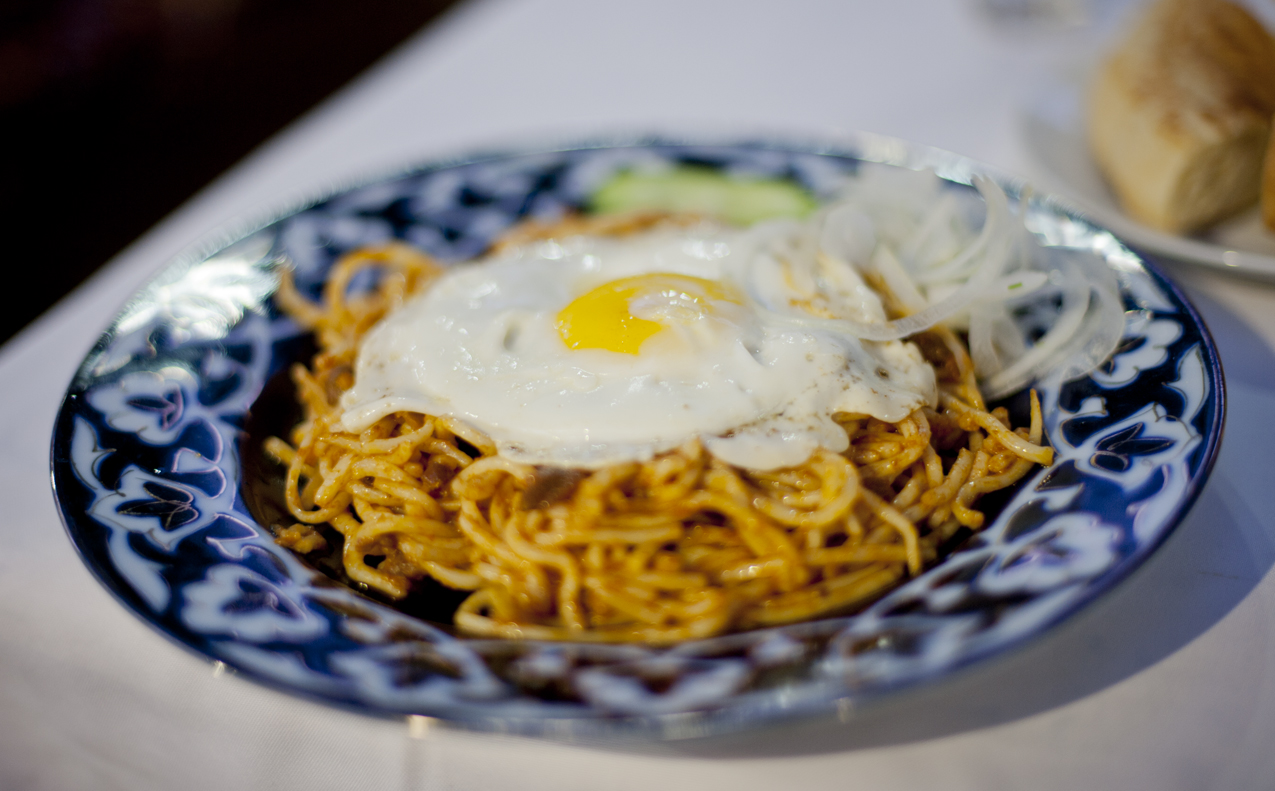
I'm really starting to look forward to Turkish food. This was essentially Spaghetti-Os with a fried egg on top.

4th of July in the Land of Plov

It was another sweltering day in Bukhara, and the temperatures topped out at around 108 degrees.  I’ve been told that this is cool compared to how it will be here in a couple of weeks.  At any rate, I’ve fallen right in with the locals, and taken to napping in the afternoon.  Since I’ve got a couple more days here, I’ve decided to really take my time, and absorb all that I can from just a couple of sites per day.  I spent a couple of hours sketching at the mosque in the photo above.  Unfortunately, I also had a bit of an upset stomach all day, so I took it particularly easy, not venturing too far from my hotel room, with its pristine bathroom.

While out and about today, I met a local who invited me to his family home for dinner.  It was a little different than I expected, so read the captions below.

Happy Independence Day!  Here are the photos:

The door to my hotel could still be mistaken for the door to the medrassa that it once was.

There are a few covered bazaars here that are naturally ventilated through occuli in their domed roofs. This is a view within one, looking back towards the city.

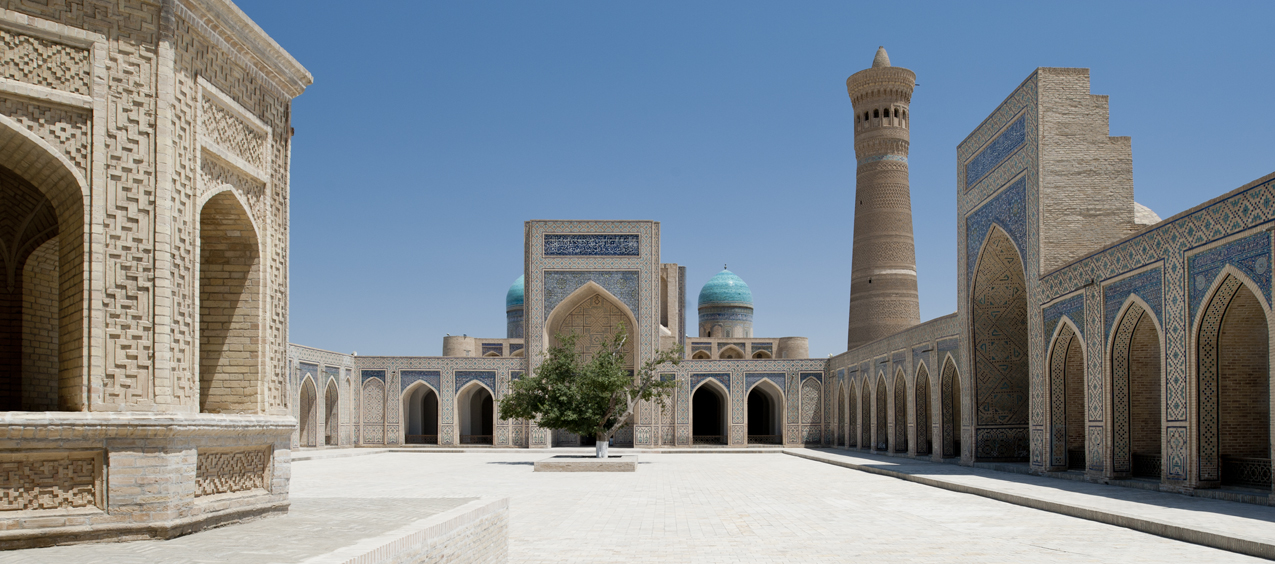
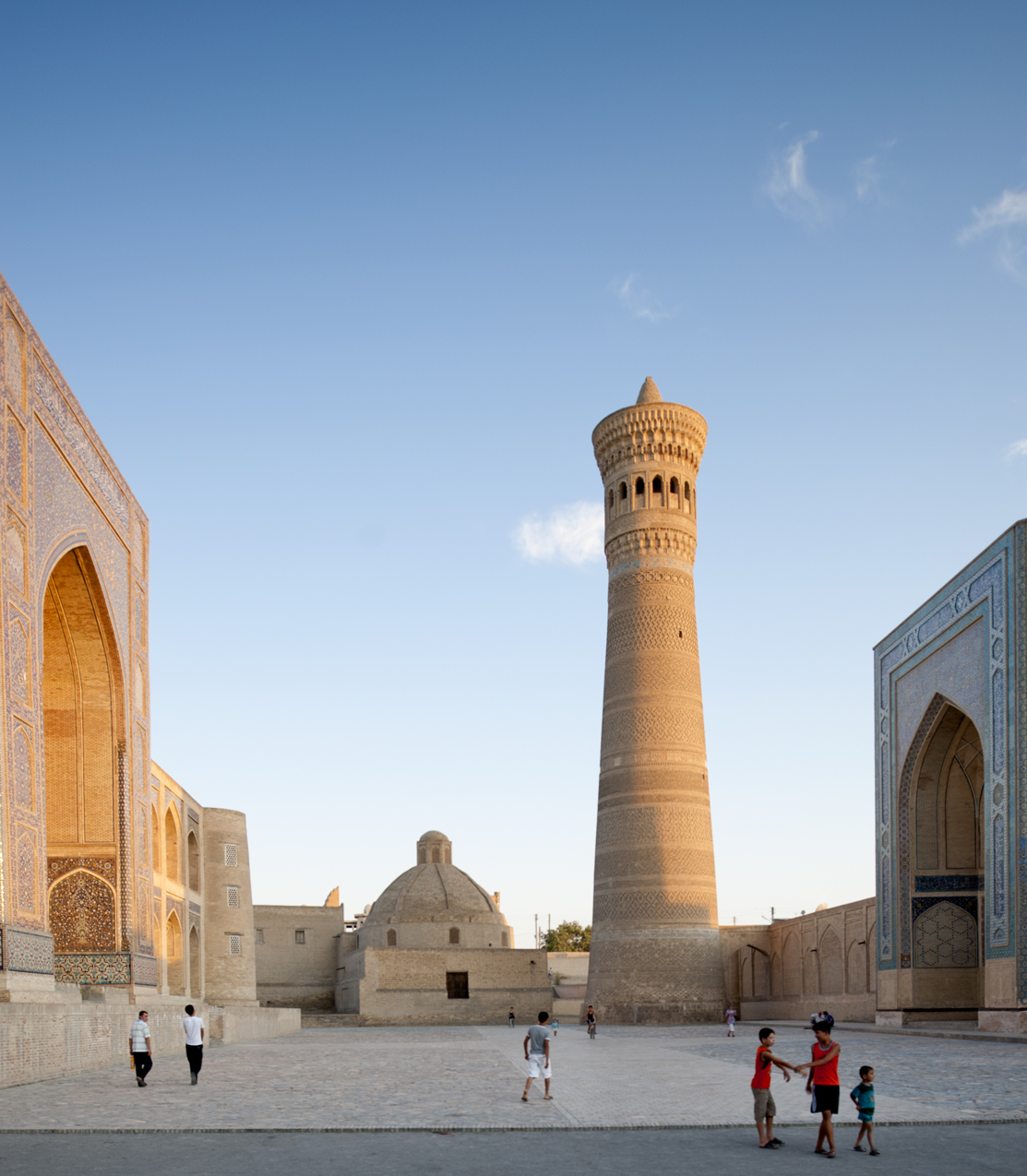
The Kalon Minaret, pictured here, was built in 1127, and is one of the only structure in the region that was not destroyed by Chinggis Khan when he swept through here. He was astonished at its height.

The Kalon Mosque is a huge complex at the base of the minaret.

The courtyard is large enough to hold 10,000 people.

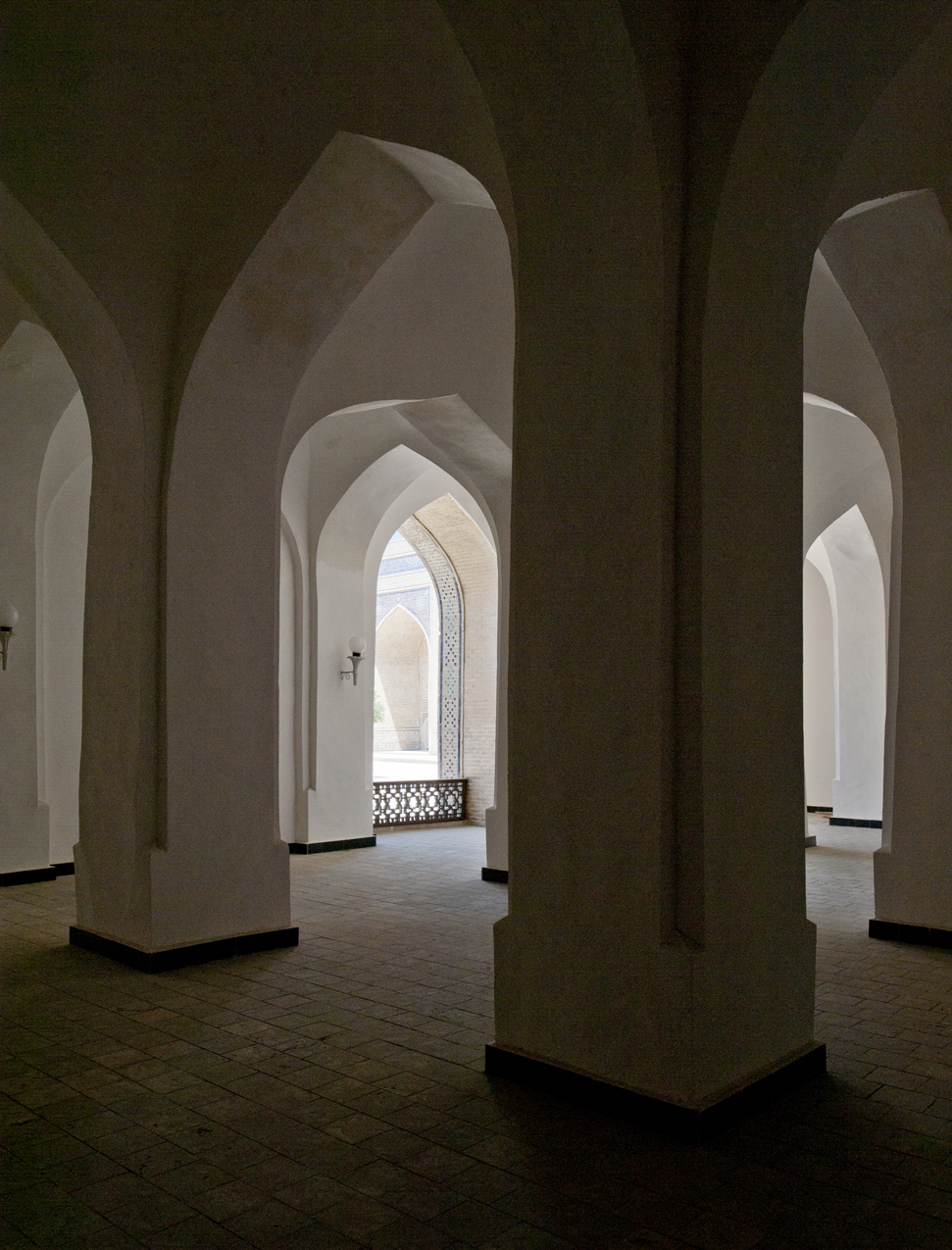
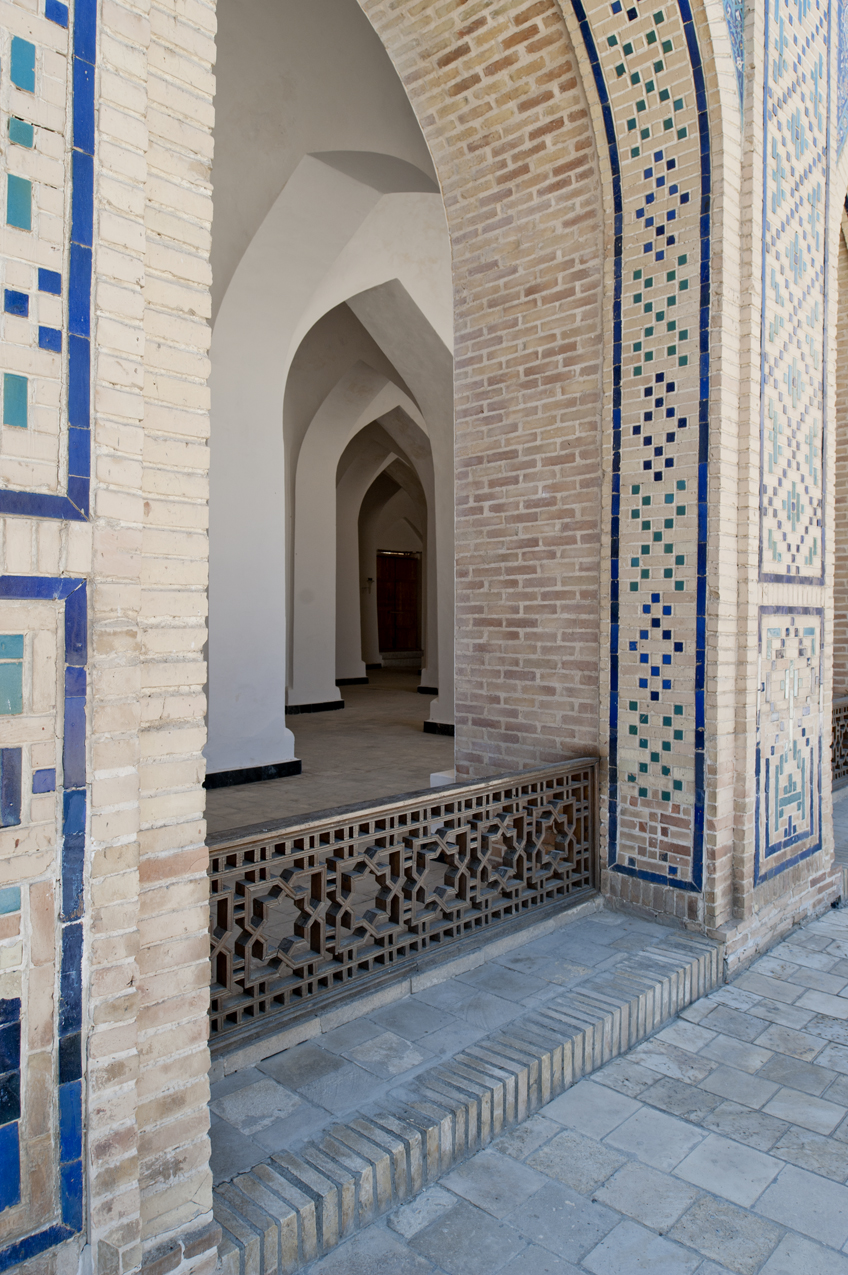
Surrounding the courtyard is a maze-like series of vaulted galleries.

I have no idea what originally took place in these galleries, but the soviets used them as a warehouse.

The vaulted spaces would make a great place for hide and seek.

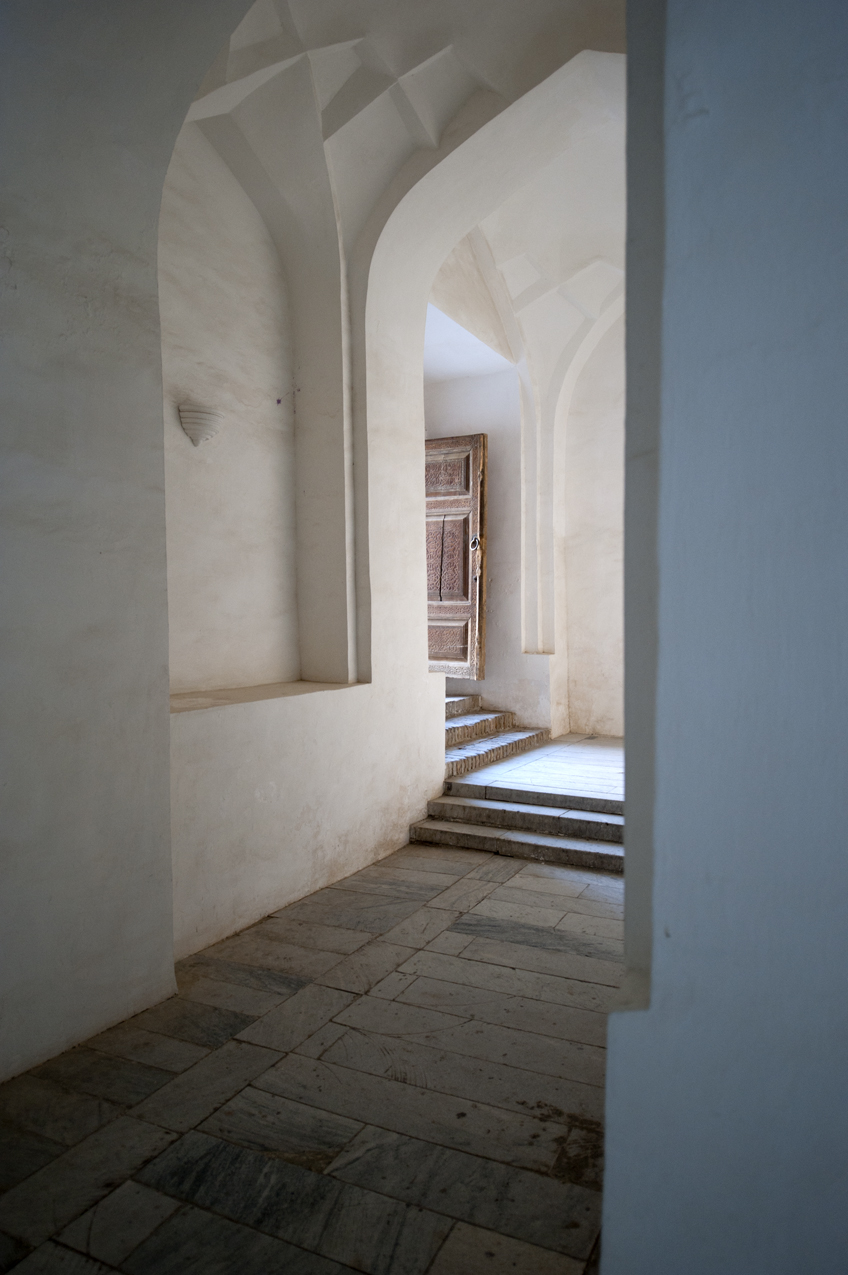
There is a quiet formal simplicity to these spaces that is hardly at odds with modernism (if one blurs one's eyes, and forgets about all of the ornamentation).

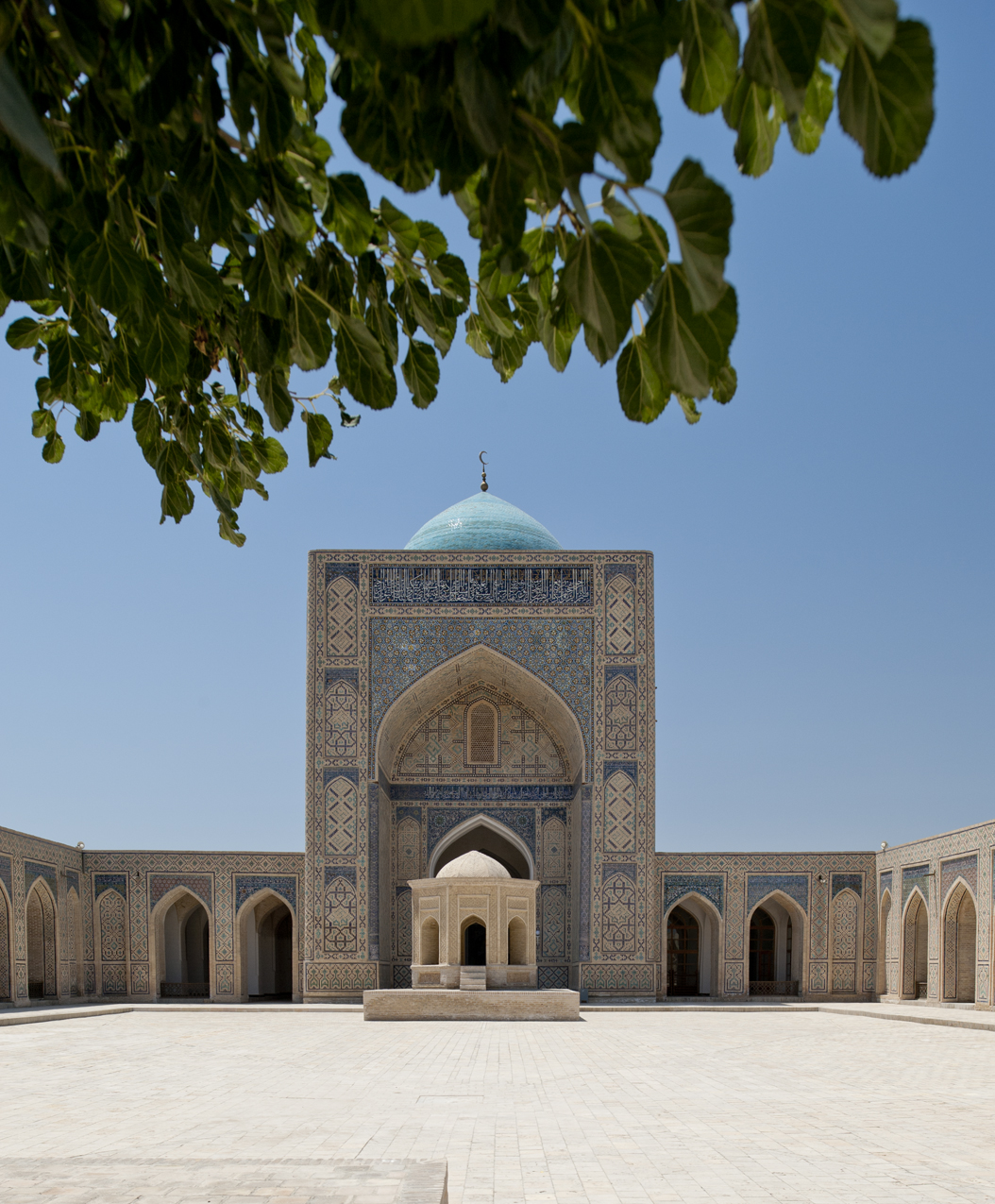
Mulberry trees, like the one under which this photos was taken, are important symbols throughout Central Asia. I've encountered important historical specimens from Turpan, all the way to Bukhara. They frequently occupy the courtyards of mosques.

A view back up to the plaza and beyond.

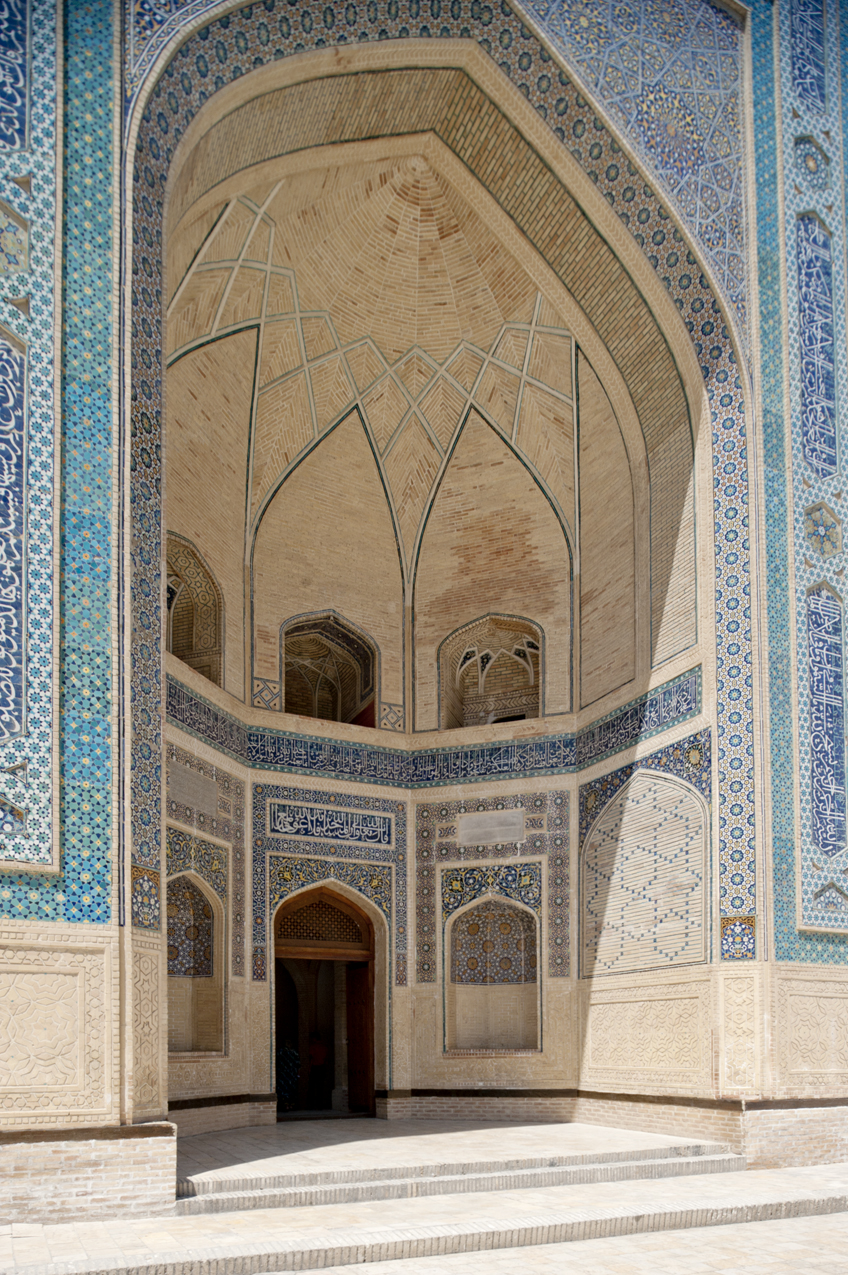
The medrassa opposite this door is still active. As I was leaving the mosque, prayers were soon to begin, and a number of young scholars were rushing across the courtyard.

This city is full of these narrow passageways.

My dinner was prepared at this stove in the courtyard of a man I met earlier in the day.

My dinner: plov, salad, bread, and delicious melon. After receiving the invitation to come to this man's family home for dinner, I assumed that I would be eating with the family. Instead, they set up a table for me in the courtyard, and all retreated into the house.

My only companions for dinner were two cats. This one wasn't much company.

When I had finished eating, and was enjoying some tea, the man and his wife finally came out for a little conversation, and persistent attempts to sell me some scarves.

While taking a couple of photos of the Abdul Aziz Khan Medrassa, this local youth ran over to get in the picture.

Seeing the fun that he was having, his friends quickly rushed over to get in on the action.

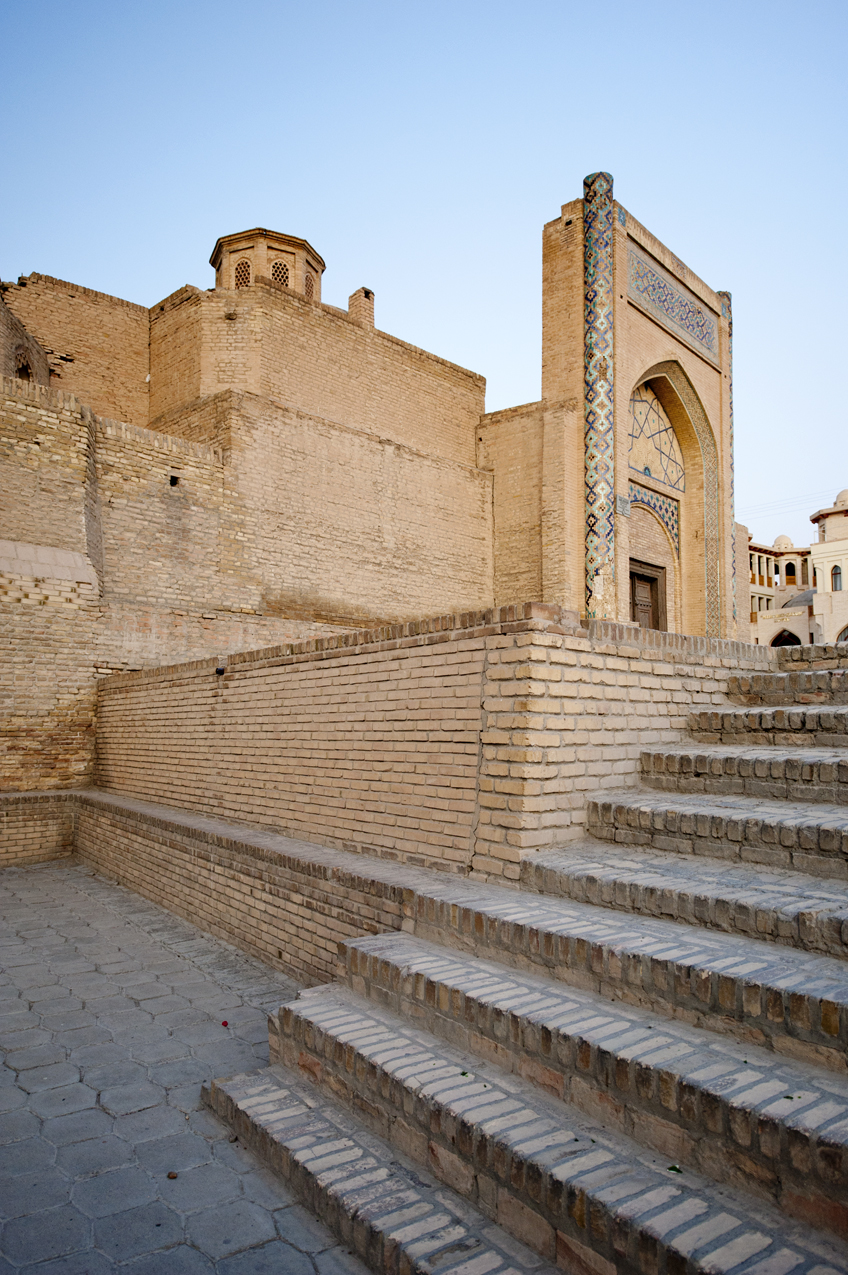
This medrassa, which is still active, is hidden behind these fortress-like walls. I wish that I could get inside.

The city cooled down significantly towards sunset, and the light made walking around a treat.

The streets wind up and down over the small hills of the city. I would assume that these mounds actually contain layers of artifacts from ancient Bukharans.

Future swindlers. The girl on the left asked me to take this photo, and then tried to hit me up for ice cream money. I think that she must have been a younger cousin of the persistent women who kept trying to get me to buy scarves today. Kids constantly ask me to take their photos in this town, but this was the first time that one of them demanded payment. I reluctantly bought them the ice cream, and hope that the other little rascals in town don't catch on.

Bukhara-Bound

I made my way from Samarkand to Bukhara today, and despite the common misconception, the trains do not necessarily run on time in a police state.  I thought that I would need to get to the station in Samarkand a little early so that I could figure out how to get on the right train, but the correct one did not arrive until two hours later.  As a result, I have not had much of a chance to explore this town, but I guess that’s not too much of a problem since I’ll be here for another three nights.

From what I can tell by my brief introduction to the town, although beautiful, four days may be a longer stay than needed here.  I had scratched another town, Khiva, off of my list a while back because I thought that I would want to spend more time in each place, but now I’m not so sure that was a great decision.  It turns out that this place is a little touristy, which tends to put a damper on my enthusiasm.

I don’t have many pictures from the day, but here are a few:

This was my breakfast spread at my B&B in Samarkand this morning, which was similar to what they served every morning, except there was usually a crepe. I got ripped off today, I guess. It was nice to have good fruit in the morning, and the apricots (usually yellow plums) were terrific. The tiny apples, however, were both bland and dry.

This was the nice lounging area at the place where I stayed in Samarkand. It was a great place to take a load off in the afternoon, especially when the proprietor's son brought around some fresh fruit and tea.

The proprietor's son could not stop smiling every time I saw him. However, when I took his picture, he immediately switched to the serious Uzbek photo face.

My arrival at my new B&B in Bukhara was greeted with this spread of tea and snacks.

I'm staying in what used to be a medrassa, in one of the former scholars' rooms. My door is the one that says 1/1, although I think that the room actually takes up three former dorm rooms. I'll have more photos of the whole complex tomorrow.

This medrassa in the center of town used to be a caravanserai, until the Khan decided that it looked too much like a medrassa not to be one.


This town seems to be full of these picturesque little streets.


If you squint really hard, you can almost imagine what this place must have been like 100 years ago.

The little girl in this picture is working on the local photo scowl.

Hospitality-Land, Part II

I was told that my post was a little boring yesterday, so hopefully this one will be a little more interesting.  I spent the day going to a couple of more sites, and strolling around the Old Town.

I started at a huge mosque near the city’s other historical sites, and then made my way towards the archeological excavations of old pre-Chinggis-Khan Samarkand.  There was a small museum there, in which the electricity wasn’t working.  I saw a bunch of broken pots, and walked into the completely dark room that contains a famous fresco that was unearthed here, but was obviously unable to see anything.  I then pushed on out of town on foot towards a couple more sites that were equally underwhelming.

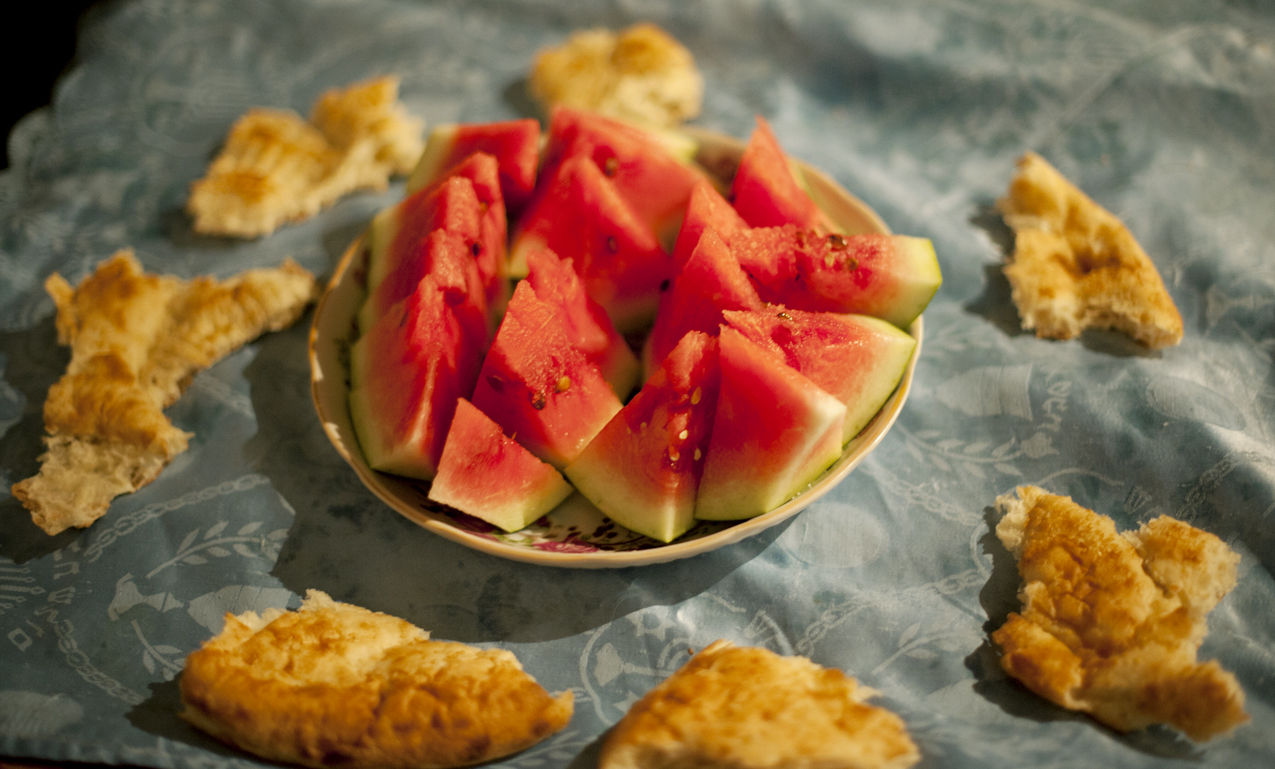
Just when I thought that I had seen everything that Samarkand had to offer, and as I was walking back to my hotel after dinner, I was summoned into the courtyard of an Old Town house for an impromptu photo shoot with its inhabitants.  One thing led to another, and before I knew it, I was guzzling tea, inhaling watermelon, and enjoying some local sweets.  They’ve asked me to come by tomorrow morning for breakfast before I head to Bukhara, and I tried to explain to them that breakfast is included at my B&B, but they didn’t want to take no for an answer.  Finally, I think that they understood.

Here are the day’s pictures:

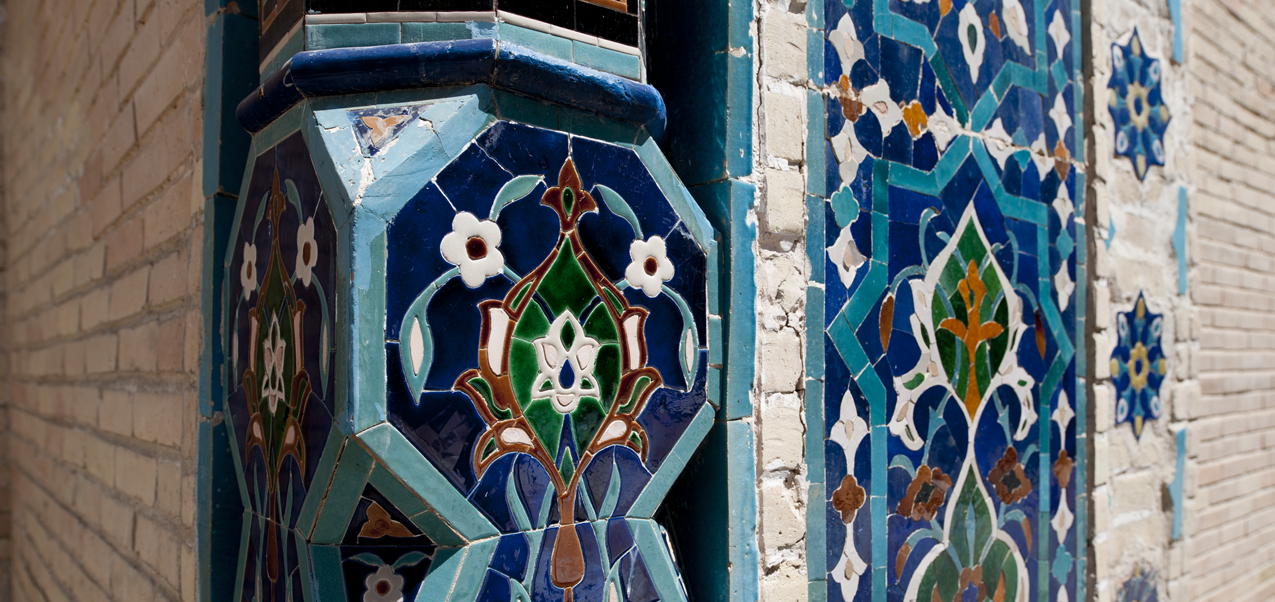
Another image of tile-work.

Yes, this is a different building than what I showed in previous posts. It's the Bibi-Khanym Mosque, which was once the largest mosque in the world. It was commissioned by Timur's wife as a surprise while he was away.

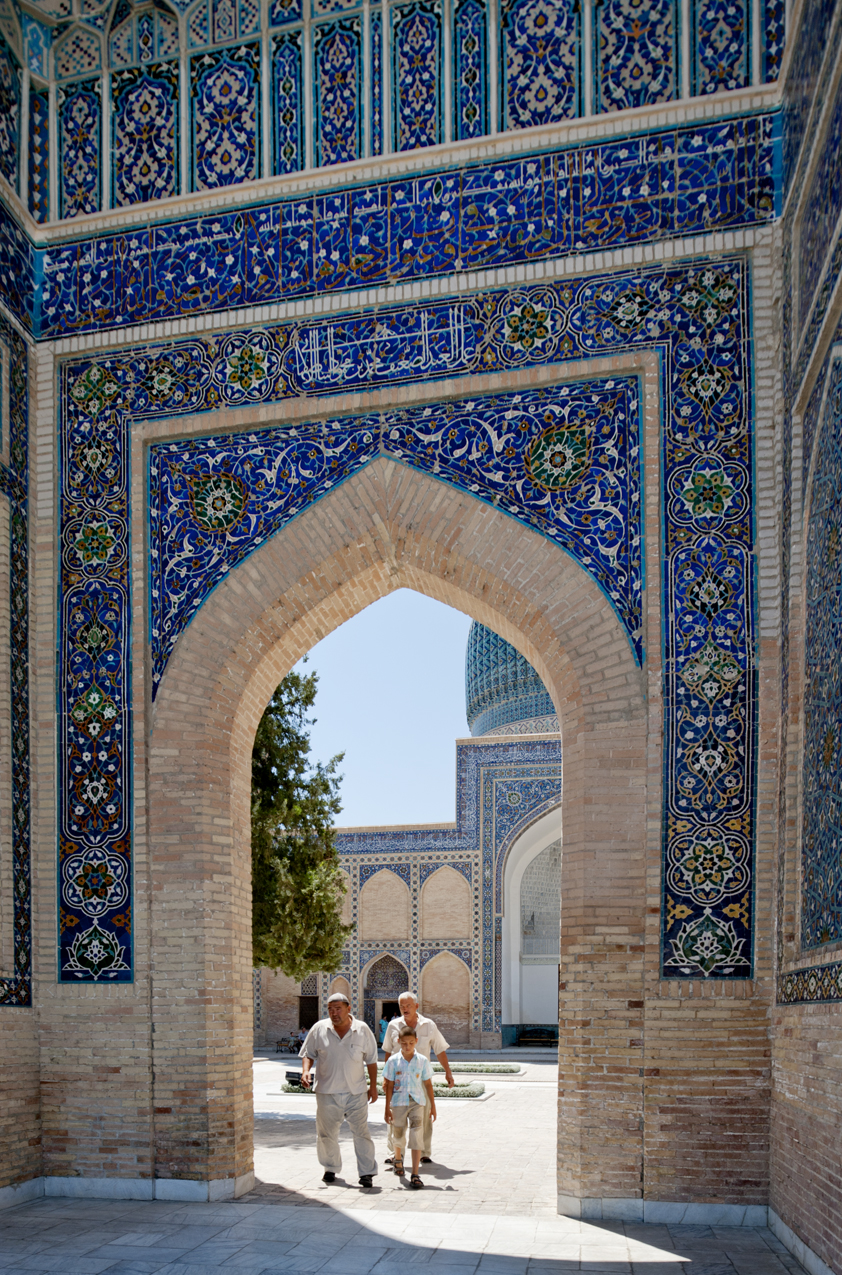
The mosque pushed construction techniques to their limits. The people in the foreground provide some scale to the recessing arches at the main gate.

This is the innermost arch. It's said that the architect of the mosque fell madly in love with Timur's wife, and refused to complete the project until he received a kiss from her. He was beheaded shortly thereafter.

The mosque lies within the interior courtyard, and is crumbling a bit.

The domed ceiling towers overhead on the interior, and is in a bit of disrepair.

A view towards the courtyard form within the mosque.

Timur's wife's mausoleum is directly across the street from the Bibi-Kharym mosque. The tombs are located down this passageway.

The ceiling inside the mausoleum has no lack of detail.

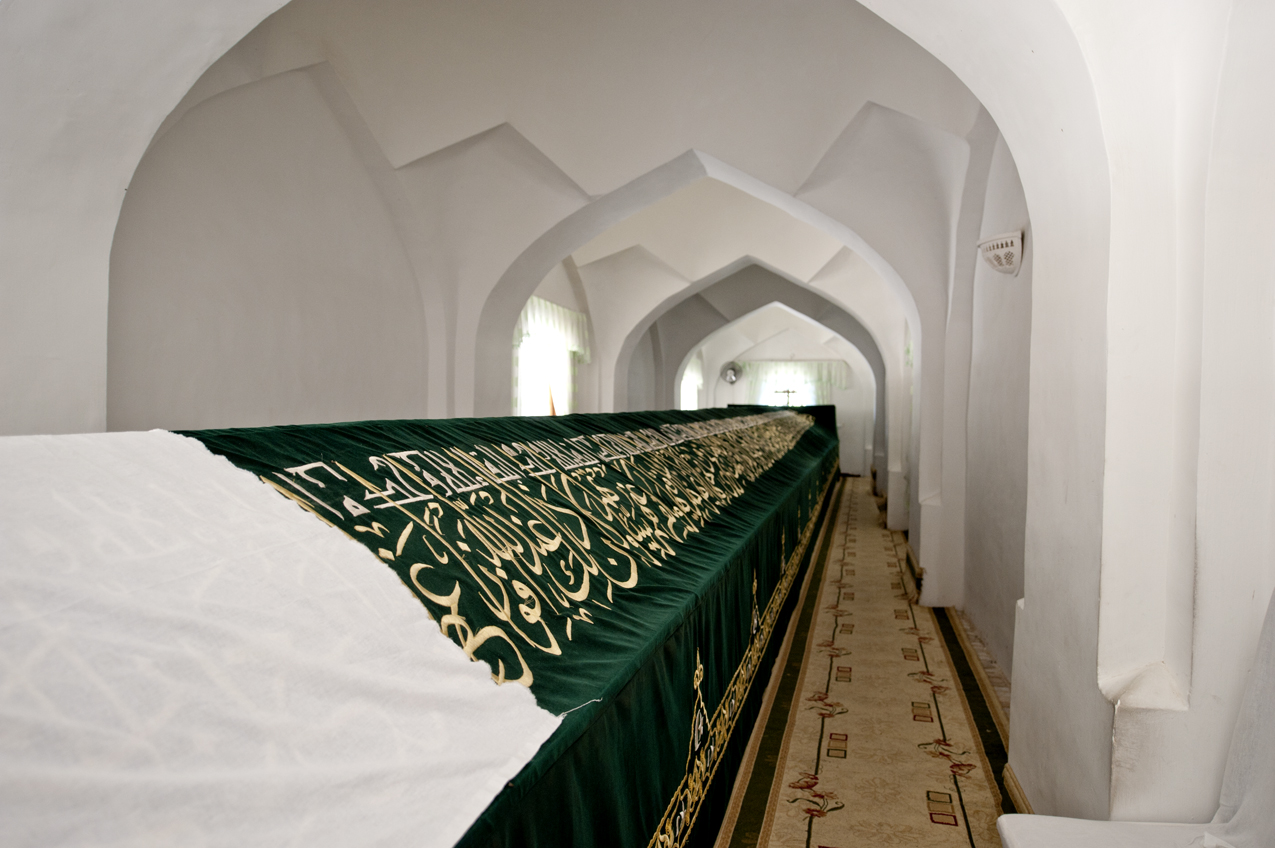
This is the tomb of the Old Testament prophet, Daniel. Timur supposedly brought the remains back from Susa, Iran.

Daniel's tomb supposedly contains only his right femur, which, accordingly to legend, grows three inches each year. This explains why the tomb is 18 meters long.

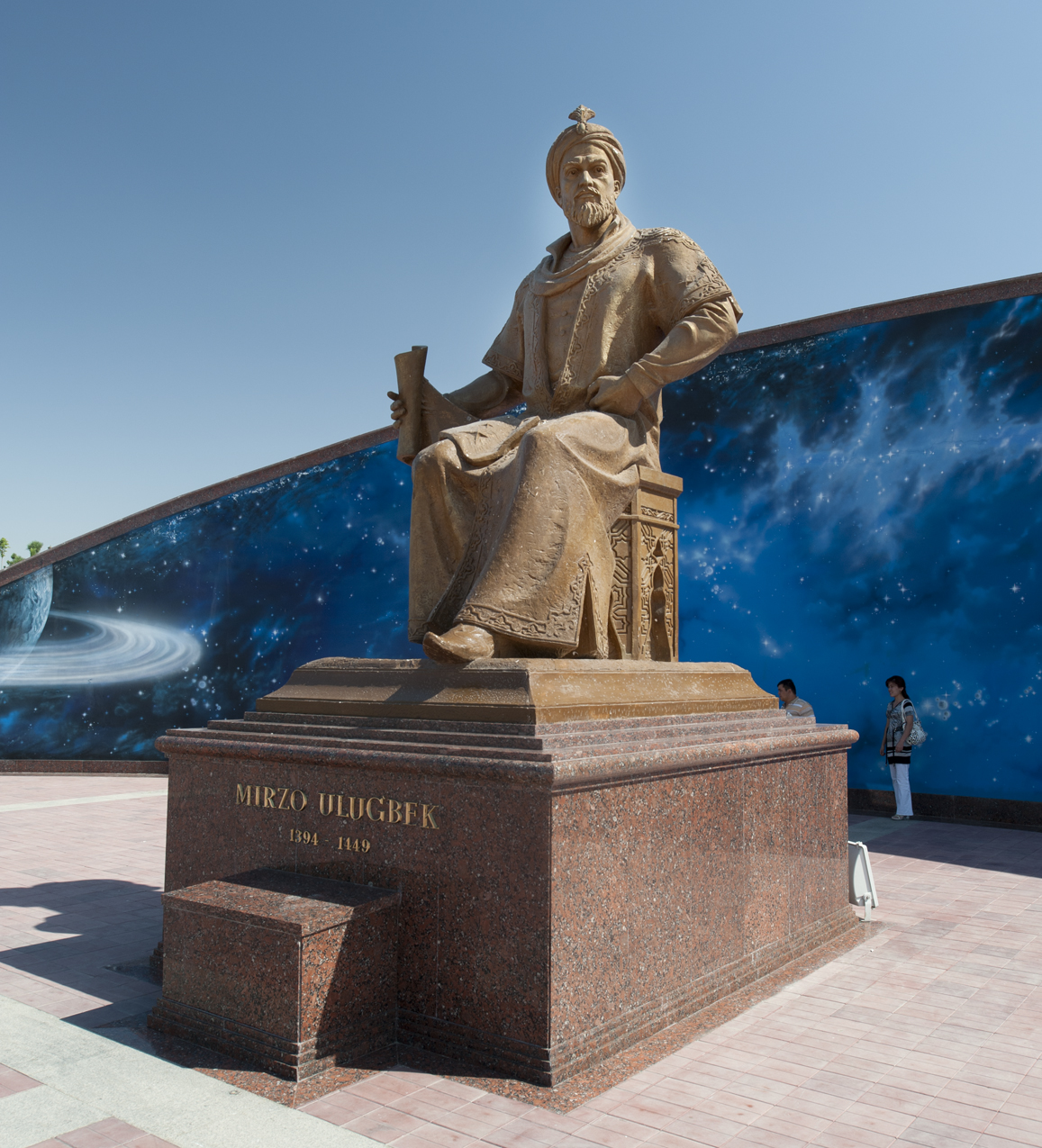
I have no idea how anyone really knows what he looked like, but this is Ulugbek, the mathematician/astronomer king. This is at the site of what used to be his observatory, an supposedly incredible structure that I really wish had not been destroyed. All that remains is the enormous track for his 30-meter astrolab. I made a very long walk out here in the hot sun, stopping at Daniel's tomb, and a museum with no electricity, and was a pretty disappointed in the end, especially since I then had to walk back.

Some wedding photos were being taken at the site.

My B&B is conveniently located in the quaint Old Town of Samarkand.

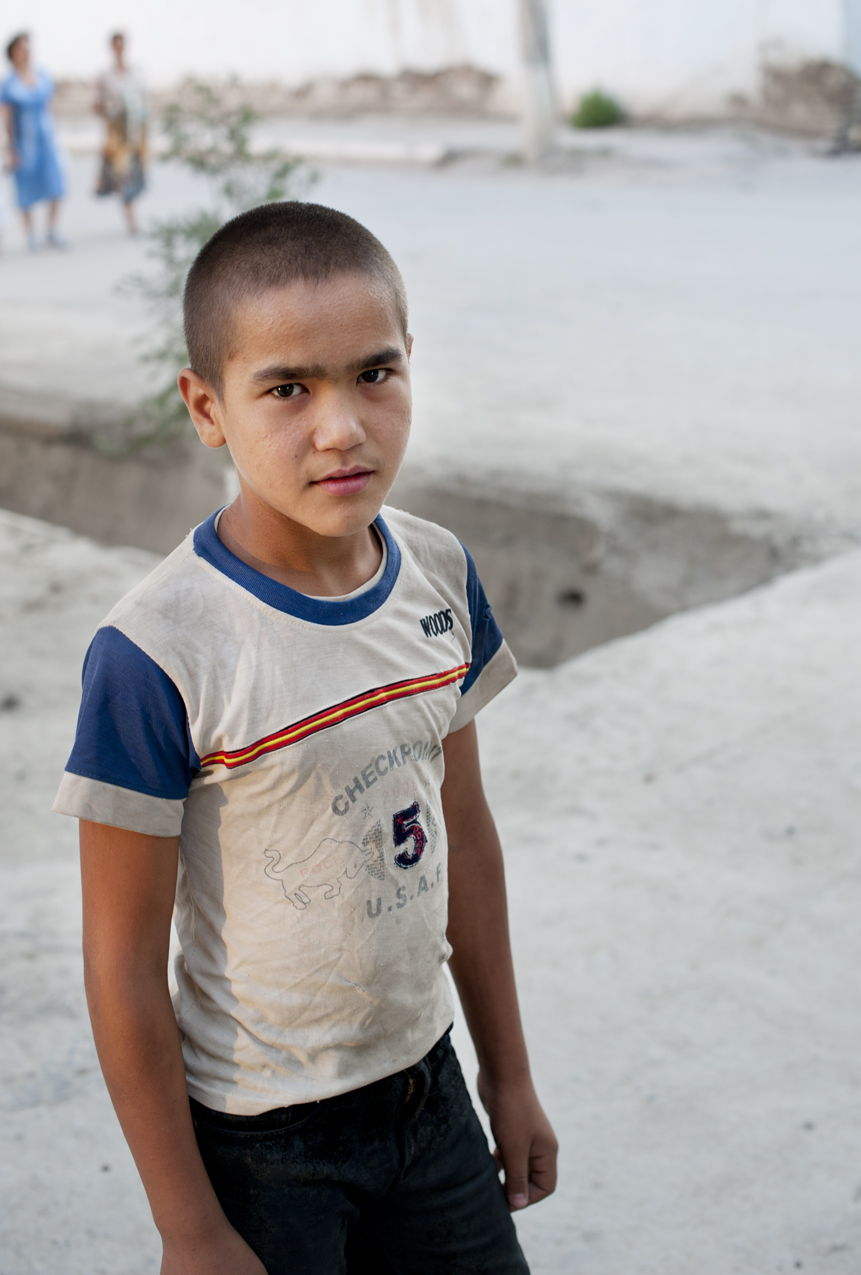
This is one of the local youths who hang out on the street outside my B&B. Smiling's not cool here.

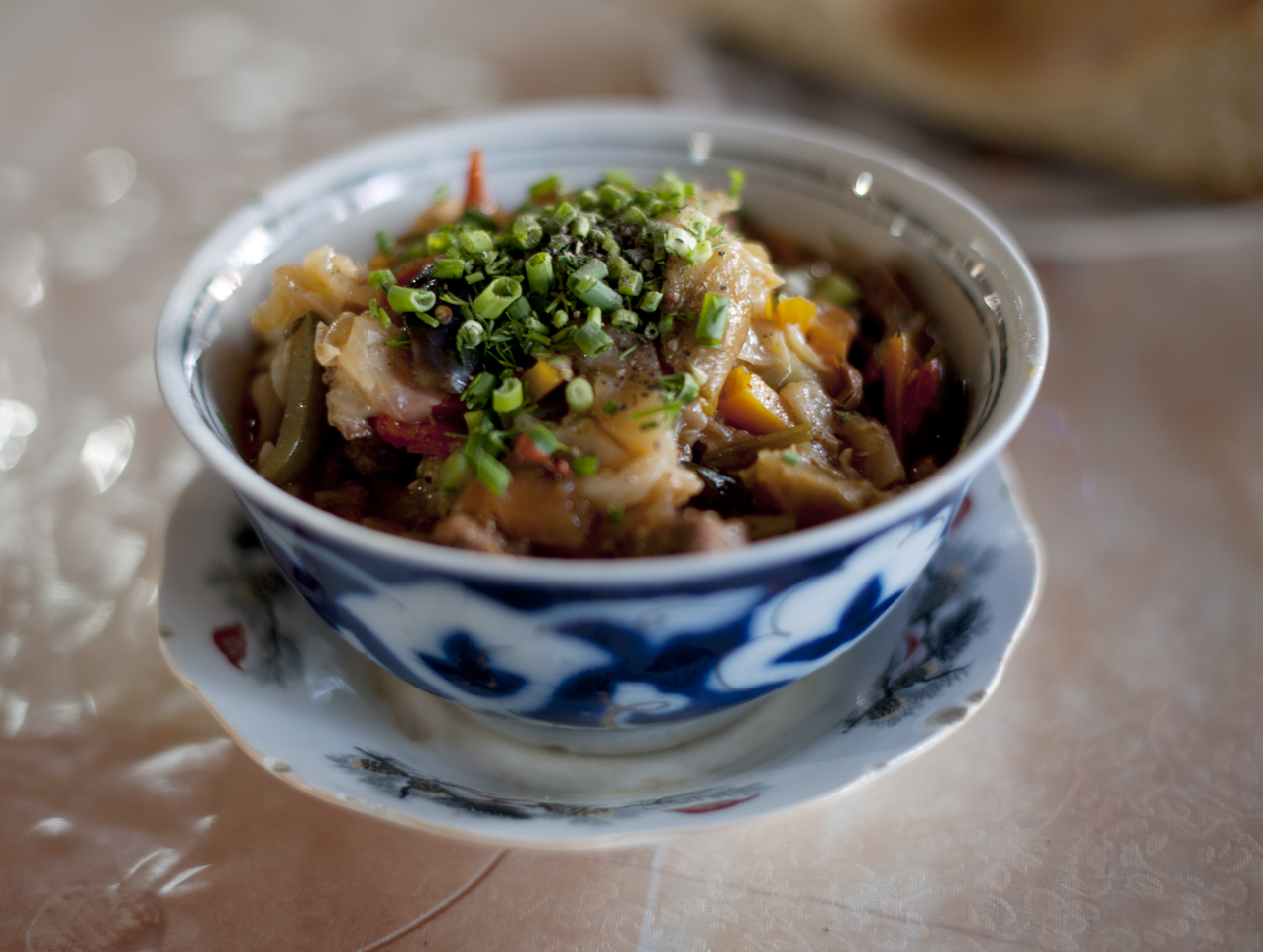
My dinner; some kind of soup with noodles, meat, and vegetables. Not bad.

For those who are interested, they still drive these old soviet cars around here. They sound their age, and, despite their diminutive size, have the turning radius of an average-sized cruse ship.

A popular evening treat here: ice cream with some sort of berry sauce, which is topped with cocoa powder. Due to some comments the last time that I showed an ice cream cone, my hand has been cropped out of this image.

These entrances in the Old Town reveal small glimpses of the beautiful courtyards within.

This fella tracked me down to get some pictures taken.

This proud father, named Muhammed, invited me into his courtyard for a photo shoot. Although he could not stop smiling the whole time that I was there, his face quickly went rigid as soon as the camera was aimed at it.

Muhammed's family, including his daughter, Annisa, are expecting me to mail them some prints of these photos. I'll have to get someone to make sense of the address that his wife wrote down for me, because I can't read it at all.

Of course, they insisted that I eat. I had just stuffed myself with bread at dinner, and ice cream on the street, so I didn't have a lot of room, but I was able to cram some more food in my stomach - just to be polite.

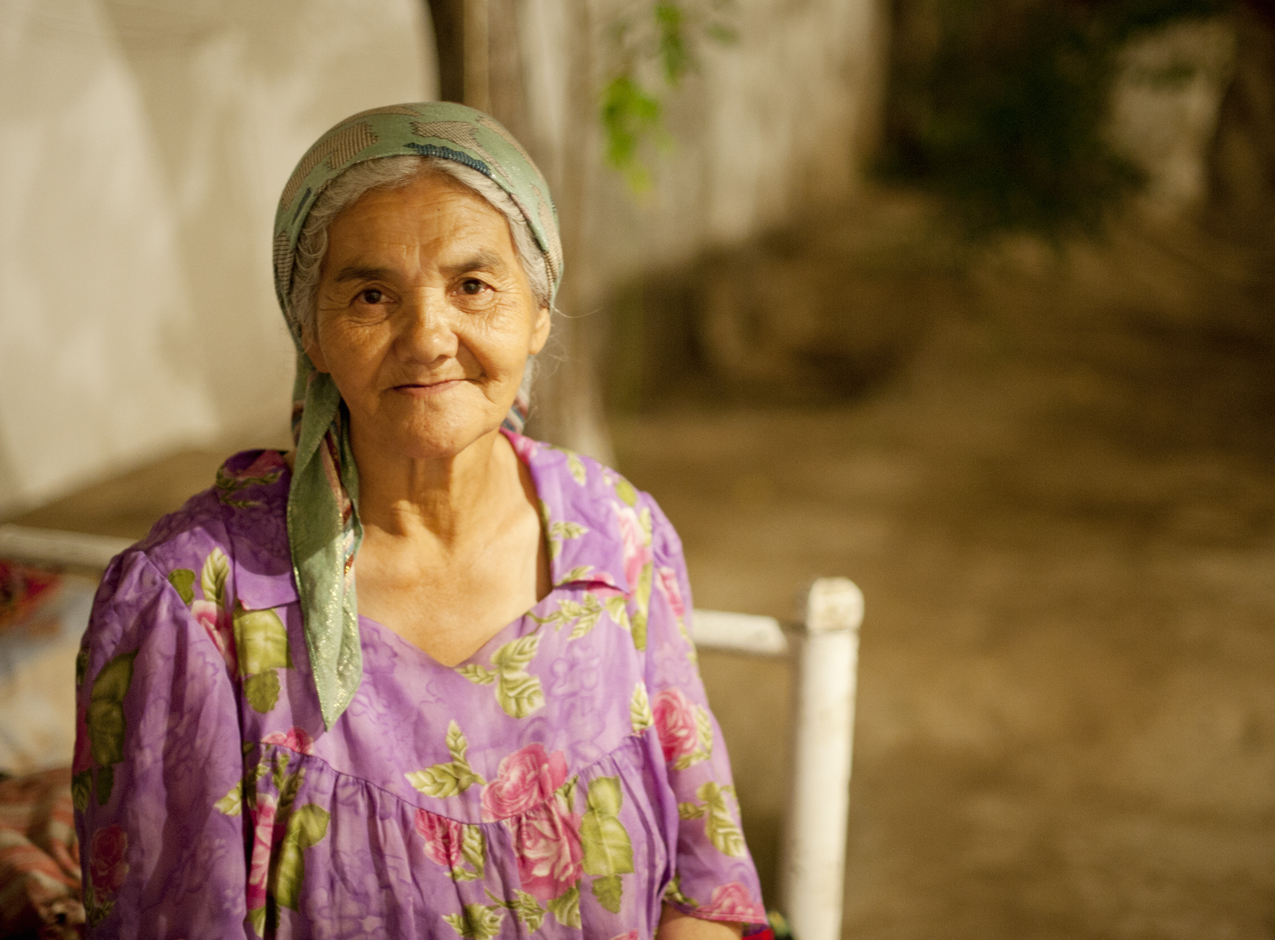
Muhammed's mother, Kimio, was one of the sweetest grandmothers that I've ever met.

Muhammed fancies himself a model.

Mausoleums and Ruins

Another day in Samarkand, and I still haven’t seen all that I want to see.  This is partly due to the fact that I got a little lost in the Old Town, thanks to a worthless map, and to the fact that Uzbeks don’t seem to like street signs.  I ended up walking about four miles in the blazing sun before I finally found the ruins for which I was looking.  I had taken a wrong turn somewhere, and ended up taking the longest route possible.

I’ll keep the text short here, and skip right to the photos (click to enlarge):

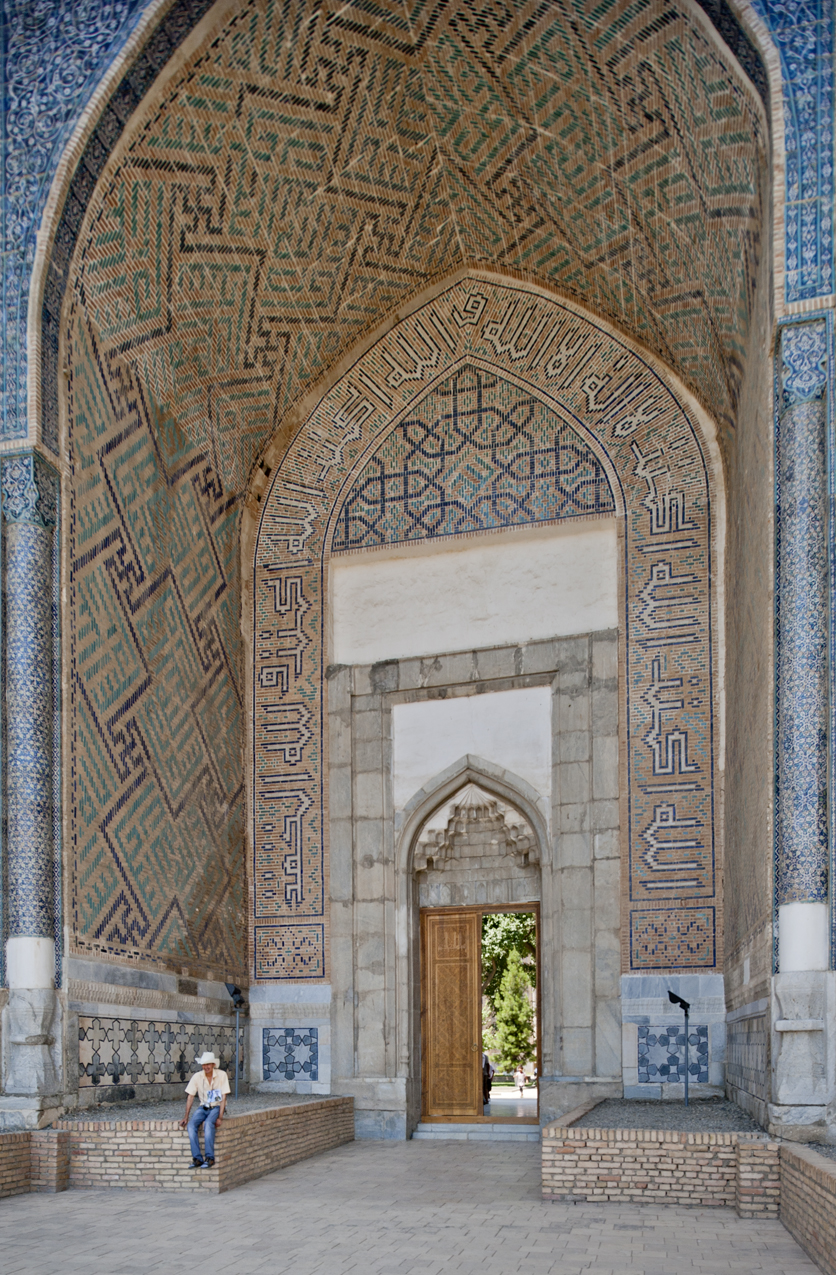
This is the entrance to Timur's mausoleum, where he and his successors are buried.

More blue tiles!

Again, the intricacy s really astounding.

I really appreciate the contrast of the white, set off form the vivid tiles.

The doors are some of the most detailed pieces.

Another stunning interior, inlaid with plenty of gold

Timur's monument is the one with the simple, but huge jade stone on top, which was broken by a persian ruler who then ran into a spell of exceedingly bad luck.

Off to the side of the mausoleum is a portion that is in ruins.

This enormous arch is part of the ruined section.

This is one of the oldest structures in Samarkand, dating from around 1380. Chinggis Khan annihilated the ancient city in 1220.

I walked about four miles to get to this ruin. Was it worth it? Probably not.

The intricacy of the interior can still be seen.


One can imagine this grand gate when it was still complete.

Across the street, there is a mosque and mausoleum complex. Unfortunately, it is currently being renovated, but it was a really beautiful place. The pool in the center is surrounded by four enormous trees that were probably planted when the complex was first built, hundreds of years ago.


The Golden Road to Samarkand

When he arrived here on his push eastward, Alexander the Great said of Samarkand, “Everything that I have heard about [Samarkand] is true, except that it is more beautiful than I ever imagined.”  Well, since then, Chinggis Khan destroyed the original city, but Temur built it back up to its former glory.  I have to say that, like Alexander, I’m pretty impressed.  I had heard that when the Russians conquered the region, they had fixed up and restored many of the original monuments.  I thought that I might have a problem with this, but it has not made a difference to me.

The only slight bump in the road that I’ve encountered is that I accidentally purchased first class train tickets throughout this country.  Normally, this would actually be a good thing, but instead of being in a typical train car, in first class, you end up in closed compartments.  Because the only people who travel first class are Russians, I ended up trapped for four and a half hours in a tight compartment with an incredibly noisy, and somewhat rude Russian family.  The two little girls spent most of the trip having a screaming contest, thus dashing any hopes that I had of catching up on some much needed sleep.  I have also enjoyed picking up some of the local color in the second class cars, and I will miss out on that throughout this country.

Also, if you’re wondering why I didn’t post yesterday, the wifi was down at my B&B, but it’s back up now, except that the power recently went out for the whole neighborhood.

Anyway, here are the photos from my first day here.  I know that there are a lot of them, and there are countless more great ones that I’ve left out, but this is a pretty photogenic city, and there’s a lot of  inspiring architecture.  I’ll post the others from today later this evening (my time).  Click to enlarge:
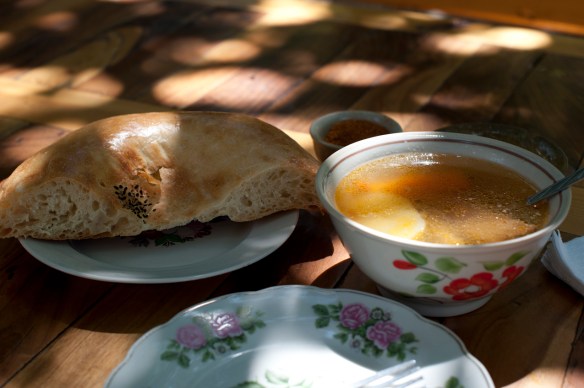
I found this great al fresco lunch place near the bazaar. Unfortunately, I guess that I ordered bland soup. The bread was good, though.

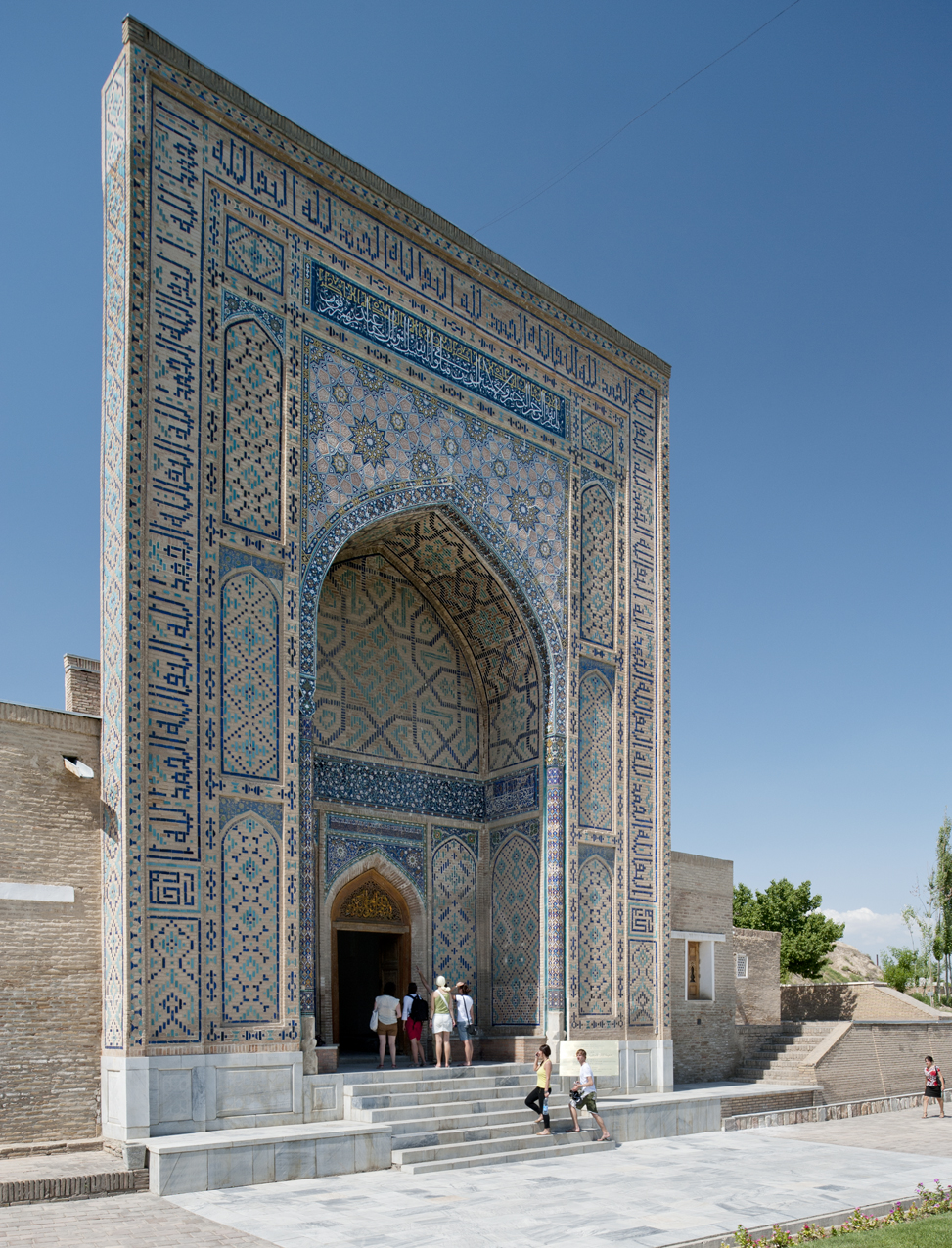
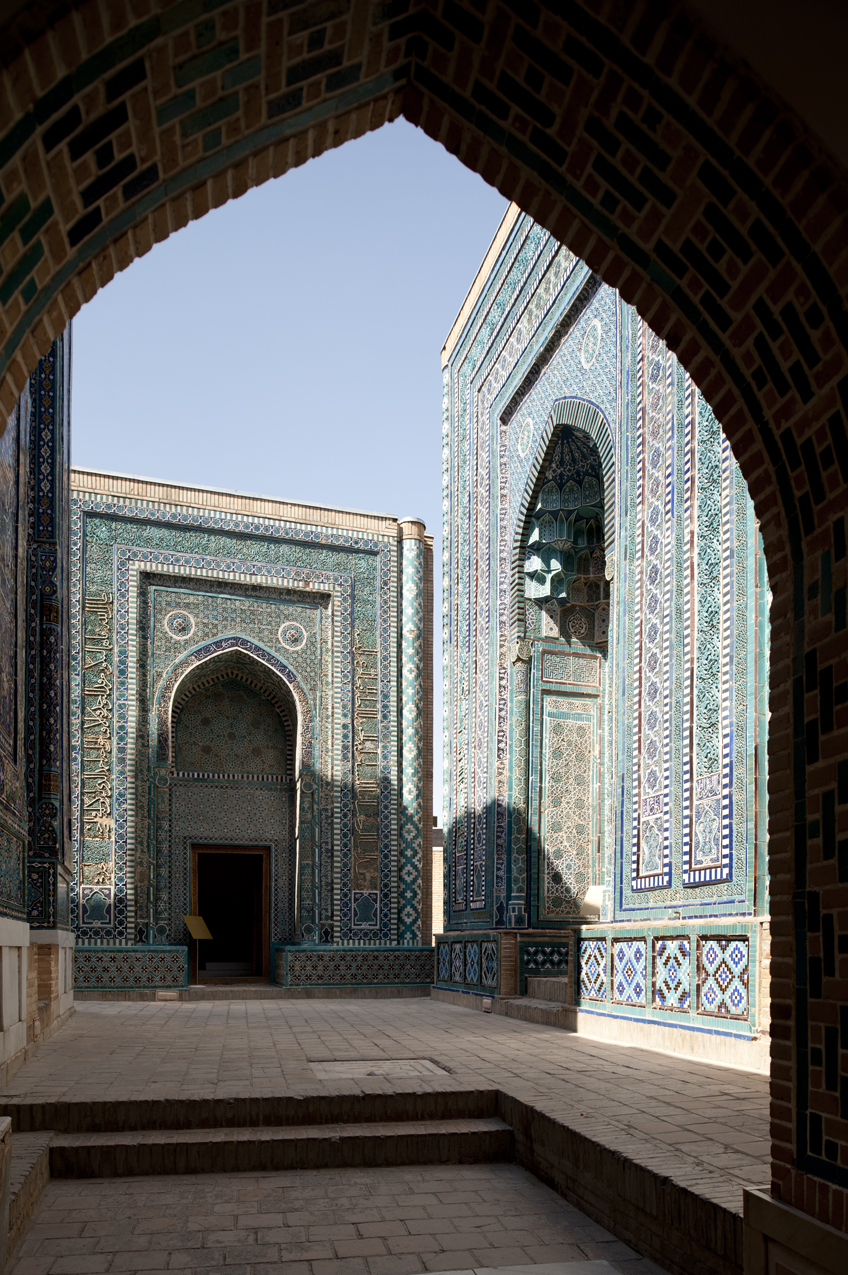
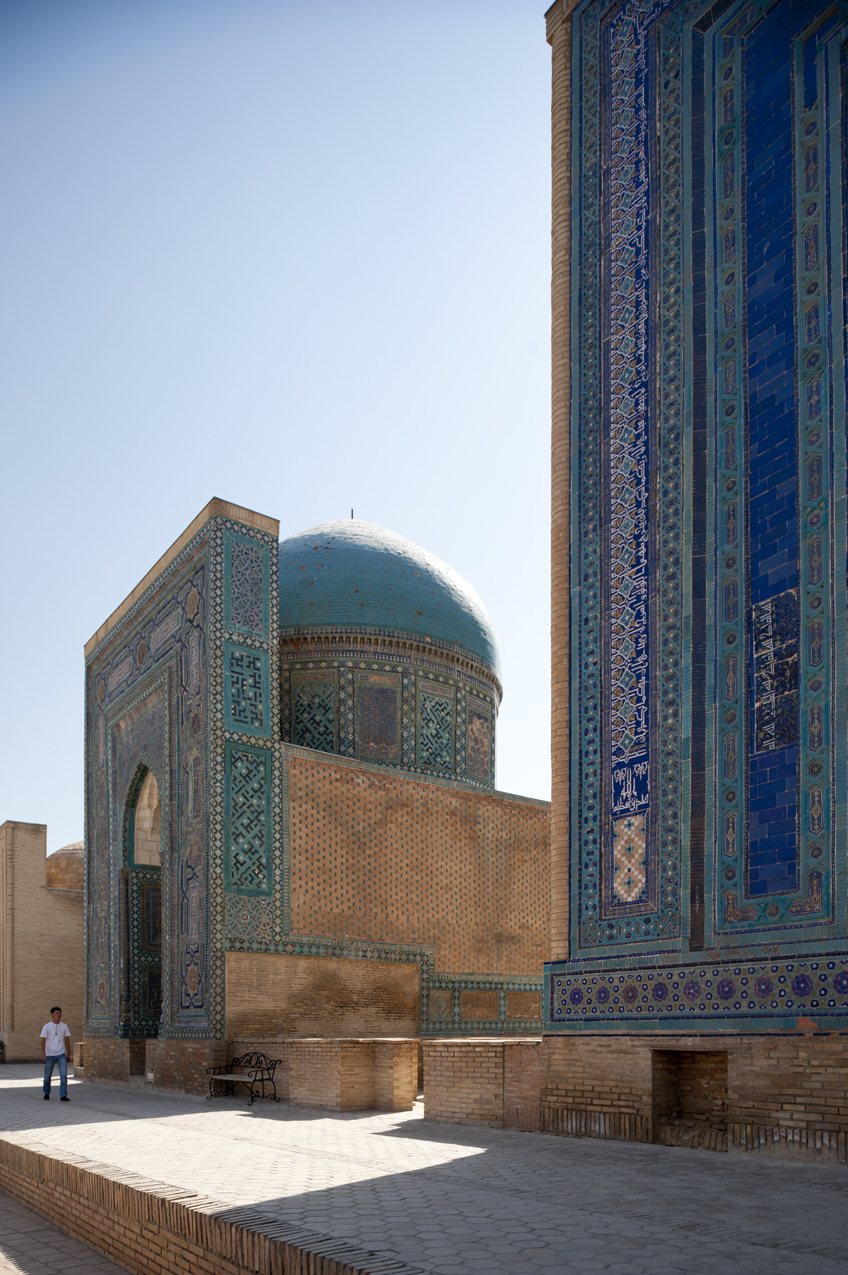
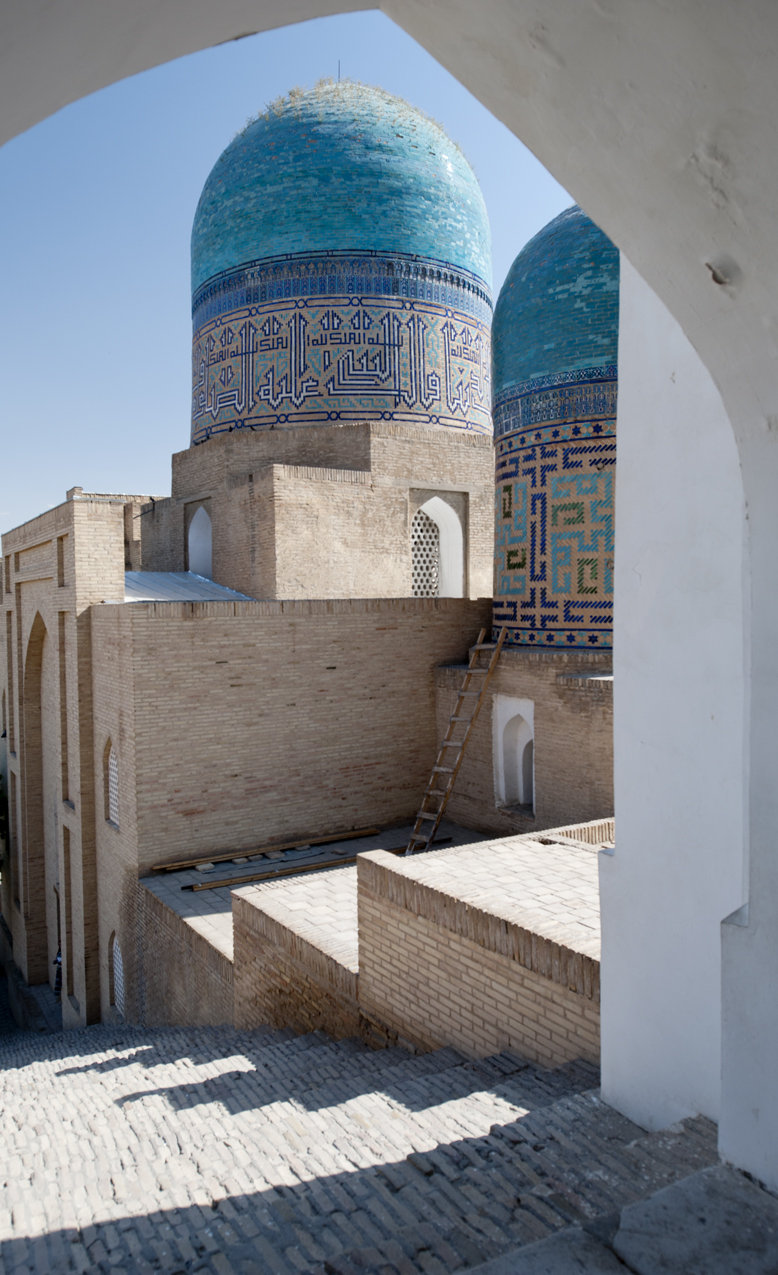
This is Shah-I-Zinda, a beautiful series of mausoleums built by Timur and his grandson, Ulugbek.

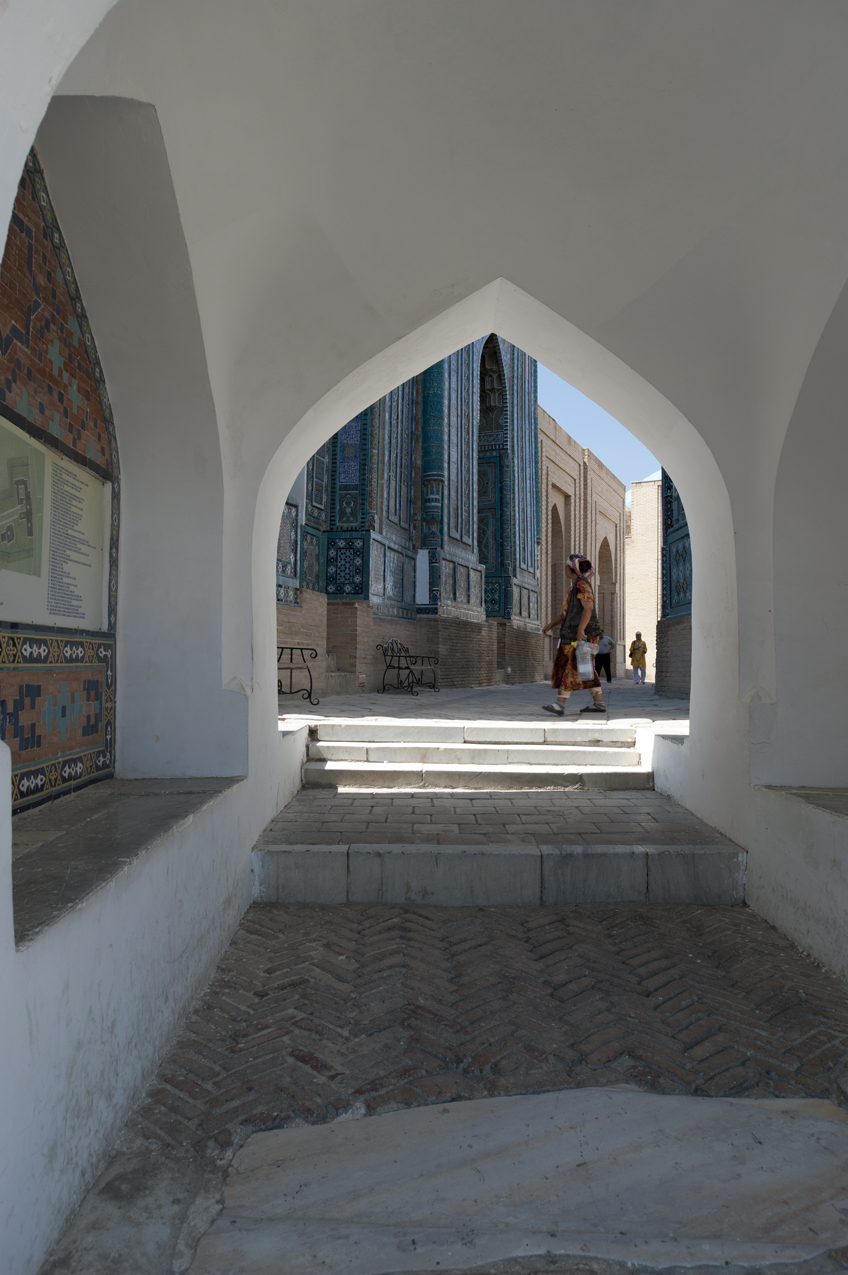
Once through the main gate, these stairs lead up to the row of mausoleums.
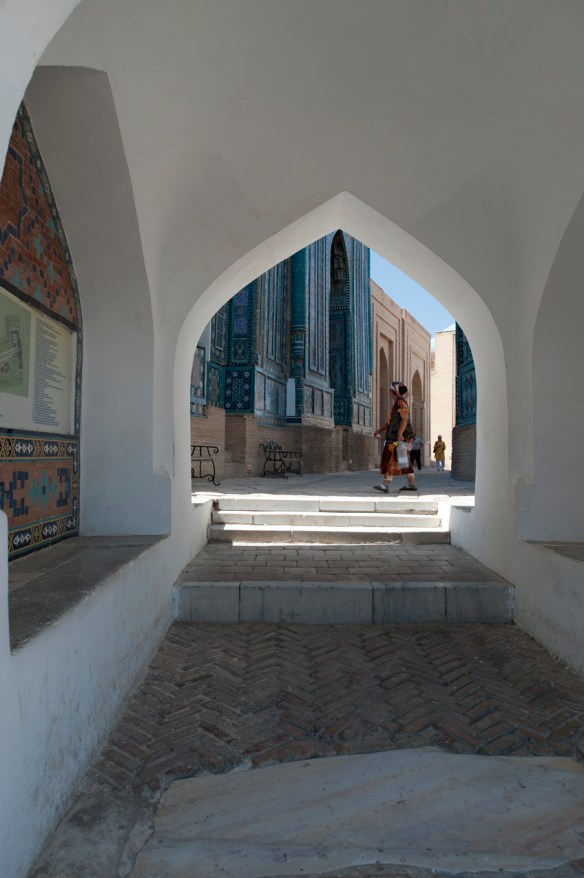
A peak through the upper gate

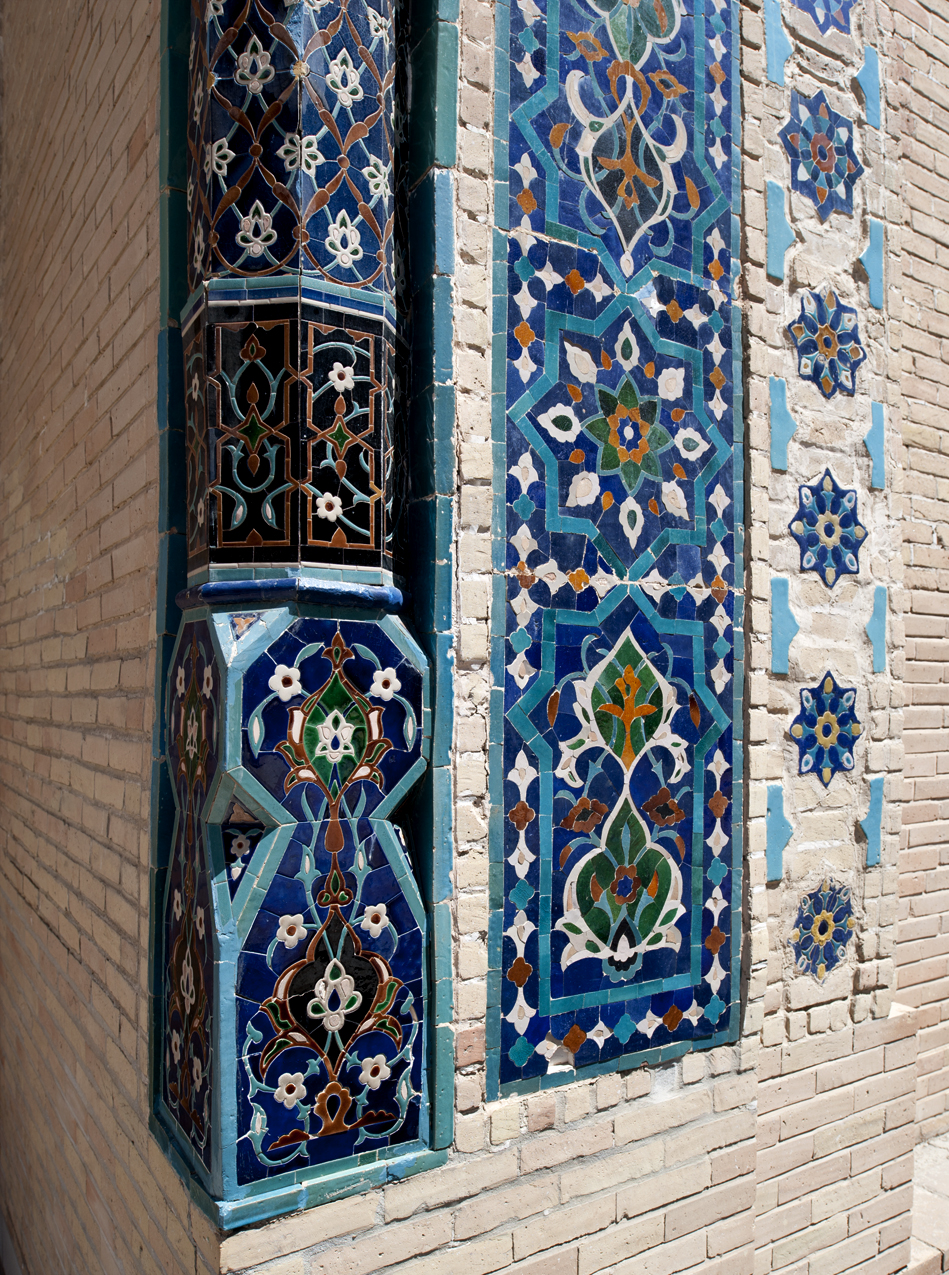
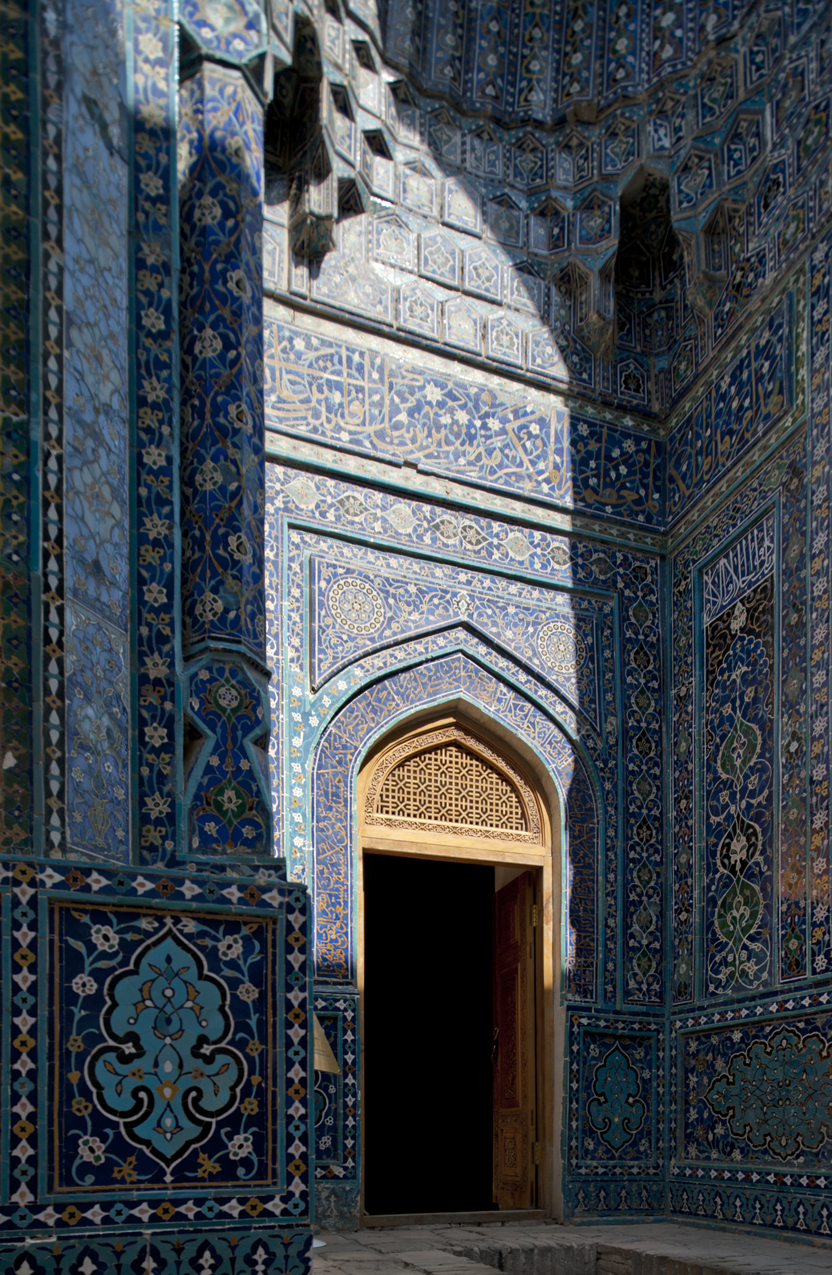
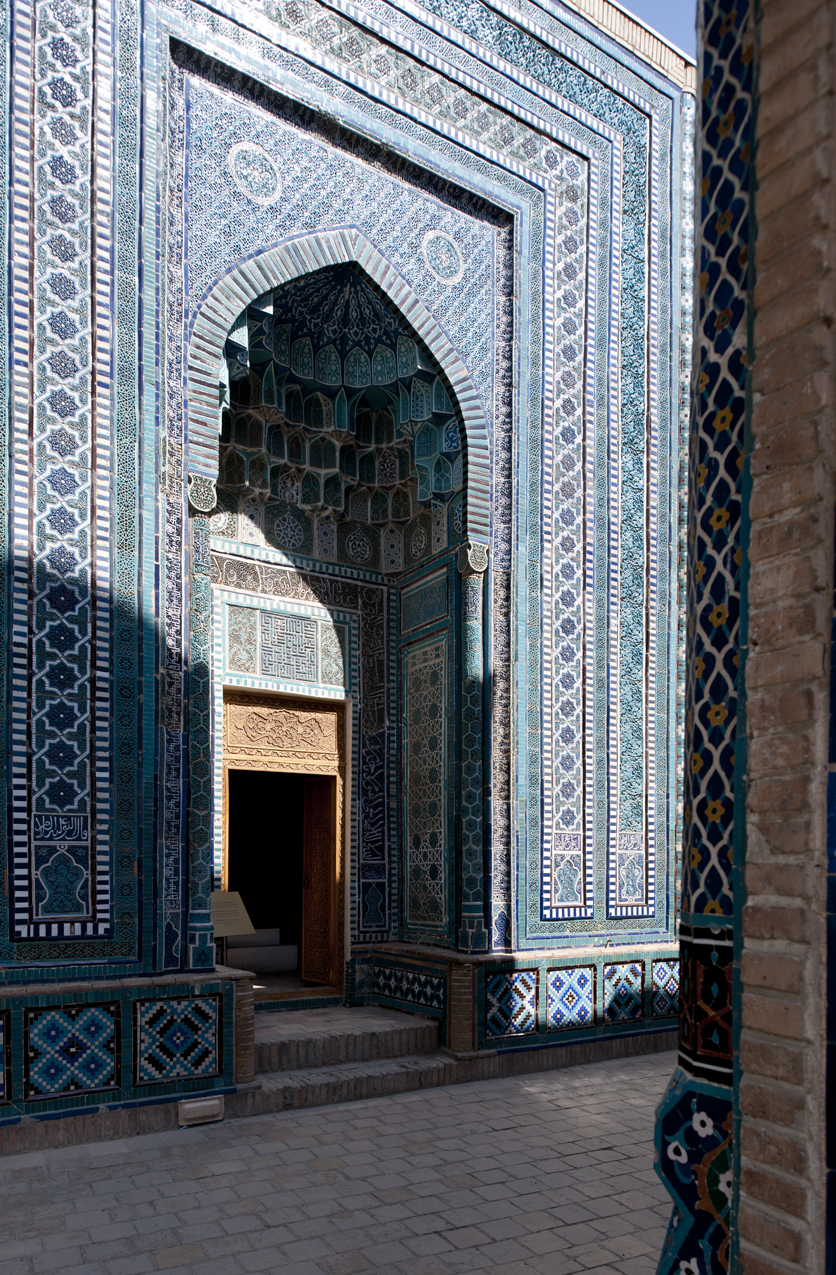
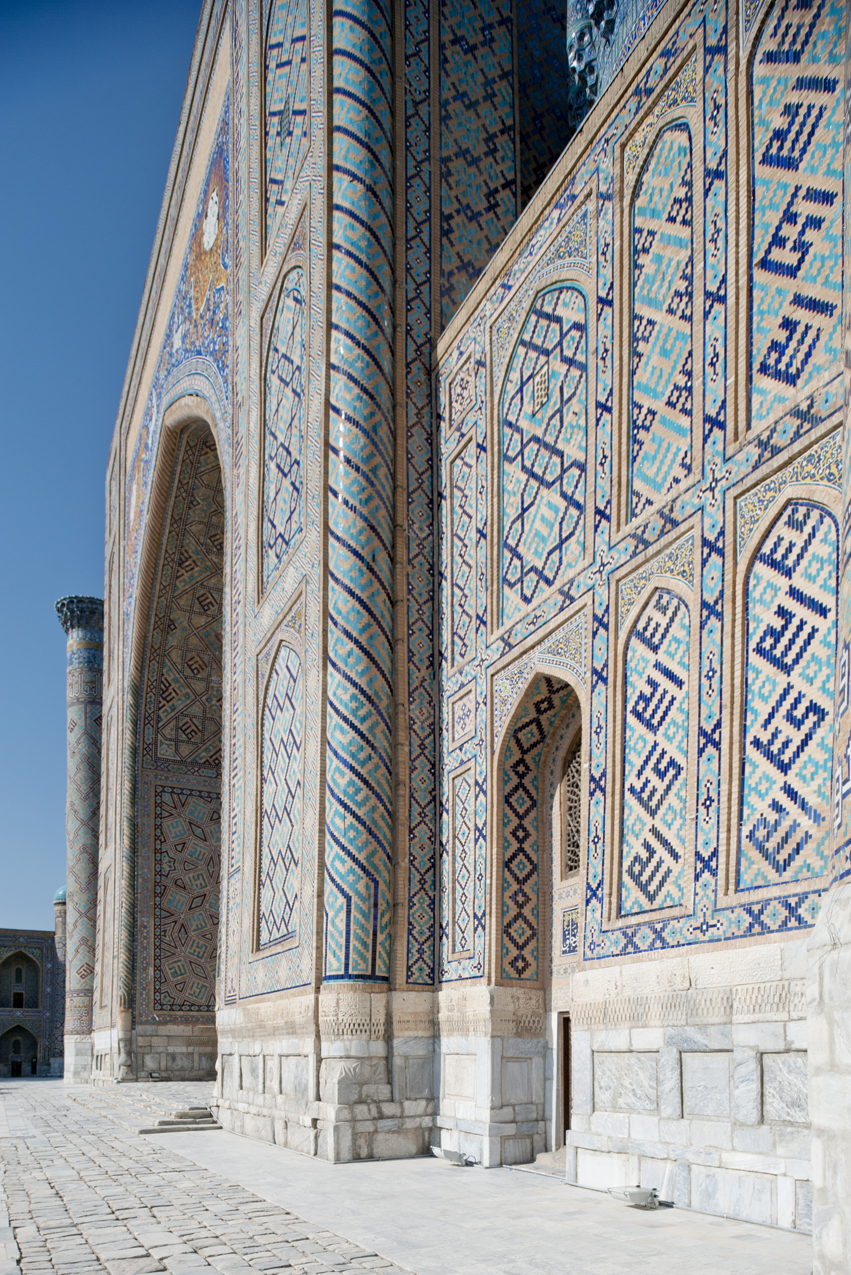
The tile-work up here is the most intricate that I have ever seen. The colors are striking against the yellow desert earth.
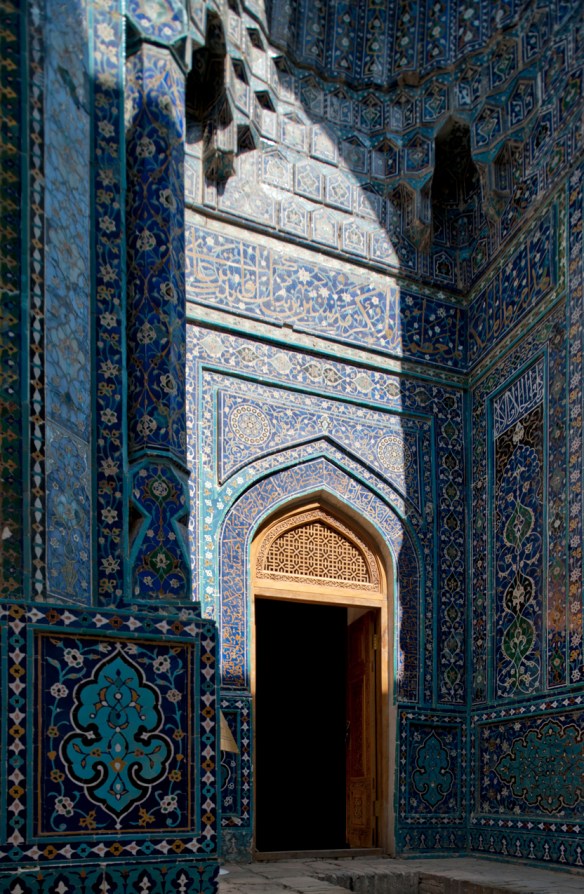
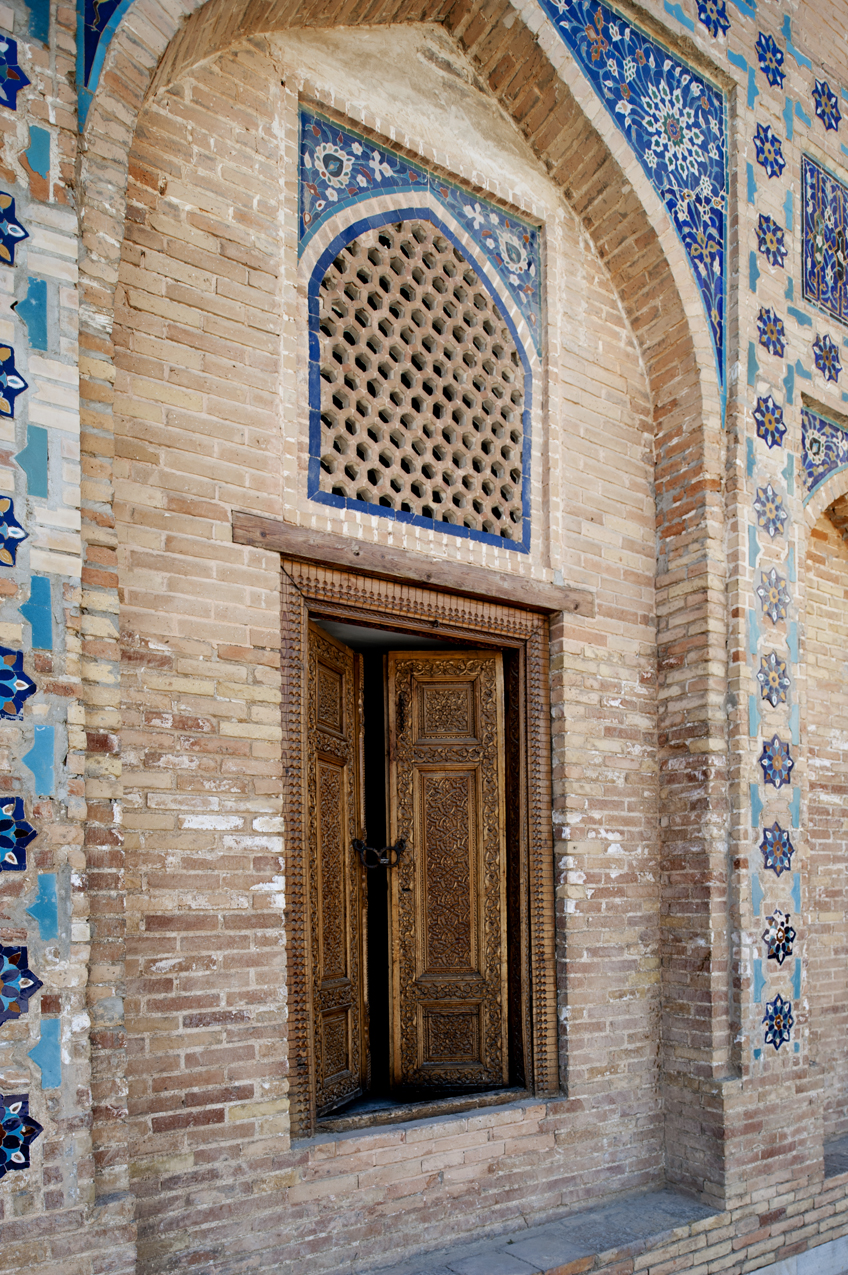
Each of the mausoleums has a small place for worship through a door like this. By small place for worship, I mean a towering, domed, intricate, mosque-like place.

There is color around every corner.

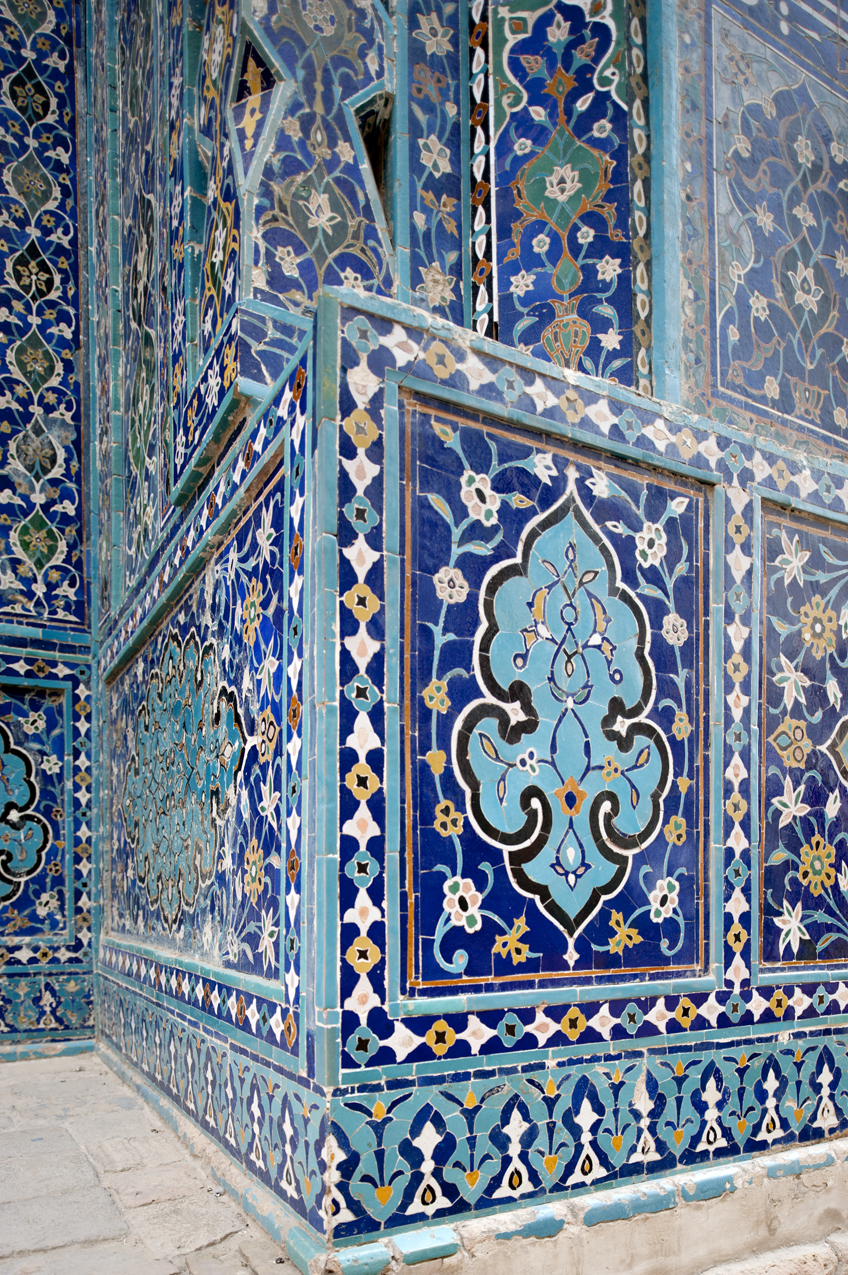
I can't imagine how long it would have taken to both design and implement this tile work.

The inner sanctum of the complex supposedly houses the remains of Qusam ibn-Abbas, the cousin of the Prophet Muhammed, who brought Islam to the region.
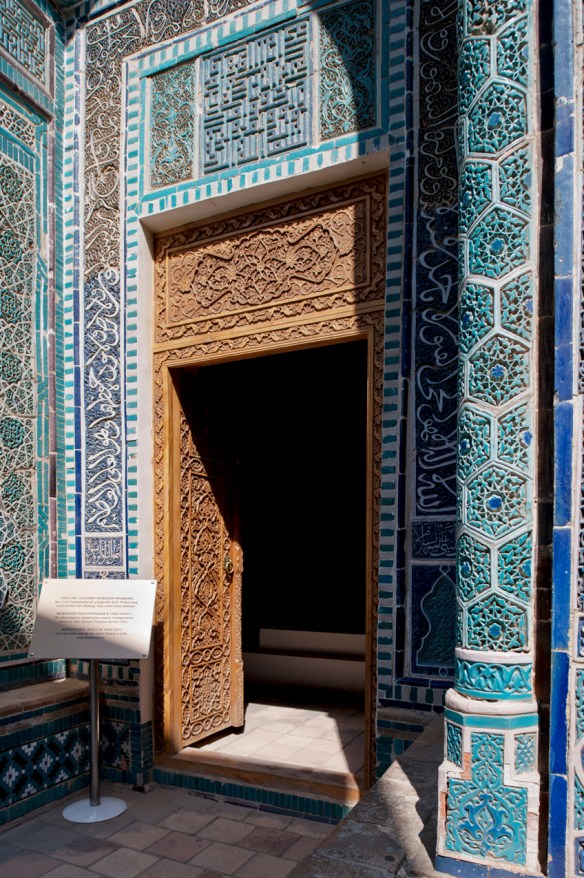
This mausoleum was built for Timur's sister.

It features the most tightly spaced tile-work that I have ever seen, which has required absolutely no touch-ups in 700 years.
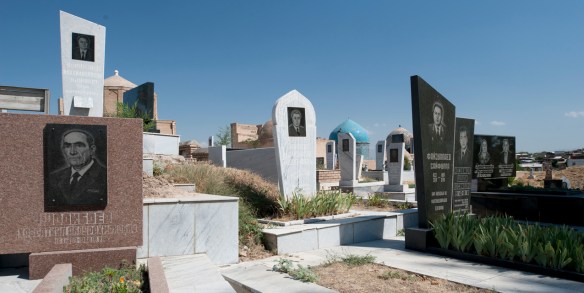
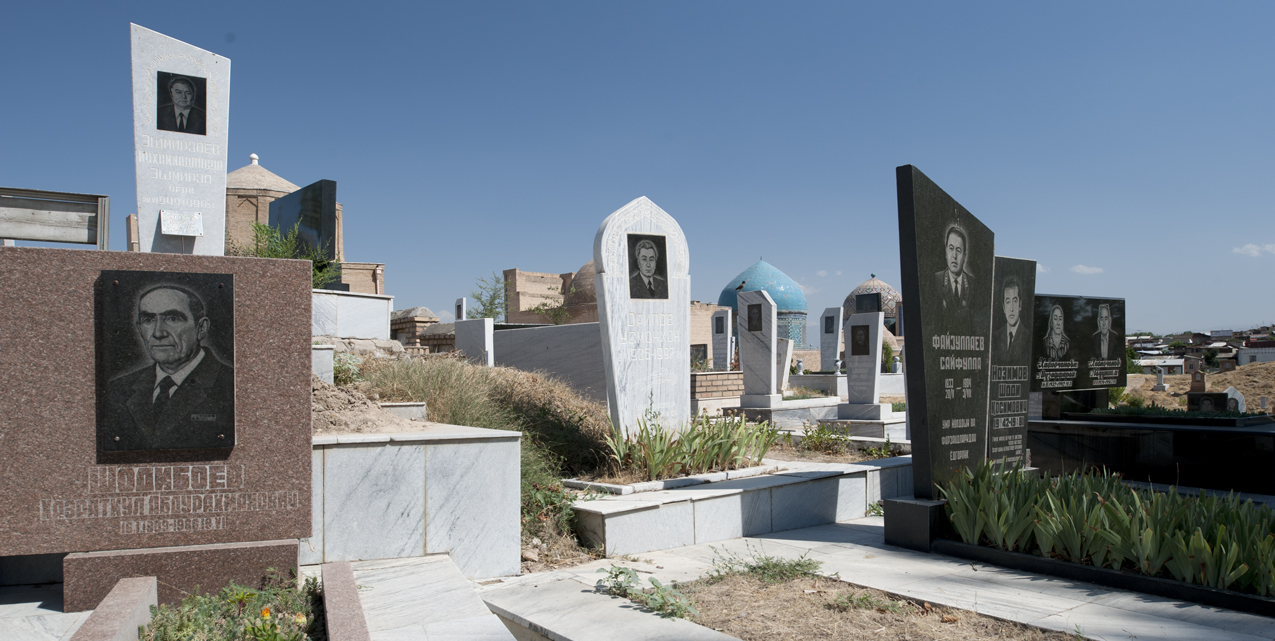
There's a cemetery on the hillside by the Shah-I-Zinda. There is an interesting trend here: people have their images laser-etched on their tombstones. It makes a trip to the cemetery a little more personal, because one feels like all of these dead people are staring back.

It's hard not to take a lot of pictures around here. I took over 400 in one day.
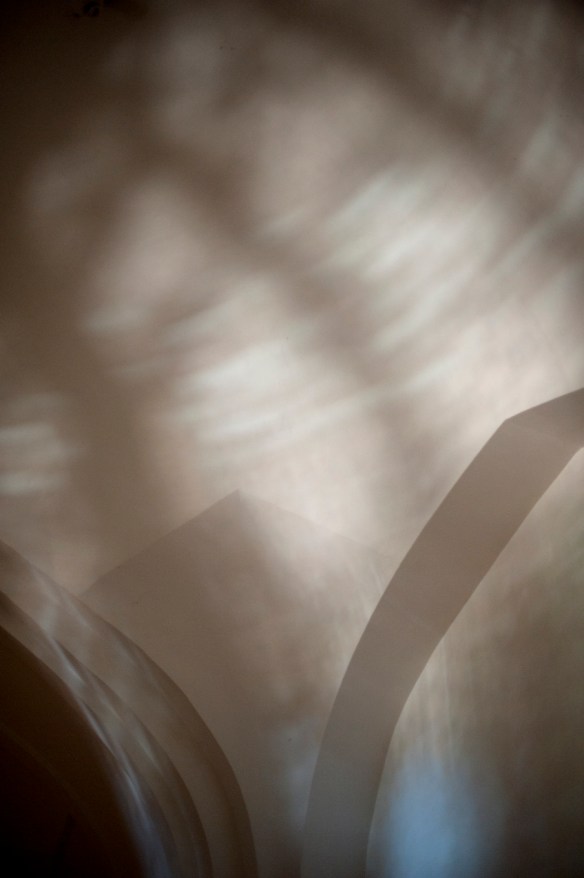
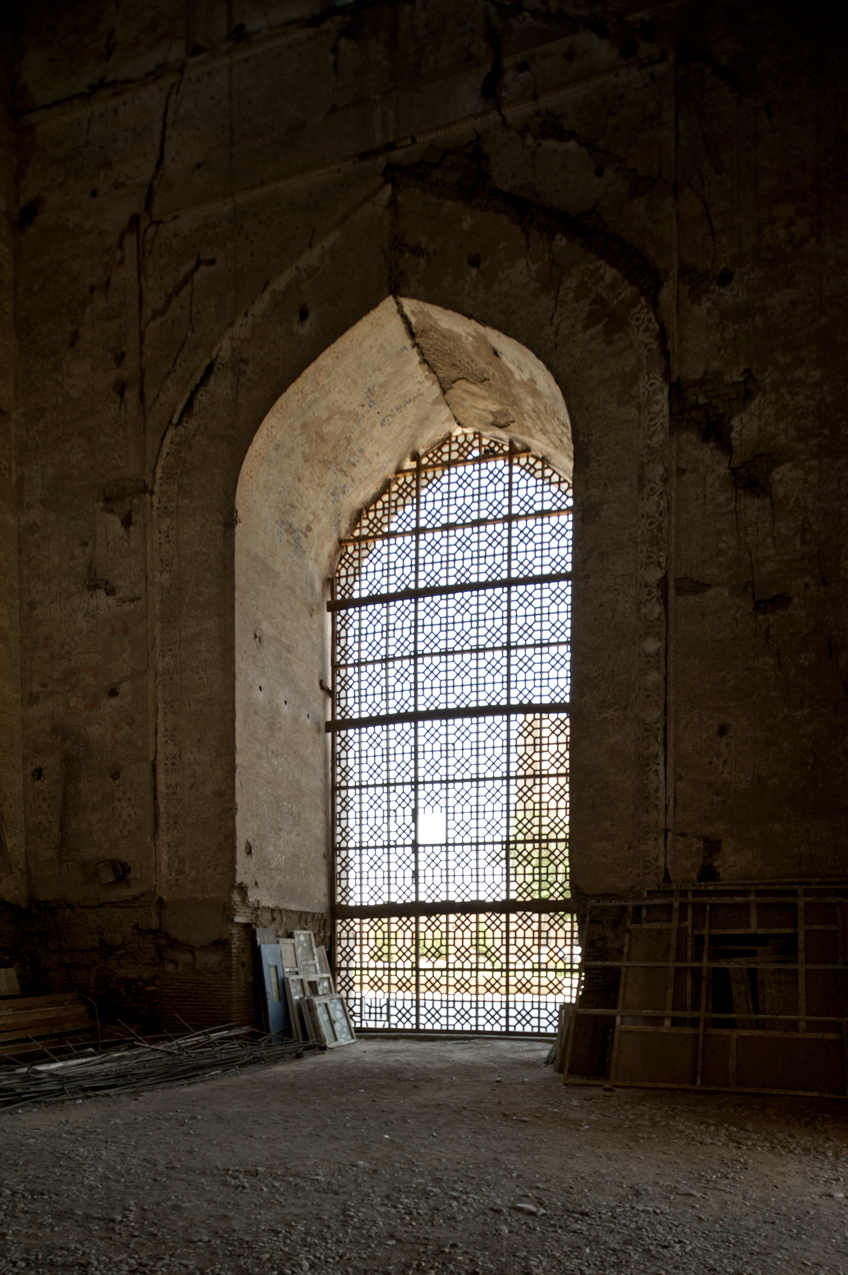
For those wondering about the patterns that the window grilles make on the interior, here's an example from the interior of the mosque at the site.

This is one of many groups of people who asked to have their picture taken with me. I think that they must have mistaken me for someone else. They couldn't figure out how to operate my camera, so I'm not in the photo that I have of them.

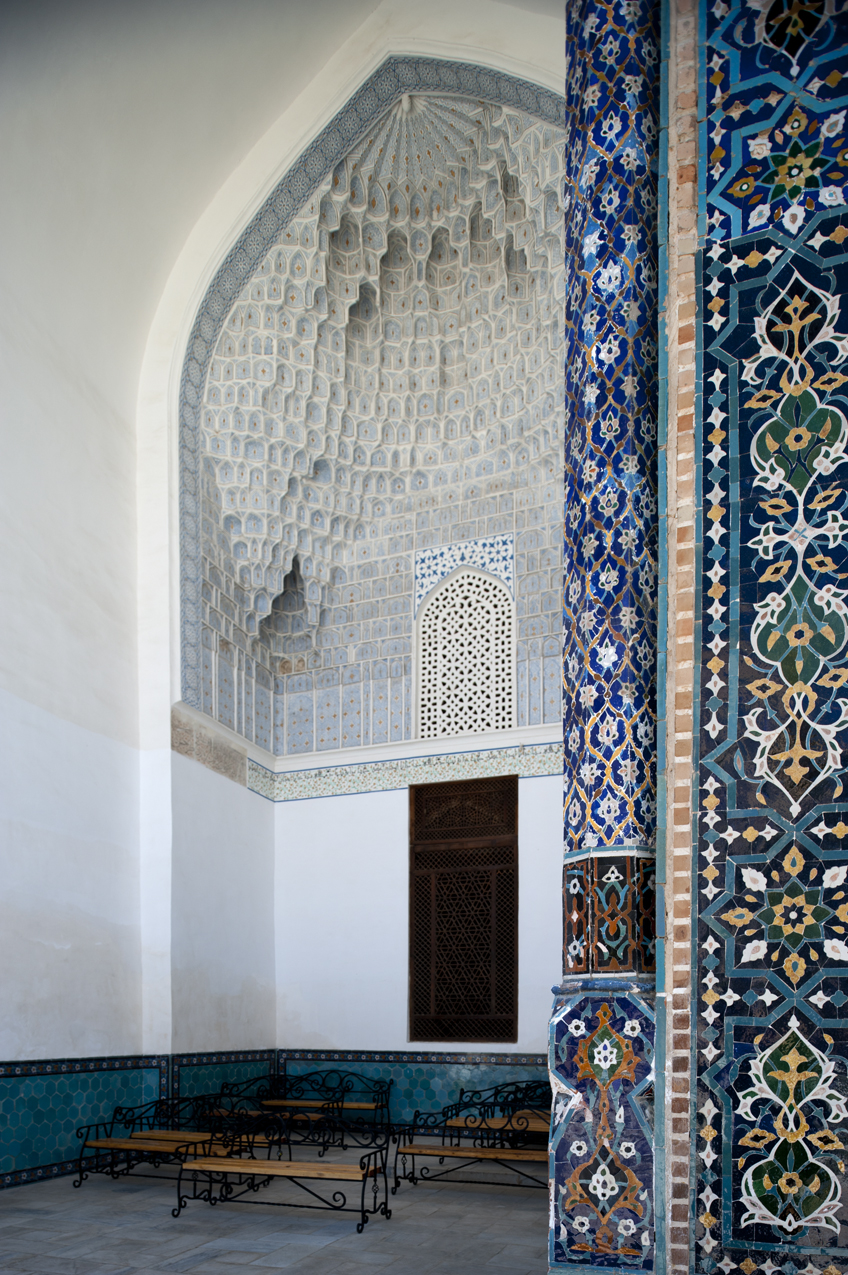
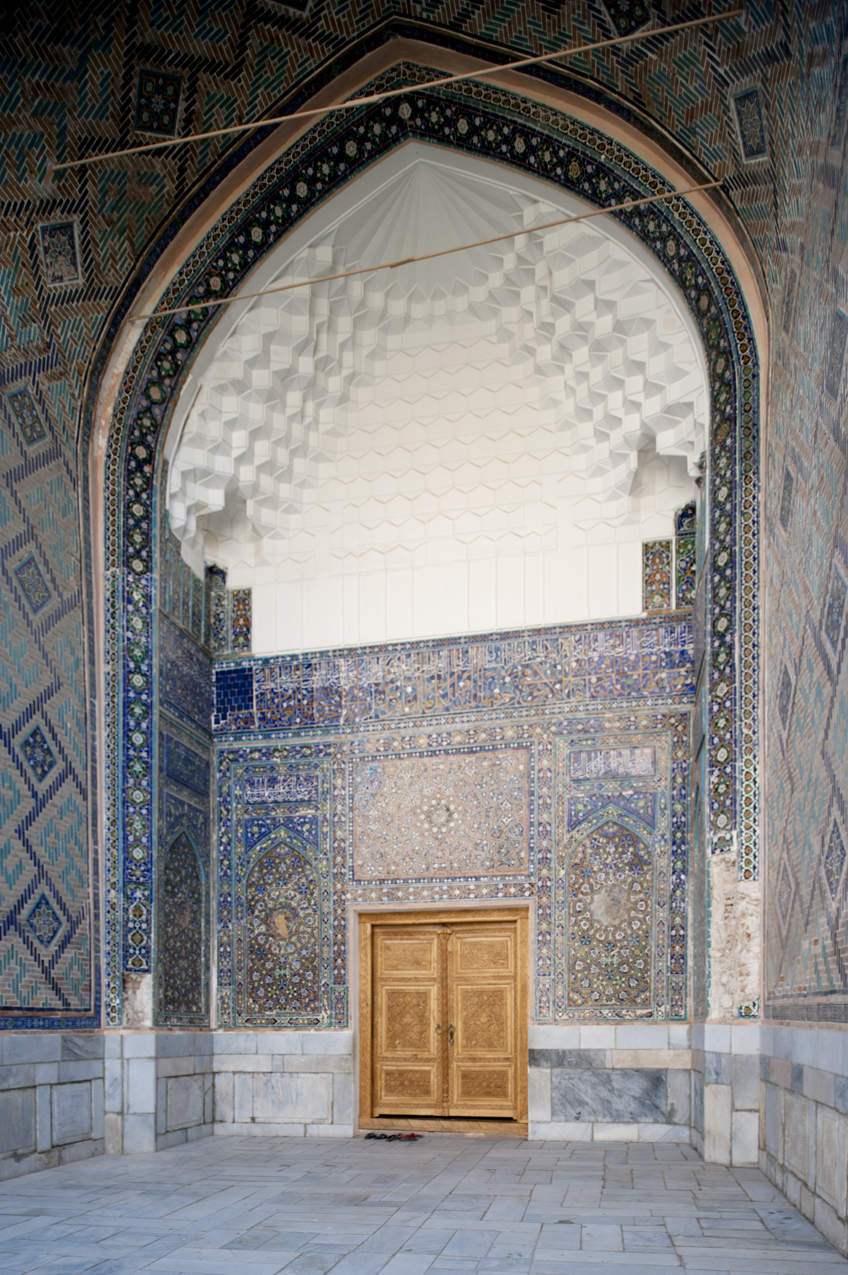
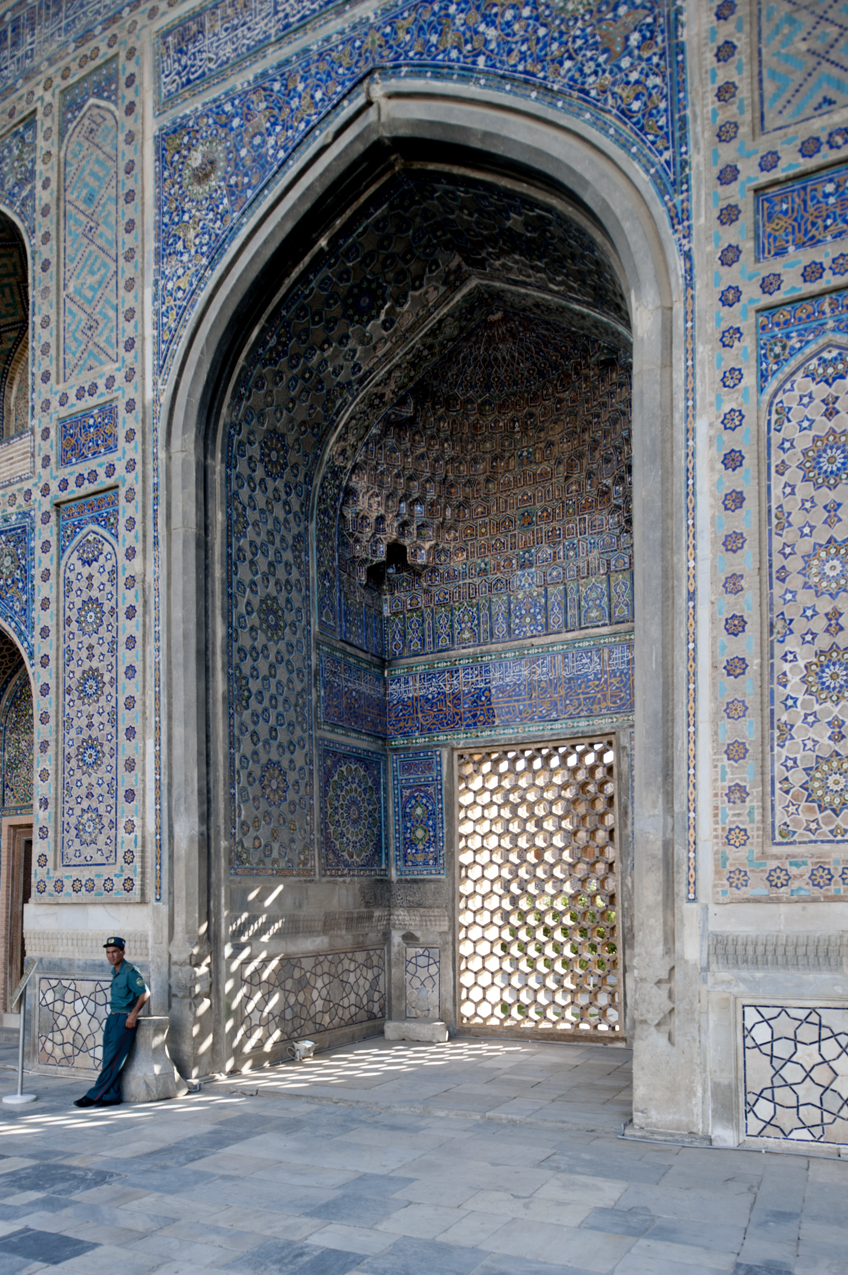
The domes behind the entrances, like the one seen here, provide the jaw-dropping interiors (not seen in photos because it's too dark inside).

These colors were expensive, and hard to come by at the time that they were used to make these mosaics.
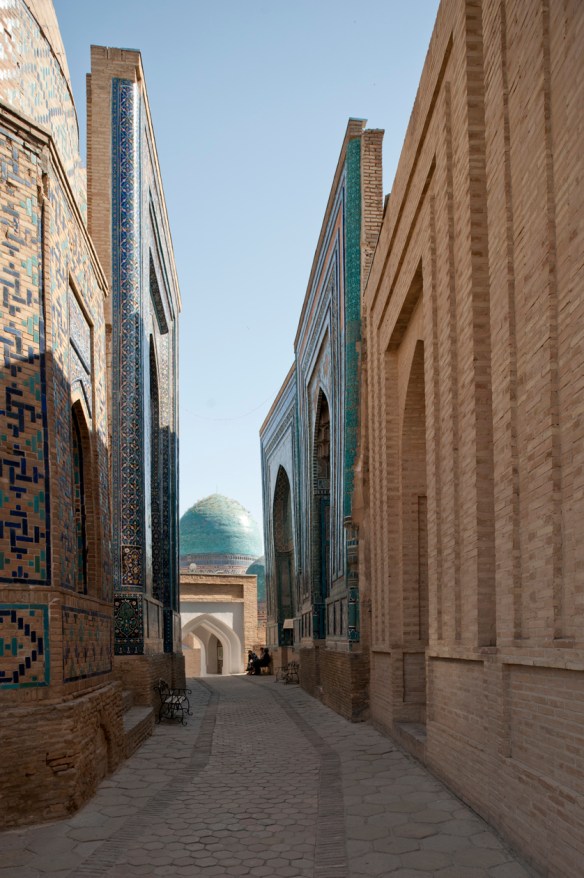
This site is still a hugely popular pilgrimage site, and people come from all across Central Asia to pray near the tomb of Qusam ibn-Abbas.
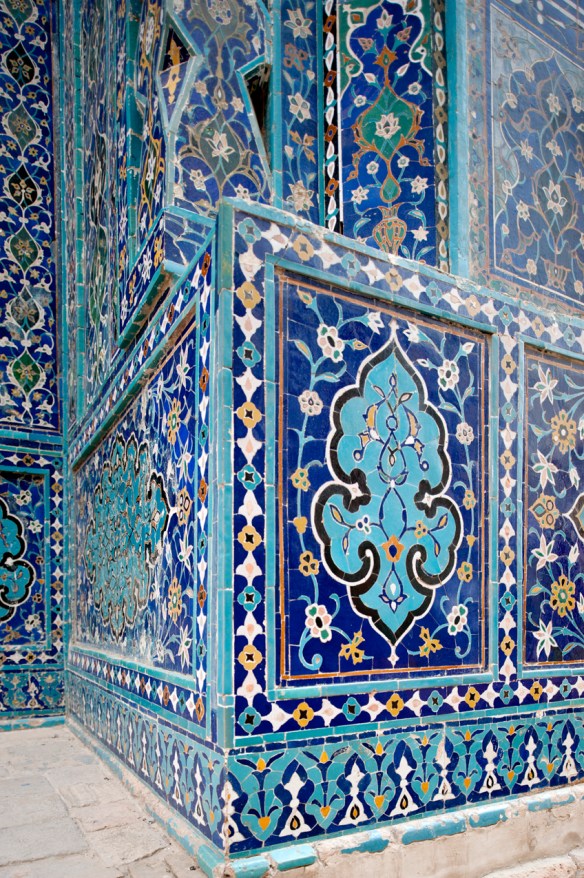
The intricacy of the tile-work can only be understood close-up. From afar, it blends into an ocean of color, but up close, new worlds can be discovered.
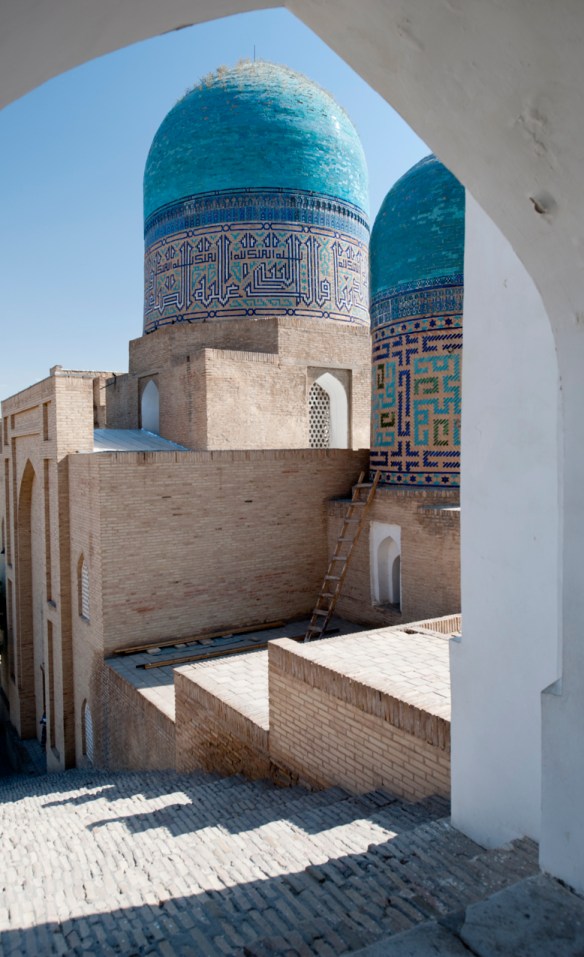
All of Samarkand's ancient buildings have these turquoise domes.

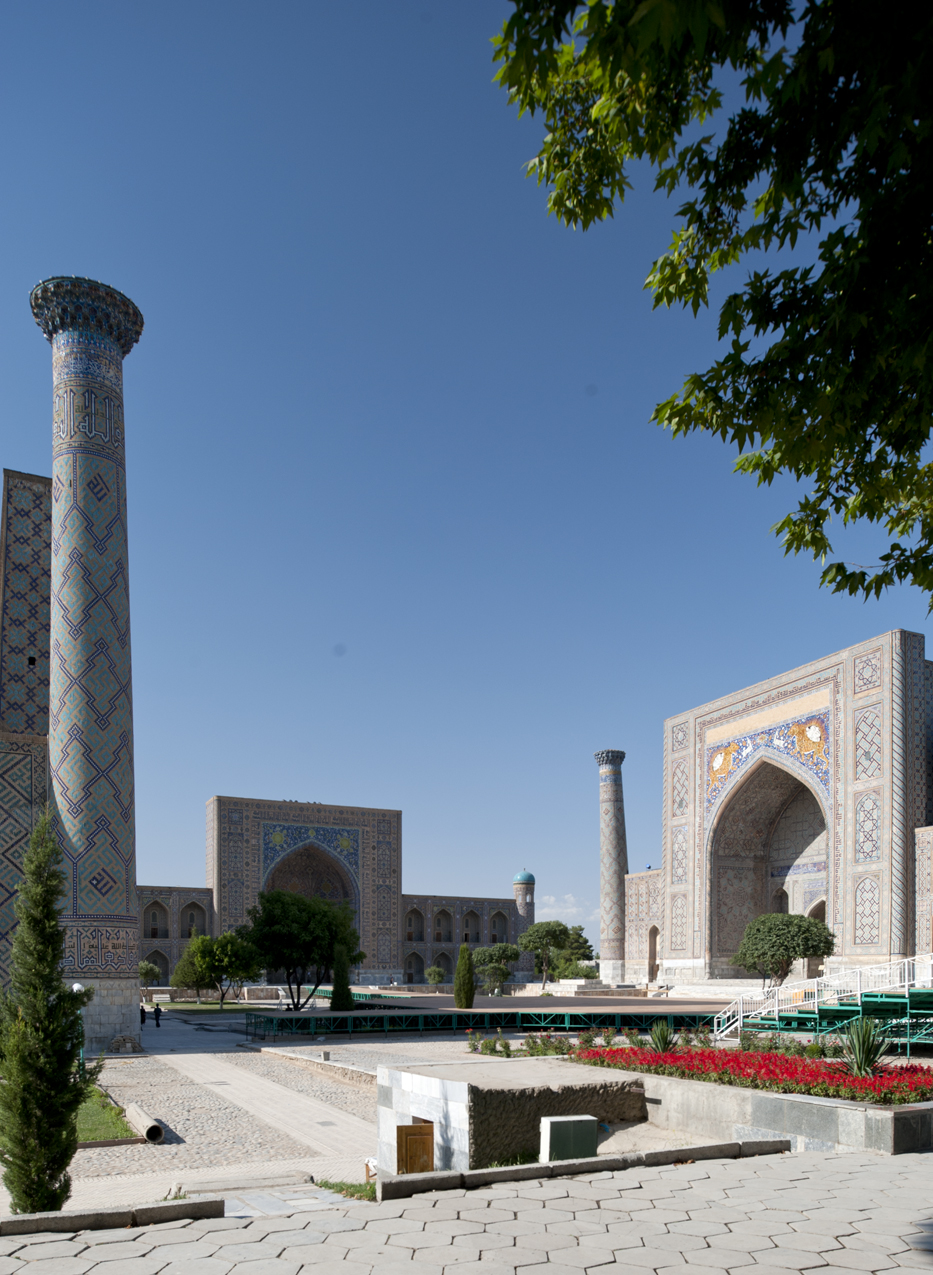
This is one of the buildings in the huge medressa complex, called the Registan.

Supposedly one of the great public squares in all the world, the space enclosed by the three Registan medressas is currently occupied by a stage and a temporary grandstand for a music festival at the end of August. I was more than a little bit disappointed, especially since it seems like the kind of thing that could be erected in a week, and I'm not sure why the plaza is obstructed for the whole summer.

This is the interior courtyard of one of the medressas. For a small donation to the Registan guards' retirement fund, I was able to get up to the second floor balcony, and up to the top of one of the minarets.

The stairway in the minaret got progressively tighter. It wasn't quite as bad as the Mati-Si cliff temple, though.

The guard promised me the best view in all of Samarkand. This may,in fact be the best view in the city, but it's a place that's better appreciated from the ground, I think.
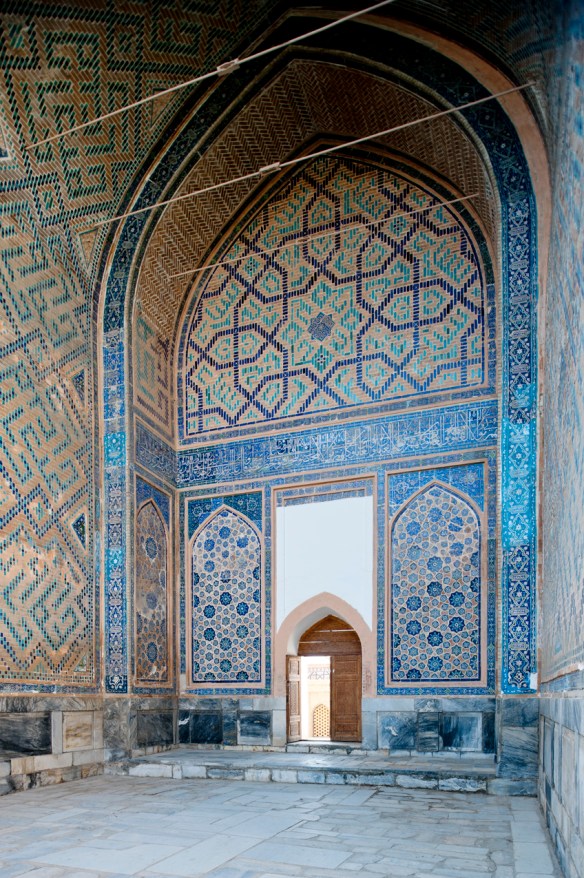
Ulugbek, who founded this Medressa, was not only Timur's successor as ruler of all of Central Asia, but was also the math professor here.
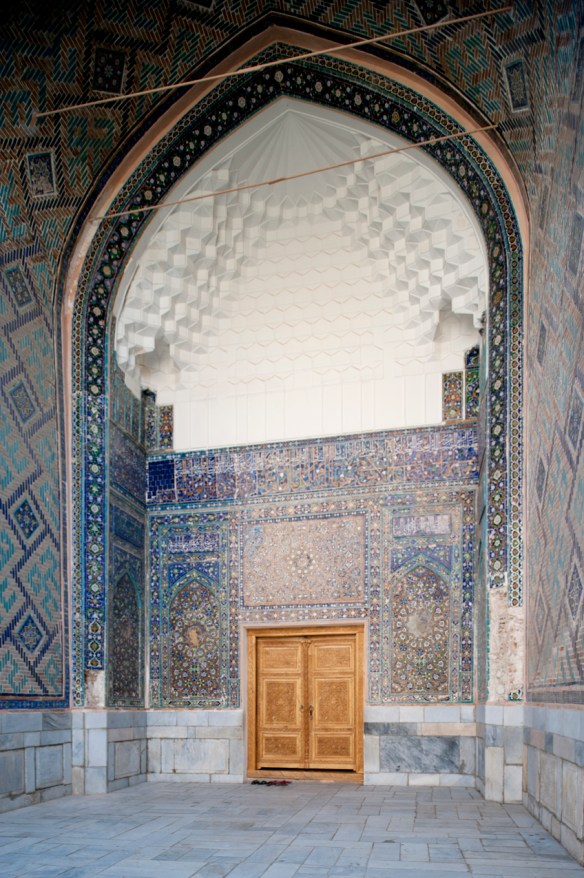
One can see where the math skills came in handy when design this structure.

The white of the entrance corridor of the Ulugbek Medressa is a refreshing contrast to the exterior ornamentation.
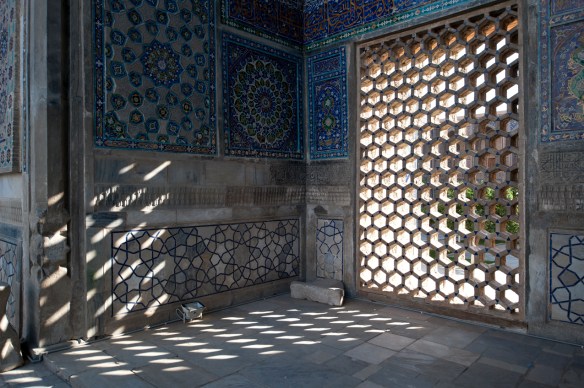
The evening sun casts its glow through the gate.

The scale figure in this image is the guard whose palm I greased to get up in the minaret.
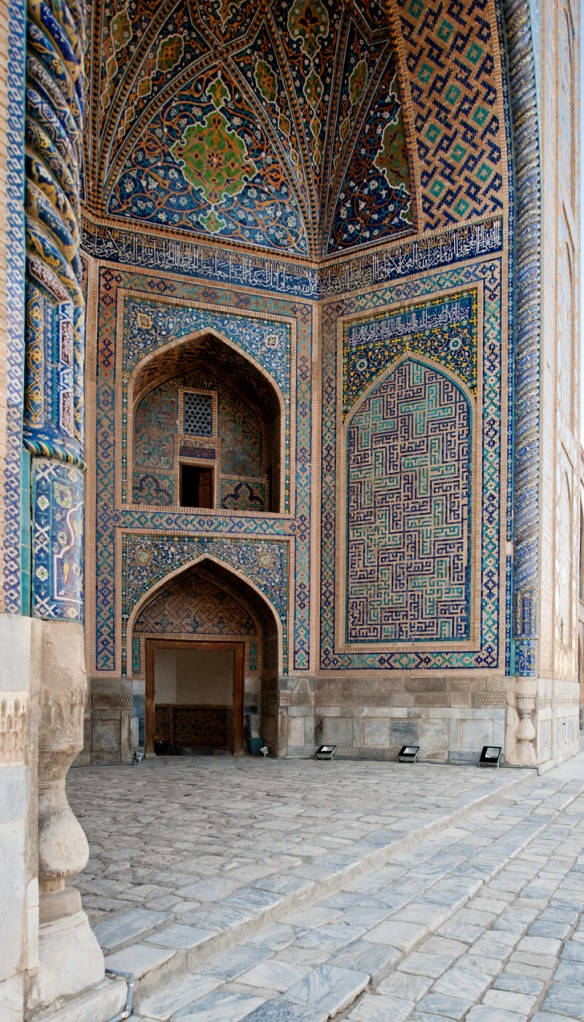
This is the gate to the medressa to the north. Each of the gates has a completely different motif.

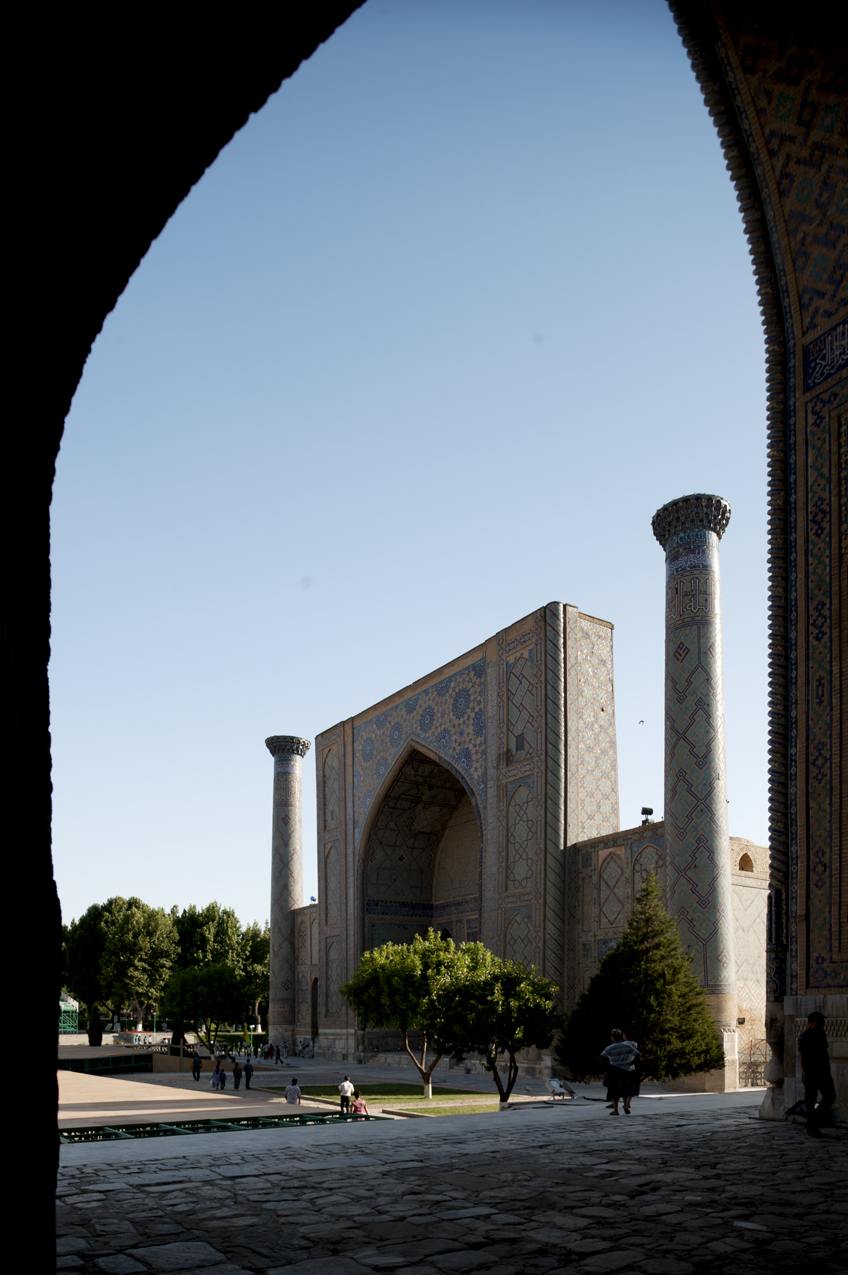
A view back to Ulugbek's Medressa.

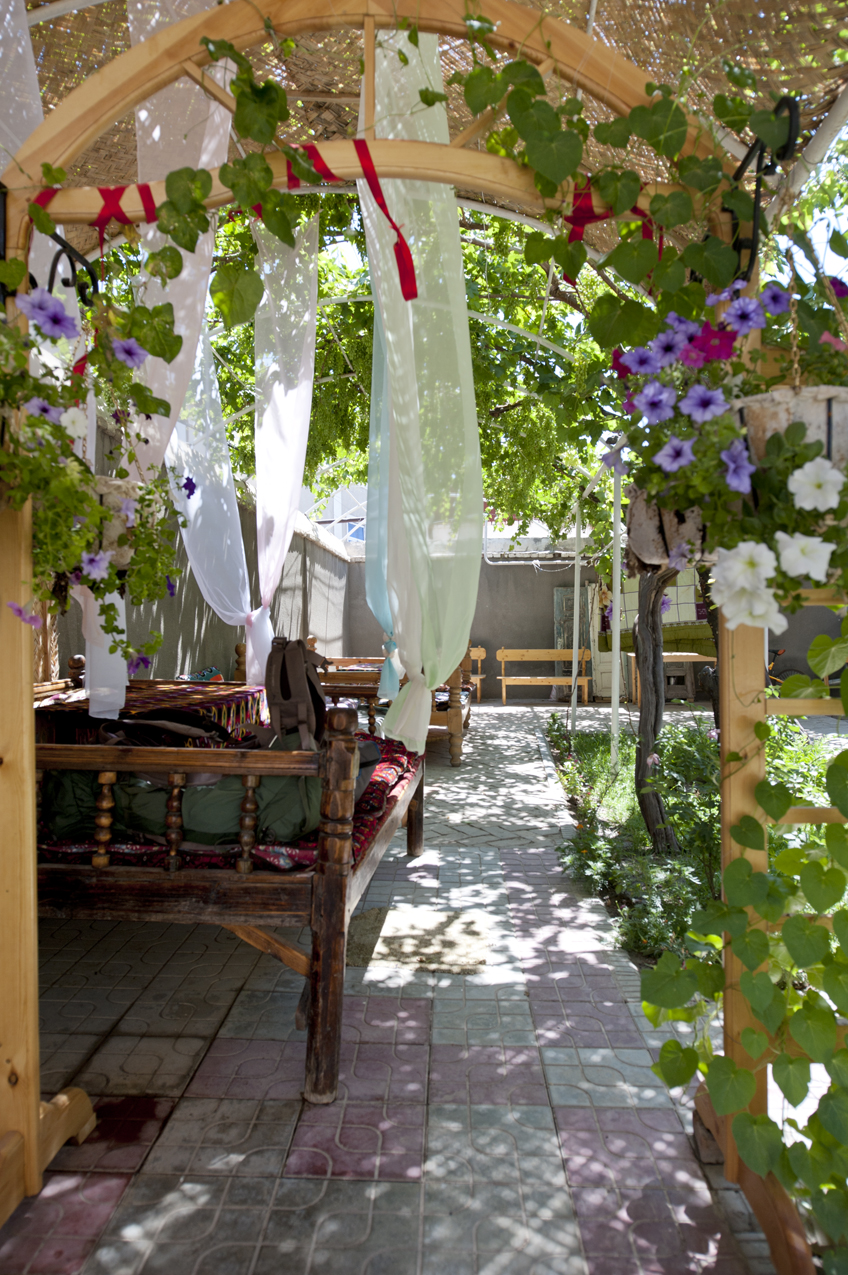
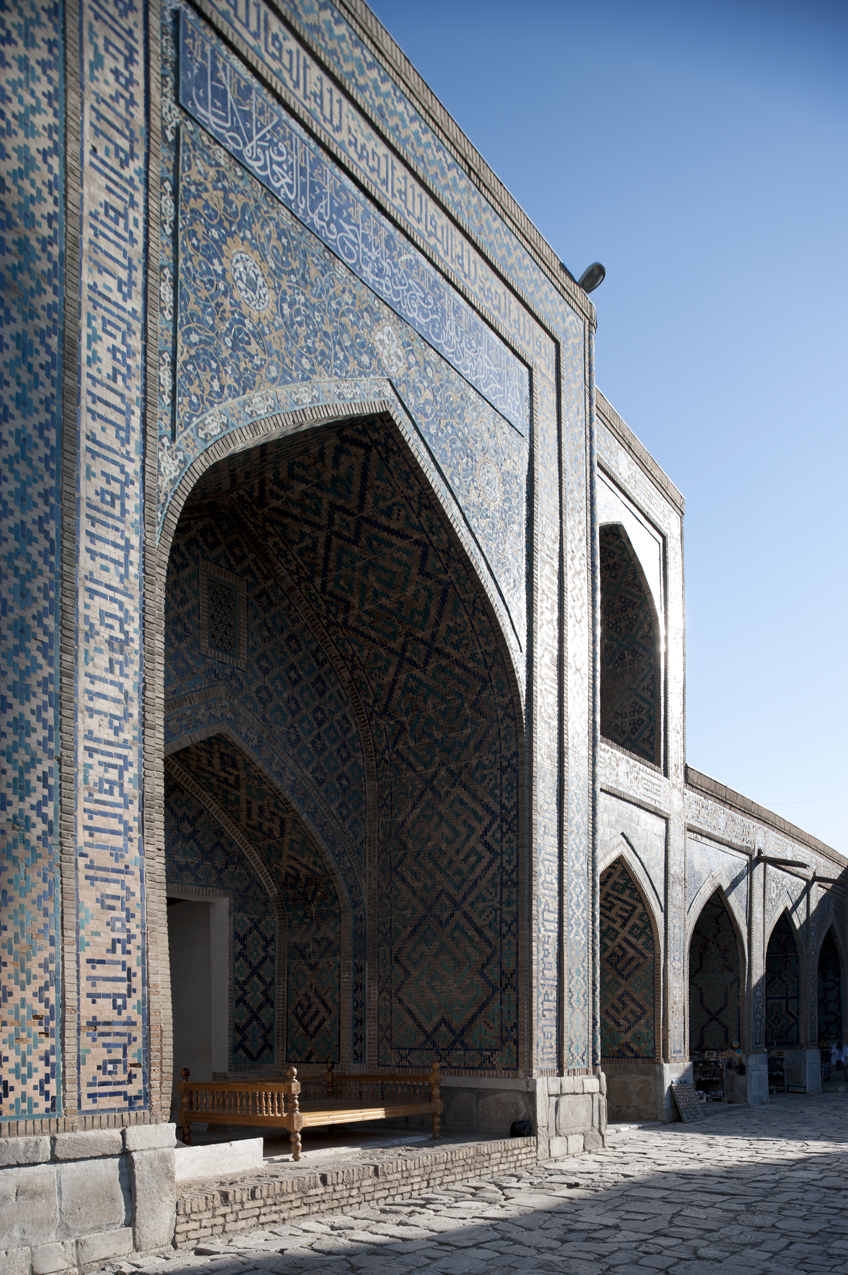
The object that looks like a bed in this picture is actually a sort of seat that Uzbeks use to unwind in the heat of the afternoon. They take their shoes off, and sit and have tea, or take a quick nap.

They must have had some extra gold laying around when they built this mosque. Although seemingly domed on the interior, the roof is flat, which could provide some nice poche space for future mechanical and plumbing installations. I'm joking, of course. It would be much simpler, and probably better acoustically, to just drop in an ACT grid ceiling.
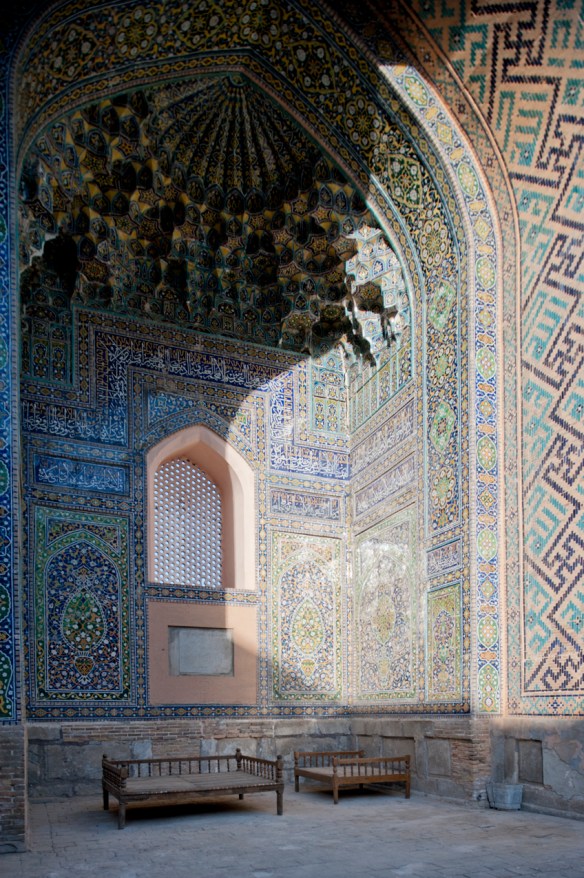
Not a bad spot for a nap.

Absolutely every surface becomes a place for ornament and pattern.
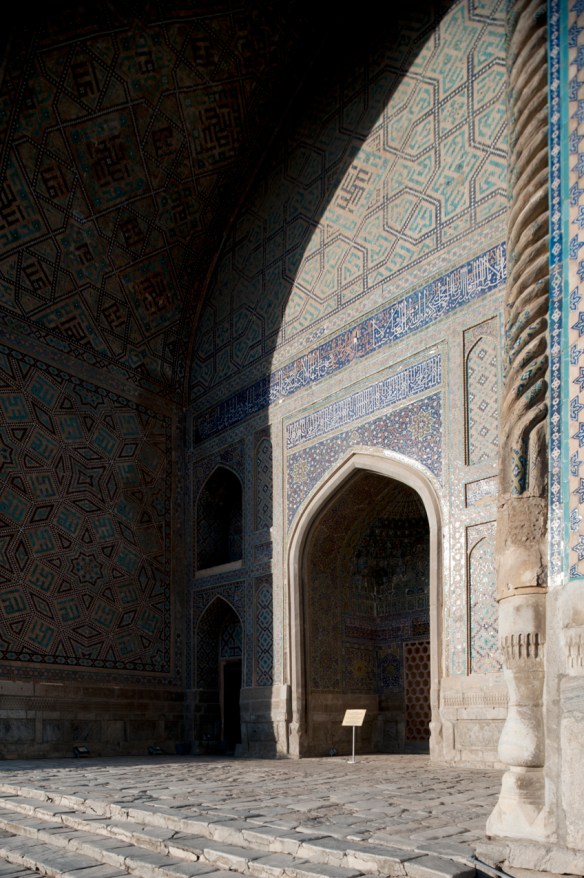
I'm out of words to describe this.

My dinner. Unfortunately, a good portion of the sauce ended up on one of the two good shirts that I brought with me.
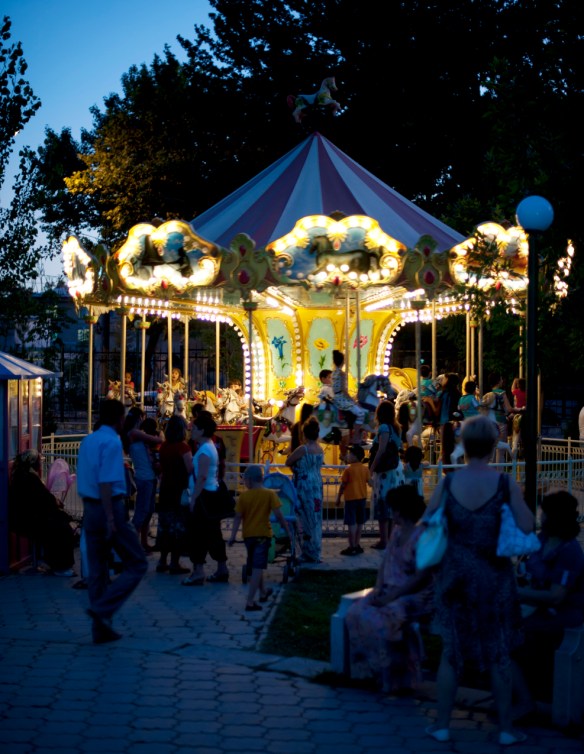
Strolling through the Russian section of town in the evening, I discovered this small amusement park.